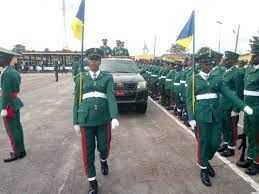

















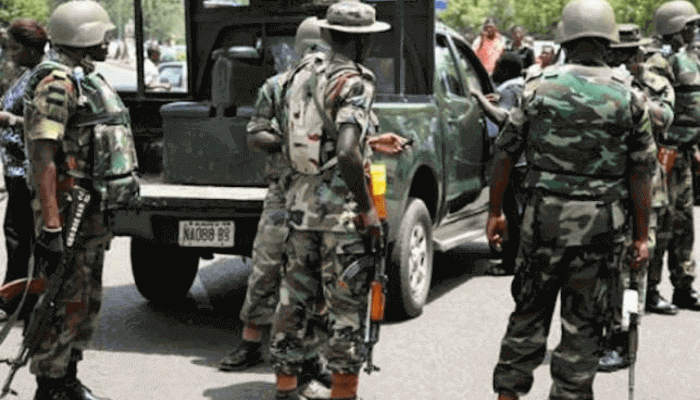
The Nigerian Army formally marked the end of an era on Thursday as 18 senior Army officers retire after 35 years of service, closing decades of military careers defined by operational command, logistics coordination, and national defence contributions across multiple theatres.
The retirement ceremony, held in Benin City, Edo State, featured a traditional pulling-out parade, a symbolic military ritual that honours long-serving officers at the conclusion of their careers. The officers belonged to the Nigerian Army Corps of Supply and Transport (NACST), a critical unit responsible for sustaining troops through logistics, movement, and supply operations.
The headline 18 senior Army officers retire after 35 years of service captures the scale of the event, but the deeper significance lies in what these officers represented within the Army’s structure.
The officers and their ranks
According to the Corps Commander, Major General Danjuma Shagaya, the retiring group included:
- 4 Major Generals
- 14 Brigadier Generals
These are not entry-level officers. They are senior leadership figures who have spent decades shaping operational capacity within one of the Army’s most essential corps.
Their retirement after 35 years aligns with the Nigerian military structure, where officers typically exit service either at a statutory age or after completing 35 years of service, whichever comes first.
Why this matters: the logistics backbone of the Army
To understand the weight of 18 senior Army officers retire after 35 years of service, it is important to understand the role of the Corps of Supply and Transport.
This unit is responsible for:
- moving troops and equipment
- ensuring food, fuel, and ammunition reach operational zones
- sustaining military operations in conflict and peacekeeping missions
As one of the retiring officers, Major General Olaniyi Dare, explained, the corps ensures that soldiers deployed across various theatres are adequately supported, whether in training, internal security operations, or peace missions.
In simple terms, combat units cannot function without logistics. And logistics does not function without experienced leadership.
That is why 18 senior Army officers retire after 35 years of service is not just a personnel update. It is a transition point in institutional memory.
The ceremony and its meaning
The pulling-out ceremony is one of the most symbolic traditions in the Nigerian military. It is not merely ceremonial display. It is a formal acknowledgment of:
- sacrifice
- discipline
- continuity
- and the passing of responsibility to a new generation
Major General Shagaya described the event as both a celebration and a reflection on decades of service, noting that many past and present commanders gathered to honour the retirees.
That tone matters. When 18 senior Army officers retire after 35 years of service, the institution is not just losing personnel. It is marking the end of careers that span Nigeria’s evolving security challenges.
https://ogelenews.ng/18-senior-army-officers-retire-after-35-years-of-se…
A career defined by decades, not moments
Military service is rarely measured in isolated achievements. It is measured in years of consistency.
The officers retiring in this case would have served through:
- internal security operations
- counter-insurgency efforts
- peacekeeping missions
- administrative and strategic command roles
Over 35 years, that translates into:
- postings across multiple regions
- leadership roles at different command levels
- institutional knowledge built through experience, not theory
That is why the phrase 18 senior Army officers retire after 35 years of service carries weight. It signals the departure of officers who have seen the Army evolve across decades.
The transition challenge
Every military faces the same structural question: how to replace experience.
When 18 senior Army officers retire after 35 years of service, the Nigerian Army must:
- elevate mid-level officers into senior leadership roles
- preserve institutional memory
- maintain operational continuity
This is not unusual. It is part of the military cycle. But transitions at this level always matter because leadership gaps, if not managed well, can affect efficiency.
The human side of retirement
Beyond ranks and structure, there is a personal dimension.
Many of these officers:
- spent most of their adult lives in service
- worked in high-risk environments
- operated under strict discipline and limited personal freedom
Major General Olaniyi Dare, speaking on behalf of the retirees, noted that although they are leaving active service, they remain committed to the values of the Nigerian Army and will continue to serve as ambassadors of the institution.
That statement reflects a broader reality. Military retirement is not an exit from service. It is often a transition into advisory, mentorship, or national engagement roles.
Why this story matters
At first glance, 18 senior Army officers retire after 35 years of service may look like routine military news.
But it is more than that.
It is about:
- institutional continuity
- leadership transition
- the quiet exit of experience built over decades
In a country where security remains a central national concern, the strength of the military depends not only on equipment or funding, but on leadership quality and experience.
That is why moments like this matter.
The bottom line
The Nigerian Army has formally bid farewell to a generation of senior officers whose careers spanned 35 years of service.
The headline 18 senior Army officers retire after 35 years of service tells you what happened.
But the real story is this:
a leadership cycle has closed,
and another has just begun.
https://punchng.com/18-senior-army-officers-retire-after-35-years-of-service/