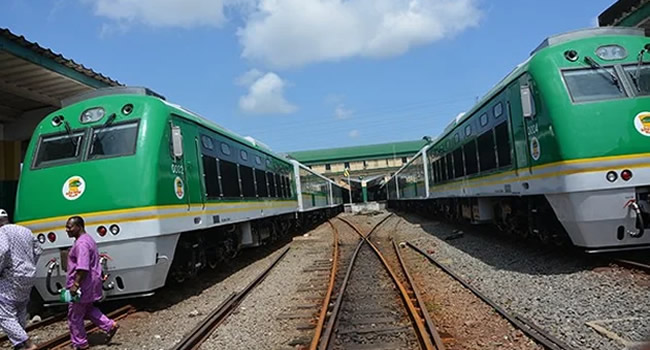

















Abuja–Kaduna train services
The Nigerian Railway Corporation (NRC) has resumed Abuja–Kaduna train services following a technical incident on Monday that left at least 26 passengers and onboard personnel injured along Nigeria’s busiest rail corridor.
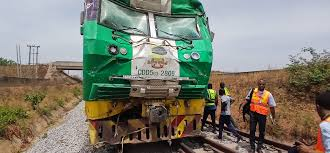
The incident, which occurred at approximately 9:16 a.m. near the Asham axis between Abuja and Kaduna, involved a mechanical failure within the train formation, not a derailment as initially speculated.
According to the NRC, the Abuja–Kaduna train services disruption was caused by a suspected failure in the coupling mechanism linking the locomotive to the coaches. This failure triggered a collision between the power car and one of the passenger coaches, resulting in a loud impact that caused injuries among passengers and crew.
Despite the alarming nature of the incident, officials confirmed that none of the coaches derailed, a crucial detail that significantly reduced the potential severity of the situation.
What Happened on Monday
The affected train, identified as service KA-2, departed Rigasa Station in Kaduna at about 7:15 a.m., heading towards Idu Station in Abuja with over 400 passengers onboard.
The journey proceeded normally until shortly after leaving Jere Station, when passengers reportedly heard a loud bang. Preliminary investigations indicate that a rear locomotive detached and collided with part of the train, likely due to a coupling fault.
NRC Managing Director, Kayode Opeifa, explained that the mechanical issue led to a temporary shutdown of the train, prompting emergency protocols.
Affected components—including the locomotive and damaged coach—were subsequently detached, allowing the train to continue its journey after a delay of about 30 to 38 minutes.
Passengers requiring urgent medical attention were evacuated at Kubwa and transported to nearby hospitals, while others continued to Abuja under controlled conditions.
In total, 26 individuals sustained varying degrees of injuries, including passengers, crew members, and security personnel onboard.
Swift Recovery and Resumption of Services
In a move aimed at restoring public confidence, the NRC announced that Abuja–Kaduna train services resumed later the same day.
The first return trip from Idu to Rigasa departed at 2:48 p.m., hours after the incident, although behind schedule. Subsequent services also operated successfully, signaling a rapid recovery of operations.
This swift resumption underscores the strategic importance of the Abuja–Kaduna train services, widely regarded as one of Nigeria’s most reliable alternatives to road travel, particularly given persistent security concerns along the Abuja–Kaduna highway.
https://ogelenews.ng/nrc-resumes-abuja-kaduna-train-services-incident
Safety Concerns and Recurring Incidents
While the NRC’s quick response has been commended, the incident has once again raised concerns about the safety and maintenance standards of Abuja–Kaduna train services.
Rail transport experts note that coupling failures are preventable with rigorous inspection regimes and maintenance protocols. The recurrence of technical faults on the corridor has already prompted legislative scrutiny, with the National Assembly initiating probes into rail safety across the country.
The Abuja–Kaduna rail line, commissioned in 2016, remains a critical infrastructure asset, connecting Nigeria’s capital to the north and serving thousands of passengers daily. However, incidents like Monday’s highlight the urgent need for sustained investment in maintenance and safety upgrades.
Public Confidence and the Way Forward
For many Nigerians, the Abuja–Kaduna train services represent more than just transportation—they are a safer alternative to a highway long plagued by banditry and kidnappings.
The NRC has assured passengers that a full investigation is underway, with the National Safety Investigation Bureau (NSIB) already deployed to determine the exact cause of the coupling failure and recommend corrective measures.
As operations stabilize, the challenge for authorities will be maintaining public trust while ensuring that safety standards keep pace with growing demand.
For now, the resumption of Abuja–Kaduna train services signals continuity—but also serves as a reminder that reliability must be matched with uncompromising safety.
https://punchng.com/nrc-confirms-26-injured-in-abuja-kaduna-train-collision