











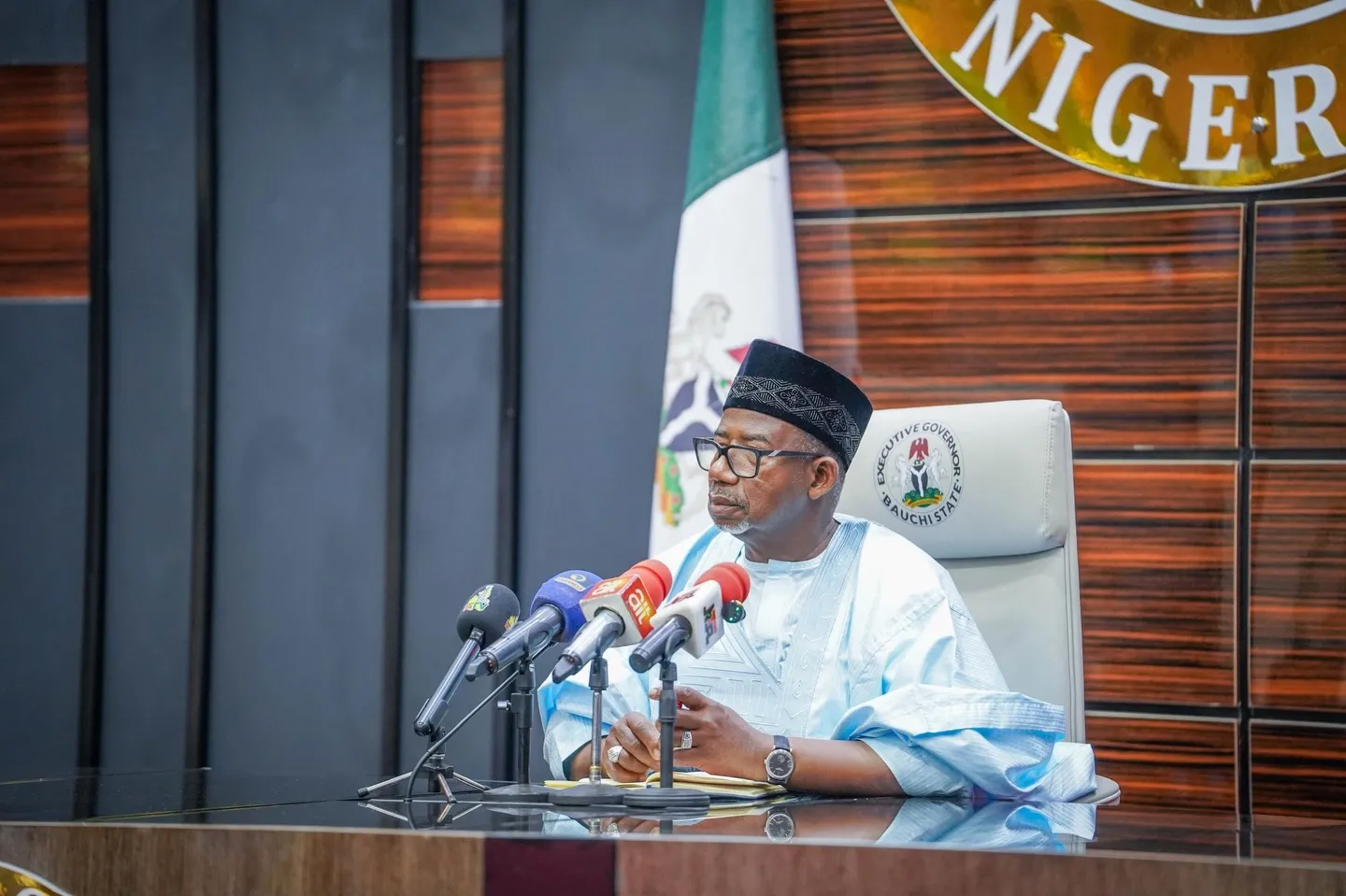
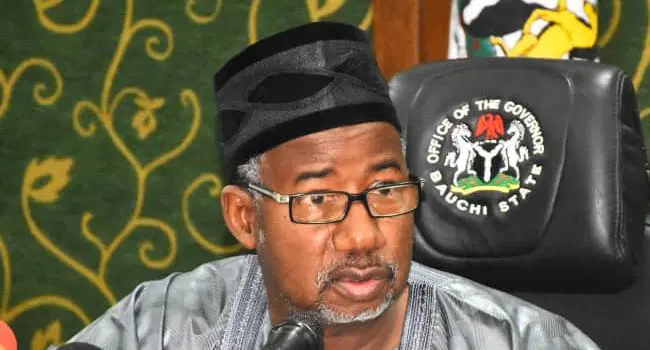
Bauchi APC split over Bala Mohammed defection move 2027 political realignment
In Nigerian politics, defection is rarely just a change of party card. It is often a struggle over structure, influence, succession, and survival. That is why the fresh crack within the All Progressives Congress in Bauchi State over the possible entry of Governor Bala Mohammed is more than a routine quarrel. It is a window into the tense repositioning already underway ahead of 2027.
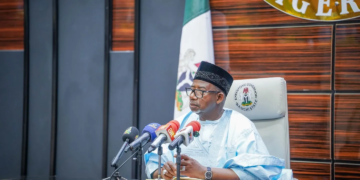
The Bauchi APC split over Bala Mohammed defection move 2027 political realignment has exposed fault lines within the state chapter of the ruling party, with leaders sharply divided over the governor’s reported entry talks and what such a move could mean for existing stakeholders, local structures, and the future balance of power in the state.
The dispute came into the open at a caucus meeting in Abuja on Wednesday, where party leaders weighed the political consequences of admitting Bala Mohammed into the APC. According to current reports, the meeting did not produce a consensus; instead, it underlined mistrust, competing interests, and a growing fear among local party leaders that a major decision could be taken over their heads.
To contain the disagreement, the Bauchi APC caucus agreed to set up a high-powered committee. The panel, according to Acting Secretary Dabo Ismail, is expected to articulate the caucus position, define conditions for any admission of the governor, engage critical actors, and provide updates to members as talks evolve.
That committee is not a routine administrative move. It is, in truth, a political buffer — an attempt to prevent the party from splintering under the weight of a potentially explosive realignment. When a ruling party in a key northern state creates a special structure to manage a single possible defection, it is a sign that the stakes are far higher than public statements may suggest, Bauchi APC split over Bala Mohammed defection move 2027 political realignment.
At the heart of the controversy is a simple but dangerous question: if Bala Mohammed enters the APC, on whose terms will he come? Existing party leaders in Bauchi appear willing to leave the door open, but they are unwilling to surrender the keys. Dabo Ismail said the governor was not being shut out, but insisted that the process must reflect internal democracy and that state stakeholders must not be sidelined.
That position is understandable. For party men who have built structures, survived opposition cycles, funded mobilization, and defended the platform in difficult seasons, the sudden arrival of a sitting governor is not just an opportunity. It is also a threat. It can redraw loyalties overnight, reorder influence, and reduce long-standing loyalists to spectators in their own house.
The chairman of the Bauchi APC caucus and senator representing Bauchi North, Sama’ila Dahuwa, gave voice to that anxiety. Reports quote him and the caucus as complaining about inadequate consultation by the national leadership, warning that excluding state stakeholders from discussions of such magnitude undermines inclusiveness and internal democracy.
That complaint is not trivial. In Nigerian party politics, consultation is currency. Once leaders begin to suspect that Abuja has already decided a matter before speaking to the state chapter, resentment hardens quickly. The real crisis, therefore, may not simply be whether Bala Mohammed joins the APC, but whether the APC national leadership can manage the process without humiliating those already on the ground.
https://ogelenews.ng/bauchi-apc-divided-over-bala-mohammed-defection-tal…
The Bauchi APC split over Bala Mohammed defection move 2027 political realignment must also be read against the governor’s own recent political signals. Just days earlier, Bala Mohammed had publicly indicated that the African Democratic Congress appeared to be his preferred destination as consultations over a possible exit from the PDP continued. He made that remark while hosting an ADC delegation led by former SGF Babachir Lawal in Bauchi.
That disclosure is crucial. It means the APC crisis is unfolding in the shadow of a broader contest for Bala Mohammed’s political future. He is not merely choosing whether to leave the PDP; rival platforms appear to be calculating whether securing him would strengthen their own 2027 prospects. In other words, the governor is not the only actor shopping for advantage — the parties are also bidding for relevance, Bauchi APC split over Bala Mohammed defection move 2027 political realignment.
Indeed, the Bauchi PDP itself has already constituted an exit committee to review its future and consider options should the governor’s camp move out of the party. The committee, Punch reported, is chaired by Deputy Governor Auwal Jatau and includes representatives from party and government structures, an indication that the PDP is treating the matter as a serious strategic turning point rather than idle speculation, Bauchi APC split over Bala Mohammed defection move 2027 political realignment.
This is why the Bauchi APC split over Bala Mohammed defection move 2027 political realignment is not an isolated story. It is part of a wider national pattern: parties are no longer waiting for the formal election season before repositioning. The old map is being redrawn now, through meetings, defections, back-channel consultations, and committees designed to test which alliances can hold.
Another important layer to the story is the meeting that reportedly took place at the Bauchi Government House involving APC National Chairman Nentawe Yilwatda and Kano State Governor Abba Yusuf. That meeting intensified speculation that the APC may be exploring a route to bring Bala Mohammed into its fold, despite his earlier signal toward the ADC, Bauchi APC split over Bala Mohammed defection move 2027 political realignment.
That single detail changes the temperature of the story. It suggests that what is happening is not merely local restlessness, but an active chess game with national implications. If the APC national leadership is truly weighing the admission of a sitting PDP governor while local APC leaders still feel uninformed, then the split in Bauchi may only be the first sign of a deeper rupture between grassroots structure and central strategy.
The Bauchi APC split over Bala Mohammed defection move 2027 political realignment also raises a classic question in opposition-to-ruling-party transitions: does a party grow stronger by absorbing a powerful outsider, or weaker by alienating its old loyalists? History offers examples of both. A governor may bring incumbency weight, local networks, and electoral value. But he may also trigger bitterness among those who feel they paid the price of party-building only to be displaced by a late entrant.
For the APC in Bauchi, the answer will depend on process. If the party negotiates openly, respects local structures, and builds a workable formula for coexistence, the governor’s entry could broaden its influence. But if the move is imposed carelessly, the party may discover too late that every major defection creates not one camp, but several wounded camps, Bauchi APC split over Bala Mohammed defection move 2027 political realignment.
That is why the committee set up by the caucus matters. Premium Times reports that it was tasked with outlining demands and conditions to the national leadership, engaging major stakeholders, and ensuring an inclusive process if the governor’s discussions advance.
In veteran political reporting, one learns to pay less attention to polite public phrases like “welcome” and more attention to the structures quietly built behind them. A politician may be welcomed in public and resisted in private. A party may praise unity while preparing for internal war. In Bauchi today, the language of inclusion is already competing with the instinct of self-preservation,Bauchi APC split over Bala Mohammed defection move 2027 political realignment.
The Bauchi APC split over Bala Mohammed defection move 2027 political realignment is therefore a story about leverage. Bala Mohammed is testing his options. APC leaders in Bauchi are trying to protect their relevance. The national leadership is likely measuring electoral gain against internal backlash. And the PDP, sensing danger, has started preparing its own exit architecture.
In the final analysis, this is not merely about one governor crossing from one party to another. It is about the deeper instability of party loyalty in Nigeria and the fierce struggle to control the architecture of 2027 before the campaign drums begin in full. Bauchi is simply the latest theatre where that struggle has become impossible to hide.
If handled with tact, the APC may yet convert a moment of tension into a political expansion. If mishandled, the same move could fracture trust inside the party and create a conflict more damaging than the defection it seeks to gain. That is the real lesson from Bauchi: in politics, admission is easy; integration is the harder art.
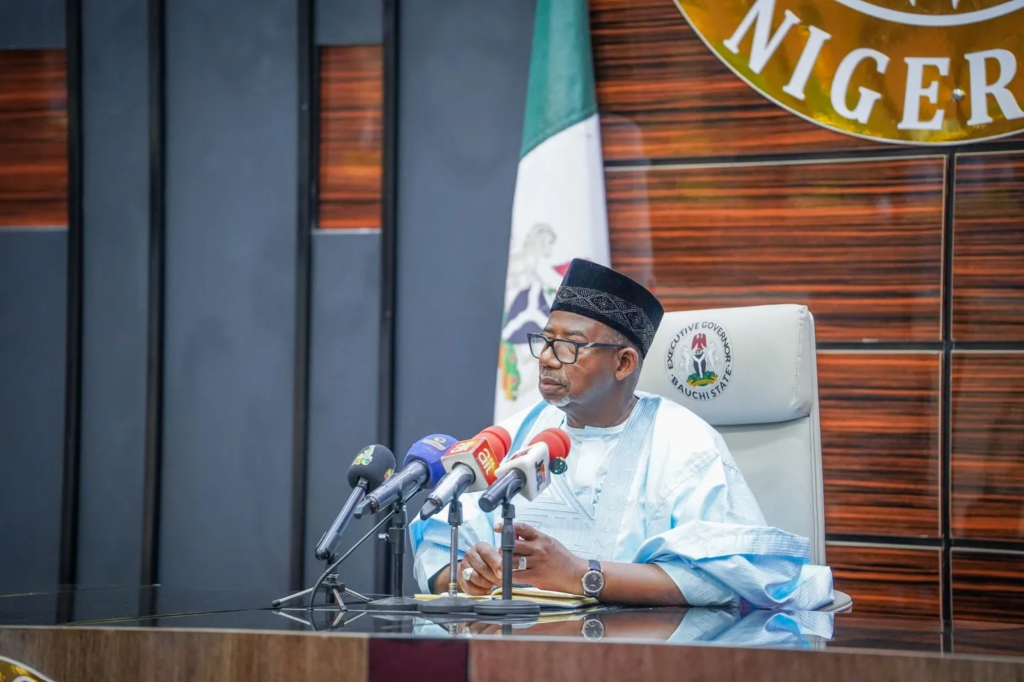
Bauchi APC split over Bala Mohammed defection move 2027 political realignment