














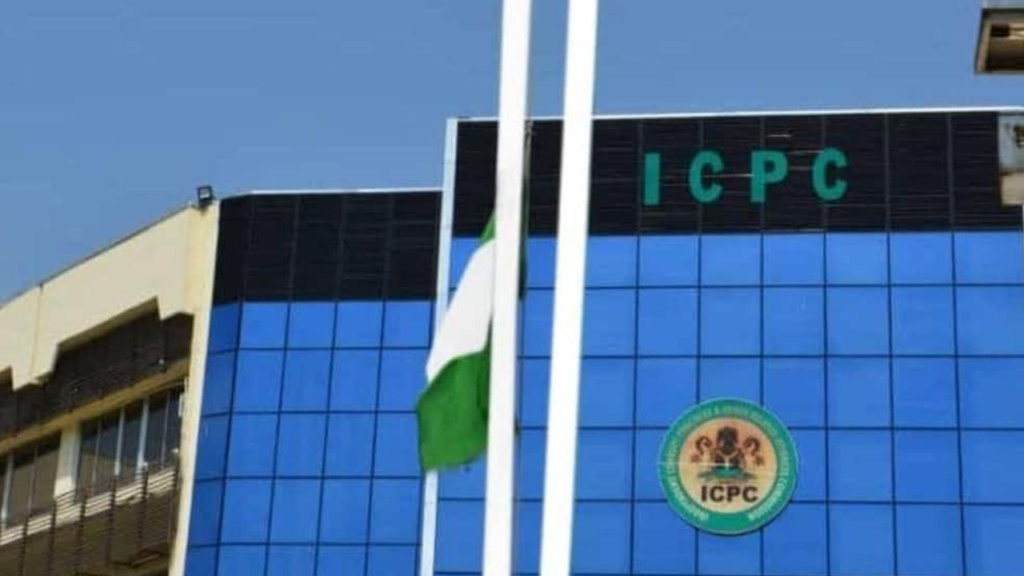
Court declines to stop ICPC’s ₦350m contract deal probe
Court declines to stop ICPC’s ₦350m contract deal probe after the Federal High Court in Abuja ruled that Nigeria’s anti-corruption agency has the statutory authority to investigate allegations linked to a controversial contract transaction allegedly involving about ₦350 million.
The ruling, delivered by Justice J.K. Omotosho, dismissed a suit filed by businessman Paul Afagase Johnson, who had sought a perpetual injunction to restrain the Independent Corrupt Practices and Other Related Offences Commission (ICPC) from inviting or investigating him in connection with the disputed contract arrangement. 
At the heart of the case was a disagreement over whether the matter was purely a civil contractual dispute or a potential criminal matter involving corruption and abuse of public resources. The court ultimately ruled that the ICPC must be allowed to carry out its investigative duties without interference.
The judgment therefore confirmed the principle that Court declines to stop ICPC’s ₦350m contract deal probe because the anti-graft agency possesses statutory powers to examine allegations involving public institutions and suspected corruption.
Background to the dispute
The legal battle began when Afagase approached the court seeking to stop the ICPC from inviting him for questioning regarding a contract deal allegedly worth ₦350 million.
According to court filings, the businessman argued that the matter involved a contractual disagreement between himself, Richard Okozi, and Rokozi Investment Limited, insisting that the issue should be resolved through civil litigation rather than criminal investigation.
He told the court that the ICPC’s invitation constituted harassment, intimidation, and threats of arrest, and that the agency was allegedly being used as a debt recovery tool in what he described as a private business dispute. 
The plaintiff also claimed that he had earlier interacted with other law enforcement bodies, including the Nigeria Police Force and the Economic and Financial Crimes Commission (EFCC), and had been cleared of wrongdoing.
On that basis, he asked the court to issue an order preventing the ICPC from continuing the investigation and demanded ₦500 million in damages for alleged violation of his fundamental rights. Court declines to stop ICPC’s ₦350m contract deal probe
But the court rejected those arguments.
https://ogelenews.ng/court-declines-to-stop-icpcs-₦350m-contract-deal-pr…
Court affirms ICPC’s investigative powers
Delivering judgment, Justice Omotosho held that the court could not restrain a law enforcement agency from carrying out its statutory duties where allegations of corruption had been raised.
The judge stressed that investigative agencies must be allowed to examine petitions and determine whether criminal wrongdoing has occurred.
In the court’s words, the judiciary should not become a refuge for individuals attempting to evade lawful investigation.
That principle formed the legal foundation for the ruling that Court declines to stop ICPC’s ₦350m contract deal probe, allowing the anti-corruption body to proceed with its inquiry.
Justice Omotosho also noted that the contract arrangement at the centre of the dispute allegedly involved government Ministries, Departments and Agencies (MDAs), placing the matter squarely within the investigative jurisdiction of the ICPC.
The judge therefore concluded that the anti-graft agency had a legitimate mandate to examine the allegations.
Lack of evidence supporting plaintiff’s claims
Another key issue raised during the proceedings was Afagase’s claim that he had already been cleared by the police and the EFCC.
However, the court ruled that no convincing evidence was presented to support that assertion.
Justice Omotosho explained that the documents before the court only showed that the businessman had been invited by law enforcement agencies, not that the investigations had been completed or that he had been formally cleared.
Because of this, the court held that the argument could not justify stopping the ICPC investigation.
Consequently, Court declines to stop ICPC’s ₦350m contract deal probe, reaffirming that the commission has the legal authority to examine corruption-related petitions.
Origin of the corruption petition
The ICPC revealed that the investigation originated from a petition alleging that about ₦350 million was paid in an attempt to secure a government contract intended for certain public institutions.
According to the anti-corruption agency, the dispute arose after the contract allegedly failed to materialise.
The aggrieved contractor reportedly filed a complaint with the Department of State Services (DSS), which subsequently referred the matter to the ICPC for further investigation.
This sequence of events explains why the commission became involved in the case in the first place.
The ICPC spokesperson stated that the court’s ruling validated the commission’s legal authority to investigate corruption-related allegations involving government projects and public institutions.
Broader implications for Nigeria’s anti-corruption fight
The ruling carries broader implications for Nigeria’s anti-corruption architecture.
Nigeria operates several anti-graft agencies, including the ICPC and EFCC, tasked with investigating corruption, financial crimes, and abuse of public office.
One of the recurring legal strategies used by suspects in high-profile investigations is to seek court injunctions preventing law enforcement agencies from proceeding with investigations.
However, courts have increasingly emphasised that investigative bodies must be allowed to perform their statutory functions.
In this context, Court declines to stop ICPC’s ₦350m contract deal probe reinforces the principle that anti-corruption investigations cannot be halted simply because a suspect claims the dispute is civil.
Legal analysts say the decision aligns with Nigeria’s broader efforts to strengthen institutional independence in corruption investigations.
What happens next
With the court rejecting the application, the ICPC is now free to continue its investigation into the alleged contract transaction.
The businessman may still honour the commission’s invitation and provide explanations regarding the allegations.
If the investigation reveals evidence of criminal conduct, the ICPC could proceed with prosecution.
If no wrongdoing is found, the investigation may be closed.
For now, the ruling sends a clear message: Court declines to stop ICPC’s ₦350m contract deal probe, confirming that investigative agencies must be allowed to perform their duties without judicial interference unless clear abuse of power is proven.
https://punchng.com/court-declines-to-stop-icpcs-%E2%82%A6350m-contract-deal-probe