















Diezani lavished over ₦4bn in London luxury store
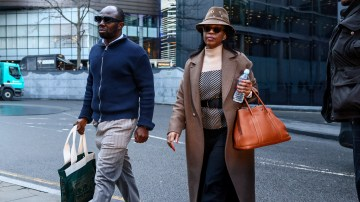
A United Kingdom prosecutor has told a London court that former Nigerian Minister of Petroleum Resources, Diezani Alison-Madueke, allegedly spent more than ₦4 billion in a single luxury department store in London, using funds prosecutors say were linked to corruption during her years in public office.
The allegation forms part of an ongoing asset recovery and forfeiture case being pursued by British authorities, reinforcing long-standing claims that Diezani Alison-Madueke used proceeds of corruption to finance an extravagant lifestyle abroad while Nigeria grappled with economic hardship and declining oil revenues.
What UK Prosecutors Told the Court
During proceedings at a UK court this week, prosecutors detailed what they described as an extraordinary pattern of spending by Diezani Alison-Madueke, centering on luxury purchases made at Harrods, London’s world-famous high-end department store.
According to the prosecution, financial records show that Diezani Alison-Madueke allegedly lavished over ₦4bn in London luxury store purchases, including designer clothing, handbags, jewelry, and bespoke items, over a period spanning several years.
UK authorities argue that the scale and frequency of the spending could not be justified by legitimate income, and instead point to funds allegedly siphoned from Nigeria’s oil sector during her tenure as petroleum minister.
https://ogelenews.ng/diezani-4bn-london-luxury-store
Why the Case Matters
The allegation that Diezani lavished over ₦4bn in London luxury store spending is not just about personal excess. It sits at the heart of a broader international effort to trace, seize, and repatriate assets believed to have been looted from Nigeria.
British prosecutors told the court that the case illustrates how public funds allegedly meant for national development were diverted into private consumption abroad, highlighting the global nature of corruption and the role of financial centers in facilitating illicit flows.
For Nigeria, the case remains symbolic of a period when oil revenues were vast, oversight was weak, and accountability mechanisms struggled to keep pace with the scale of alleged abuse.
Background: Diezani’s Years in Power
Diezani Alison-Madueke served as Nigeria’s Minister of Petroleum Resources from 2010 to 2015 and later became President of OPEC. During that period, Nigeria earned hundreds of billions of dollars from crude oil sales.
However, her time in office was also marked by repeated allegations of corruption, opaque oil deals, and questionable financial transactions. Nigerian anti-corruption agencies, including the EFCC, later accused her of orchestrating complex schemes to divert public funds through shell companies and foreign accounts.
UK prosecutors now say the evidence presented in court strengthens claims that Diezani lavished over ₦4bn in London luxury store shopping sprees, funded by proceeds traced to oil-related transactions.
Luxury Spending Under the Microscope
Court filings reportedly include detailed transaction logs, receipts, and witness testimony showing repeated high-value purchases at luxury outlets. Prosecutors said Diezani Alison-Madueke was treated as a “VIP client,” with store staff allegedly delivering goods directly to her residence and closing sections of the store for private viewings.
The prosecution emphasized that such spending patterns were inconsistent with legitimate earnings and reflected what they described as “systematic laundering of corrupt proceeds through retail luxury channels.”
The claim that Diezani lavished over ₦4bn in London luxury store purchases has drawn renewed attention to how luxury retail has been used globally as a vehicle for money laundering.
Diezani’s Response and Legal Position
Diezani Alison-Madueke has consistently denied all allegations of wrongdoing. In previous statements through her legal team, she has argued that the cases against her are politically motivated and that her assets were acquired lawfully.
Her lawyers maintain that the UK proceedings are civil in nature and do not amount to a criminal conviction. They have also challenged the admissibility and interpretation of financial records presented by prosecutors.
Despite these defenses, UK authorities say the evidence supports forfeiture under proceeds-of-crime laws, even without a criminal trial.
Nigeria’s Asset Recovery Push
The UK case comes as Nigeria continues to pursue the recovery of assets linked to Diezani Alison-Madueke across multiple jurisdictions, including the United States and Europe.
Nigerian officials have repeatedly said recovered funds would be channeled into infrastructure, healthcare, and social programmes. Some assets linked to Diezani have already been repatriated in previous settlements.
The latest revelation that Diezani lavished over ₦4bn in London luxury store spending has reignited public debate at home, with many Nigerians demanding faster and more transparent recovery of stolen wealth.
Public Reaction and Broader Implications
Reaction across Nigeria has been sharp. Civil society groups say the case underscores the human cost of corruption, pointing out that billions allegedly spent on luxury goods abroad could have funded schools, hospitals, and roads.
Anti-corruption advocates argue that international cooperation, such as the UK case, is critical to dismantling the networks that enable large-scale looting of public resources.
Analysts also note that the case sends a signal to serving and future public officials that foreign safe havens are increasingly unsafe for illicit wealth.
What Happens Next
The UK court is expected to continue hearing arguments on asset forfeiture, with rulings that could determine whether properties, cash, and luxury items linked to Diezani Alison-Madueke will be permanently seized.
For Nigeria, the case remains a reminder of the long shadow cast by corruption in the oil sector and the slow, complex process of recovering stolen assets.
As proceedings continue, one point remains central: the allegation that Diezani lavished over ₦4bn in London luxury store purchases has once again placed Nigeria’s corruption battles under an international spotlight, with accountability, restitution, and justice still unfolding.