

















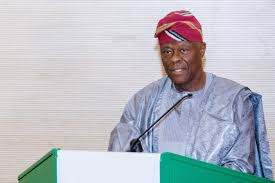
Edun urges export-led growth to drive economy
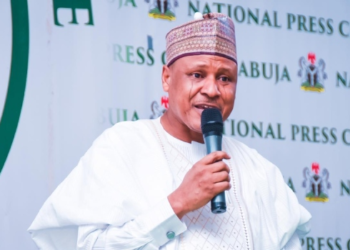
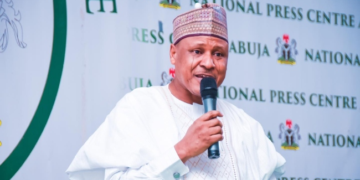
Nigeria’s search for a more durable path to economic growth took centre stage this week as the Minister of Finance and Coordinating Minister of the Economy, Wale Edun, called for a stronger export-driven strategy to power the country’s next phase of expansion. Speaking at the 2026 Nigeria Business Summit organised by Stanbic IBTC, Edun said Nigeria must reposition itself as a leading export economy if it hopes to diversify foreign exchange earnings and deliver more inclusive growth.
The message was direct and timely. For months, government officials have argued that the worst of Nigeria’s recent macroeconomic instability is easing. But stability alone does not create enough jobs, lower poverty at scale, or produce the kind of broad-based recovery that households can actually feel. That is the real meaning behind the statement that Edun urges export-led growth to drive economy. It is not simply a line from a conference speech. It is a signal that Abuja wants the next chapter of economic policy to lean more heavily on trade, production and market access.
The summit itself was designed around that very question. Stanbic IBTC describes the Nigeria Business Summit as a two-day conference focused on growth, scale and cross-sector collaboration, with emphasis on leveraging emerging sectors, driving intra-African trade and contributing meaningfully to SME development in Nigeria. In that setting, Edun’s argument fitted neatly into a broader conversation about how businesses and policymakers can turn stability into measurable expansion.
At the heart of his remarks was a blunt admission. According to reports from the event, Edun said Nigeria’s GDP growth has improved to about 4 per cent, but that level is still below what is needed to move millions of Nigerians out of poverty. He said the country’s strategy is now shifting from stabilisation to growth acceleration, with trade expansion at the centre of that transition. That is what gives the phrase Edun urges export-led growth to drive economy its importance. It points to a deliberate policy direction, not just a hopeful slogan.
There is clear logic behind that position. Nigeria has long depended too heavily on crude oil receipts for foreign exchange and fiscal breathing space. That dependence leaves the economy vulnerable whenever global oil prices wobble, production slips, or external conditions tighten. An export-led model, especially one built around stronger non-oil exports, gives the country a chance to widen its earnings base. It also aligns with the push for more regional and global trade participation. Edun put it plainly at the summit: increased participation in regional and global trade will be critical to diversifying foreign exchange earnings and driving inclusive growth.
Still, speeches do not move cargo. For Edun urges export-led growth to drive economy to become more than a conference theme, Nigeria will need to fix the everyday barriers that weaken trade competitiveness. That means port efficiency, customs processing, logistics costs, access to trade finance, and the difficult terrain facing small and medium-sized businesses trying to reach export markets. It also means building more confidence in sectors outside oil so that exporters can plan, invest and scale with less uncertainty. This is where the gap often lies between policy aspiration and business reality. The direction may be right, but execution will decide whether the rhetoric survives contact with the real economy. That is an inference based on the summit’s focus on trade and SMEs, and on the government’s stated shift toward productive-sector growth.
https://ogelenews.ng/edun-urges-export-led-growth-to-drive-economy-as-ni…
Edun also pointed to what he described as signs of a more resilient economy. Reports from the summit said he highlighted improved foreign reserves, rising non-oil revenues and renewed investor confidence as evidence that reforms are beginning to take hold. Those are the indicators government wants businesses to see as proof that Nigeria is becoming more stable and more investable. In that sense, Edun urges export-led growth to drive economy also functions as an invitation to the private sector: produce more, trade more, and position for wider markets while the reform window is open.
That private-sector angle matters. The summit discussions were not only about macroeconomics. They were also about sustainable business practices, global trade opportunities and the role of SMEs in national growth. For a country with a huge informal sector and a deep reservoir of entrepreneurial activity, export-led growth cannot be built on large corporations alone. It will require smaller businesses to move up the value chain, improve standards, access finance and plug into regional commerce more effectively. Stanbic IBTC’s own framing of the summit reflects that reality.
For ordinary Nigerians, this may sound distant, but it should not. The success or failure of an export-led growth strategy will affect jobs, prices, business survival and the wider availability of foreign exchange. If Nigeria earns more from a broader export base, pressure can ease on the naira, more sectors can expand, and businesses may find it easier to operate and hire. If the strategy remains trapped in speeches and summit halls, then the economy risks returning to its old pattern: modest headline growth, weak household outcomes and persistent dependence on oil. That is why Edun urges export-led growth to drive economy is a story worth reading beyond the business pages.
The stronger reading of Edun’s message is this: Nigeria’s economic managers believe the era of pure crisis control should give way to a phase of productive expansion. But they also know that growth has to be faster, broader and more rooted in real output if it is to reduce poverty meaningfully. That is the tension sitting underneath the headline. Edun urges export-led growth to drive economy because the country needs more than recovery language. It needs a growth model that can endure external shocks and create value beyond crude oil.
For now, the minister has set out the direction. The challenge is whether Nigeria’s policy machinery, trade systems and business environment can move with enough speed to make that direction credible. Until then, the call for export-led growth remains both a strategy and a test.