















FG gives Chinese contractor seven-day ultimatum over poor road work
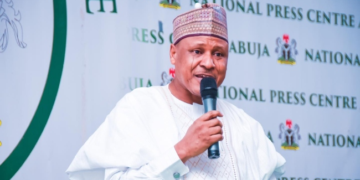
The Federal Government has issued a stern seven-day ultimatum to a major Chinese construction firm over poor road work on critical federal highways, underscoring a new era of contractor accountability in Nigeria’s infrastructure sector. The ultimatum, issued by the Minister of Works, Senator David Umahi, is aimed at forcing immediate corrective action on defective sections of key road projects handled by China Harbour Engineering Company (CHEC) and its sister firm, China Harbour Operation and Maintenance Company (CHOMC). 
The government’s ultimatum — keyed to a mounting public outcry and environmental concerns — marks a significant escalation in the Ministry’s efforts to enforce quality standards, protect public investments, and safeguard the health and safety of communities along major federal highways. Senior officials described it as part of an overarching push to ensure that contractors deliver durable, safe and value-driven infrastructure. 
In a high-level meeting convened at the Ministry of Works headquarters in Abuja, Umahi chaired discussions with top ministry officials and representatives of the two Chinese firms on Thursday, where complaints over substandard execution, slow mobilisation and environmental hazards were aired. The meeting specifically focused on concerns tied to the Makurdi–9th Mile–Enugu Road project and the Mararaba–Keffi–Akwanga–Lafia–Makurdi Dual Carriageway, where residents have formally petitioned the government over excessive construction dust and other quality lapses. 
At the end of the meeting, the Federal Government gave Chinese contractor seven-day ultimatum over poor road work, instructing them to deploy soil stabilisation measures, dust-control systems, and other approved practices to address environmental and public health risks within the next seven days. If the contractors fail to act within the deadline, the minister warned, the government will suspend the affected projects or take other firm contractual actions. 
Urgency Driven by Public Complaints and Health Risks
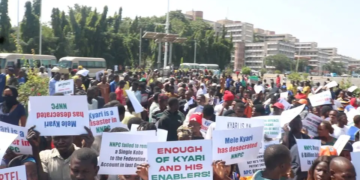
Residents along the Makurdi–9th Mile–Enugu corridor had complained that heavy construction activity was generating excessive dust that poses health risks, particularly to school children and the elderly. The petition attracted widespread attention and forced the ministry to take prompt action. 
In response, Umahi directed that the Federal Government give Chinese contractor seven-day ultimatum over poor road work to implement dust-control measures and soil stabilisation across all active construction sites. He mandated that dust suppression techniques be immediately deployed to mitigate environmental hazards and protect community health. 
The ministry’s directive also emphasised that contractors must ensure proper rehabilitation and maintenance of all sections where substandard work was identified. That includes milling and re-asphalting defective pavement, repairing failed bridge expansion joints, clearing blocked drainage channels, and re-erecting damaged road furniture such as signage and safety installations. 
https://ogelenews.ng/chinese-contractor-7day-ultimatum-road-work

Scope of Projects Under Scrutiny
The construction corridors in question are among Nigeria’s most strategic road links. The Mararaba–Keffi–Akwanga–Lafia–Makurdi Dual Carriageway serves as a principal artery linking the Federal Capital Territory to Nasarawa and Benue states, and further connects to the South-East and parts of the North-East. The route is critical for trade, mobility and national integration. 
The Makurdi–9th Mile–Enugu Road project, a vital link between Benue and Enugu states, also forms part of a national infrastructure matrix aimed at improving transport efficiency and safety across the central and eastern regions. 
Despite substantial mobilisation funds disbursed to the firms, Umahi expressed concern that critical equipment had not been deployed fully and that only minimal site clearance work was visible in some areas. As a result, the minister warned that failure to comply with the seven-day ultimatum would trigger strict contractual consequences, including suspension, withholding of certification, and recovery of public funds already paid. 
Firm Government Stance on Accountability
Umahi’s statement reflects a broader government policy that emphasises accountability, quality delivery and value for taxpayers’ money. He noted that the present administration under President Bola Tinubu would no longer tolerate poor execution, delays and disregard for contractual standards on federal projects. 
The minister stressed that the government’s focus on infrastructure remains unstoppable, with sustained effort expected over the next five years to transform Nigeria’s federal road network. While acknowledging the inherited backlog of thousands of ongoing projects valued at trillions of naira, Umahi said the government was committed to reshaping expectations about public works by demanding quality outcomes and contractor responsibility. 
The ultimatum underscores the government’s determination to hold contractors accountable, a message that could ripple across other sectors where substandard project execution has cost Nigeria valuable time and resources. Observers say this signals a shift toward stricter enforcement and more assertive monitoring of publicly funded infrastructure. 
Contractor Response and Next Steps
Representatives of CHEC and CHOMC, speaking through the Acting Executive Director (Operations) of CHOMC, Stephen Lee, pledged that industry-standard anti-dust measures would be deployed across all sites. They also assured ministry officials of full mobilisation on other strategic corridors, including Lagos’s 7th Axial Road, and committed to rehabilitating defective sections of the Makurdi–Lafia corridor. 
Despite these assurances, the clock is ticking. With the Federal Government giving Chinese contractor seven-day ultimatum over poor road work, all eyes will be on the firms to deliver on the commitments within the stipulated period. Failure to do so could see the government escalate sanctions, suspend contracts, or even reassign projects to new contractors. 
Wider Implications for Infrastructure Delivery
The ultimatum also raises broader questions about contractor performance in Nigeria’s public works sector. While many projects have suffered delays due to funding gaps and logistical hurdles, the current government’s focus on enforcement of quality standards signals a tougher stance than in the past. Analysts say this could lead to improved build quality, faster turnaround, and stronger confidence in public infrastructure — if followed by consistent monitoring and enforcement. 
For now, communities affected by the stretch of federal roads remain hopeful that the Federal Government giving Chinese contractor seven-day ultimatum over poor road work will result in visible improvements — cleaner air, safer road surfaces, effective drainage, and rehabilitated sections free of defects. 
Whether the ultimatum yields immediate change remains to be seen, but the government’s firmer language sends a clear message: poor workmanship and public complaints will no longer be met with silence or delay under the Renewed Hope administration. 
https://punchng.com/fg-gives-chinese-contractor-seven-day-ultimatum-over-poor-road-work

FG gives Chinese contractor seven-day ultimatum over poor road work