
















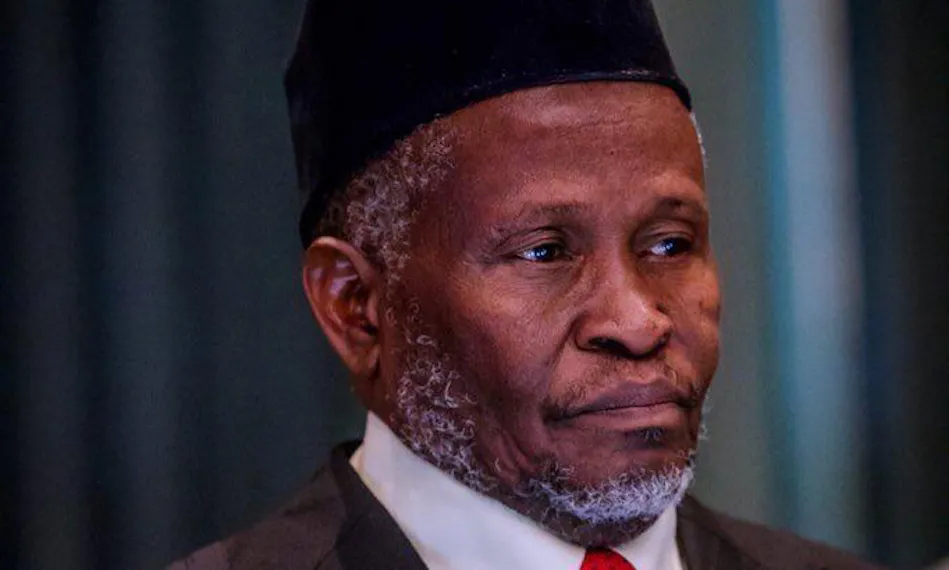
Abuja — The death of Ibrahim Tanko Muhammad, former Chief Justice of Nigeria, was confirmed on Tuesday…, has died while receiving medical treatment in Saudi Arabia, family and professional sources confirmed on Tuesday, December 16, 2025. Ibrahim Tanko Muhammad death was confirmed on Tuesday as the former Chief Justice of Nigeria died while receiving medical treatment in Saudi Arabia.
A close source disclosed that the retired jurist passed away in the early hours of Tuesday at a hospital in Saudi Arabia, where he had been undergoing medical care. Confirmation later came through an official condolence message issued by the Nigerian Association of Muslim Law Students (NAMLAS) in Abuja.
In its statement, NAMLAS described the death of Justice Ibrahim Tanko Muhammad as a profound loss to the Nigerian judiciary, the legal profession, and the Muslim community. The association offered prayers for the repose of his soul, noting his years of service, discipline, and commitment to justice.
Legal Career and Judicial Service
Justice Ibrahim Tanko Muhammad was born on December 31, 1953, in Doguwa, Giade Local Government Area of Bauchi State. He studied law at Ahmadu Bello University, Zaria, and was called to the Nigerian Bar in 1981. He later obtained a Master of Laws (LL.M) and a Doctorate degree in Law.
His judicial career spanned several decades. He was appointed to the Court of Appeal in 1993 and elevated to the Supreme Court of Nigeria in 2006, where he was sworn in as a Justice in January 2007.
In January 2019, Justice Muhammad assumed office as the Chief Justice of Nigeria, following the suspension of his predecessor. He served as head of the judiciary until June 2022, when he resigned on health grounds.
During his tenure, he presided over the judiciary at a time marked by institutional scrutiny, legal reforms, and intense public debate over the independence of the courts. Colleagues often described his leadership style as cautious and restrained, with emphasis on internal stability within the judicial system.
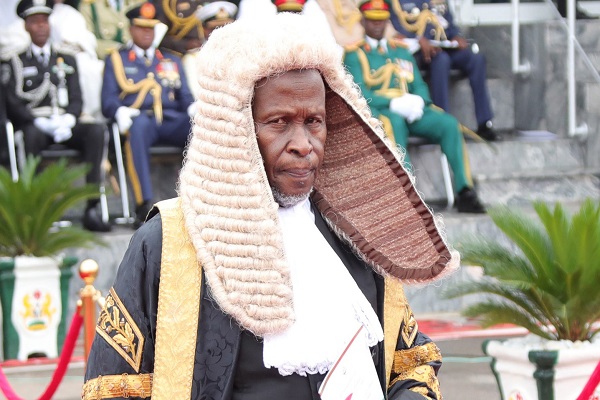
Judicial Legacy and Impact
Justice Ibrahim Tanko Muhammad’s death brings renewed attention to his long and consequential role in Nigeria’s judicial history. Over several decades on the bench, he became known for a restrained judicial philosophy that emphasised procedural discipline, institutional stability, and respect for precedent.
As Chief Justice of Nigeria, Justice Muhammad presided over the judiciary during a period marked by heightened political tension, public scrutiny, and internal reforms. His tenure coincided with complex constitutional disputes, high-profile election petitions, and debates around judicial independence. Colleagues often described his leadership style as cautious and administrative, prioritising continuity within the court system at a time of national uncertainty.
https://ogelenews.ng/today-in-nigeria
Beyond his years as Chief Justice, Justice Muhammad’s influence extended through his work at the Supreme Court, where he contributed to landmark decisions that shaped constitutional interpretation, electoral jurisprudence, and criminal justice practice. He was regarded as a judge who valued consensus and institutional coherence over personal visibility.
Legal practitioners and academics have noted his commitment to mentoring younger members of the bar and bench, particularly through judicial conferences and training initiatives. For many within Nigeria’s legal community, the Ibrahim Tanko Muhammad death represents not only the loss of a former head of the judiciary but the closing of a chapter defined by measured authority and institutional stewardship.
His legacy remains embedded in court decisions, judicial reforms, and the generations of lawyers and judges influenced by his approach to law and public service.
https://ogelenews.ng/category/national-news
Tributes and National Reaction
Following the announcement of his death, tributes poured in from legal practitioners, senior advocates, judicial officers, and religious leaders across the country. Many described Justice Muhammad as a jurist who valued discipline, mentorship, and respect for judicial process.
Several lawyers recalled his role in mentoring younger members of the Bar and his influence on judicial reasoning at the appellate and supreme court levels.
Funeral Arrangements
Details of funeral arrangements have not yet been officially announced. In line with Islamic tradition, burial is expected to take place shortly after death. It remains unclear whether the burial will be held in Saudi Arabia or in Nigeria, pending a decision by his family.
Justice Ibrahim Tanko Muhammad died at the age of 71, bringing to a close a long career in Nigeria’s legal and judicial system. His legacy is expected to endure within courtrooms, law faculties, and legal institutions across the country. The death of Ibrahim Tanko Muhammad marks the close of a significant chapter in Nigeria’s judicial history.