










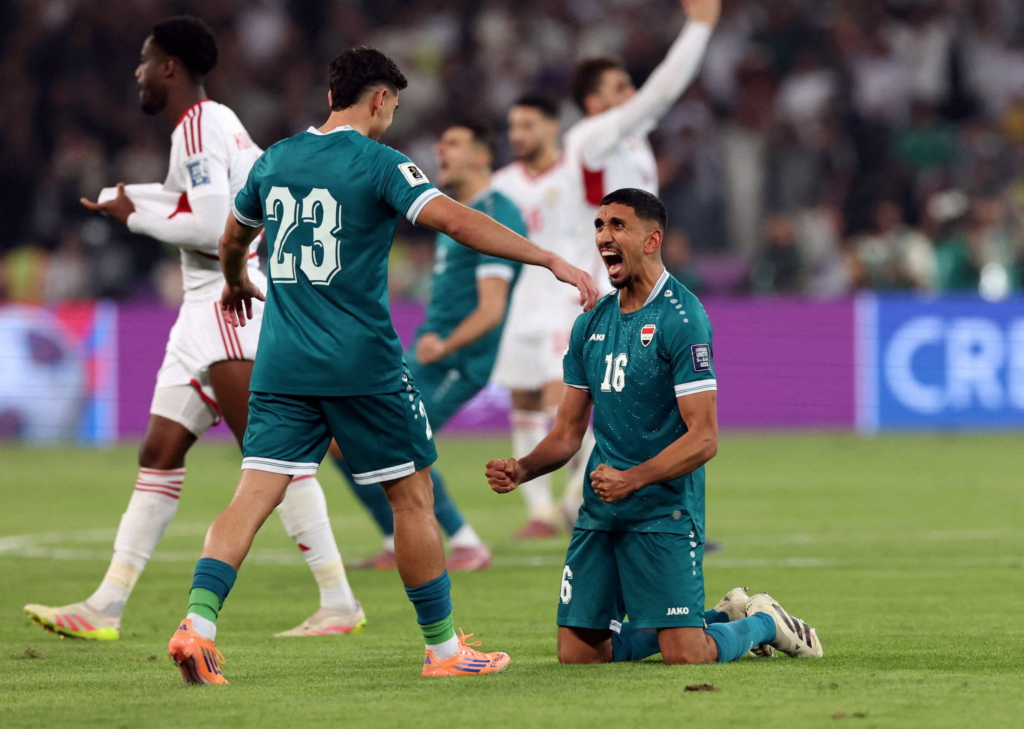
Iraq seeks World Cup play-off delay over regional conflict
Iraq seeks World Cup play-off delay over regional conflict after the country’s football authorities and head coach Graham Arnold warned that war-related travel disruptions could cripple the team’s chances of qualifying for the 2026 FIFA World Cup. With Iraqi airspace shut, embassy operations disrupted, and players scattered, the Lions of Mesopotamia now face the possibility of playing the biggest match in decades without a full squad.
The Iraqi team is scheduled to play on March 31 in Monterrey, Mexico, against the winner of the preliminary intercontinental play-off between Bolivia and Suriname. The winner of Iraq’s game would book a place at the 2026 World Cup, making it one of the most consequential fixtures in the nation’s football history. Reuters said Arnold has appealed to FIFA to postpone the match because Iraq cannot properly prepare under the present conditions.
That is why Iraq seeks World Cup play-off delay over regional conflict is now one of the most serious off-field issues facing the final stretch of World Cup qualification. For Iraq, this is not merely about convenience. It is about whether a national team can fairly contest a qualification decider while half its players are unable to travel and its coaching staff cannot even gather them in one place.
Arnold said the ongoing conflict linked to neighboring Iran has led to the closure of Iraqi airspace until April 1, one day after the scheduled match. Associated Press and Reuters both reported that the disruption has made it impossible for many Iraq-based players to leave the country in time for camp and final preparations.
The coach’s frustration is understandable. He argued that asking Iraq to play such a decisive fixture without its best available squad would undermine the integrity of the competition. According to Reuters, Arnold proposed that FIFA allow the earlier play-off between Bolivia and Suriname to go ahead, then move Iraq’s final qualifier to a later date, possibly closer to the World Cup itself.
The Guardian added another striking detail: FIFA had reportedly suggested that Iraq could travel by road on a 25-hour journey to Turkey before taking a flight onward. Iraq rejected that option, with Arnold saying he would not send players and staff through a route he considered unsafe and unreasonable in the middle of a regional conflict.
That is one reason Iraq seeks World Cup play-off delay over regional conflict has become more than a sports headline. It now sits at the intersection of football governance, player welfare, regional security, and tournament fairness. The request has put FIFA under pressure to show whether it will prioritize scheduling discipline or the realities of an unfolding geopolitical emergency.
There is also the visa problem. Reports say the team’s planned training camp in Houston had to be abandoned, while some players and staff had not secured visas for Mexico and the United States because embassies in the region were closed or inaccessible. Arnold himself was reported stranded in the UAE, adding to the sense of chaos around Iraq’s preparations.
For a team chasing its first World Cup appearance since Mexico 1986, these are not minor obstacles. They are the sort of disruptions that can derail a campaign before the match even begins. Reuters noted that Arnold believes Iraq is just one win away from a return to the global stage, which makes the current uncertainty especially painful for Iraqi fans and officials.
https://ogelenews.ng/iraq-seeks-world-cup-play-off-delay-over-regional-c…
The broader playoff picture makes the story even more compelling. Other intercontinental playoff matches involving New Caledonia, Jamaica, and the Democratic Republic of Congo are still expected to go ahead in Guadalajara, while Iraq’s path remains clouded by war and travel restrictions. That contrast may deepen pressure on FIFA to make a decision quickly.
So when Iraq seeks World Cup play-off delay over regional conflict, the argument is simple: the team wants a fair chance to compete. Iraq is not asking for an advantage on the pitch. It is asking not to be punished for conditions entirely outside football’s control.
There is also an unusual layer of uncertainty involving Iran. The Guardian reported that if Iran were to withdraw from the tournament process because of the war, Iraq could potentially be affected in the reshuffling of qualification pathways, while the UAE could also enter the conversation because Iraq beat them in qualifying. That makes the situation even more fluid and politically sensitive.
At the time of reporting, FIFA had not publicly granted the postponement request. Reuters said Arnold was still awaiting a response, even as time continued to slip away before the scheduled March 31 fixture. That delay in itself is becoming part of the story, because every day lost makes Iraq’s preparation harder.
For now, Iraq seeks World Cup play-off delay over regional conflict remains both a football crisis and a human one. A national side on the brink of history is fighting not only for qualification, but for the basic conditions needed to compete. Whether FIFA agrees or not, this episode has already shown how quickly global sport can be overtaken by real-world conflict.
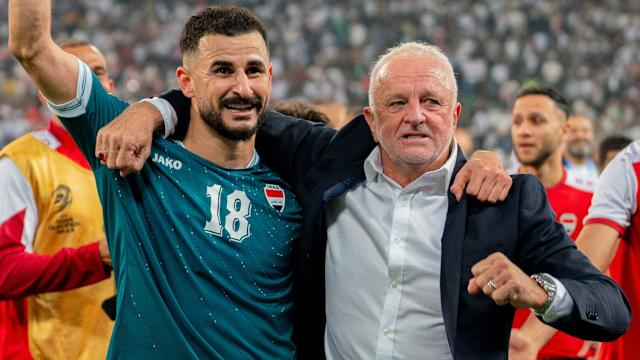
Iraq seeks World Cup play-off delay over regional conflict