














Jigawa CNG centres training
The Jigawa State Government has trained 120 artisans in Compressed Natural Gas (CNG) conversion, maintenance and safety as it moves to establish conversion centres across the state, positioning the programme as part of Nigeria’s wider push toward cheaper alternative fuel options.
The training, held in Dutse, was organised by the Nigerian Content Development and Monitoring Board (NCDMB) in collaboration with Hatfield Global Resources and Safe AutoGas Ltd, and targeted youths and artisans expected to form the workforce for the planned centres.
For Jigawa, the logic is straightforward: if CNG conversion centres are to work, the state needs people who can safely install kits, maintain systems, and reassure motorists that conversion can be done professionally.
That is the core of the Jigawa CNG centres training agenda now taking shape.
What the training covered
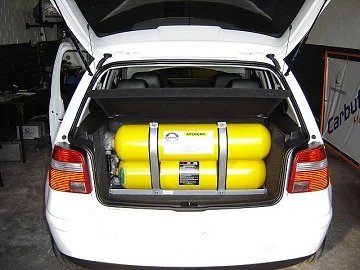
PUNCH reported that the programme focused on practical skills for converting petrol-powered vehicles to CNG-powered vehicles, as well as safety protocols and maintenance procedures.
A representative of the NCDMB, Torunarigha K. Cash, who supervised the exercise, said the training followed the board’s prescribed manuals and was designed to support the national transition to CNG.
According to the report, the three-day practical sessions were hosted at the Manpower Development Institute, Dutse, and included live conversion demonstrations.
Cash said the training was “rigorous” and geared toward empowering Nigerian youths and artisans with the technical competence needed for the CNG transition.
A key highlight was that about 10 vehicles were converted free of charge during the practical sessions, giving trainees hands-on exposure to different vehicle types and conversion steps.
This is one reason the Jigawa CNG centres training matters: it moves beyond classroom talk into actual workshop-level competence.
Why Jigawa is investing in the programme
The training is happening as Jigawa works to create CNG conversion centres that can generate jobs, reduce fuel costs for residents, and encourage energy efficiency.
Hatfield Global Resources’ CEO, Safiya Idris Hadejia, described the programme as the first of its kind in the state, adding that it aligns with the Nigerian Gas Expansion Programme and was designed to equip 120 beneficiaries with conversion skills.
She also said the participants included both male and female trainees, a detail that matters in a sector where women are often underrepresented in technical trades.
The state’s pitch is that trained hands will be absorbed when the conversion centres come on stream.
That’s why the Jigawa CNG centres training is being framed not just as a workshop programme, but as workforce development tied to physical infrastructure.
Where the planned CNG centres will be located
A major detail in the report is location. Hadejia disclosed that the Jigawa State Government is constructing four CNG conversion centres across the state, specifically in Dutse, Hadejia, Kazaure and Gumel Emirates.
She expressed hope that the trainees will get employment opportunities to run the centres once they are completed and inaugurated.
This is where the story gets practical: if those centres are completed and properly staffed, motorists and transport operators can convert without travelling out of state, and the conversion market can begin to localise around trained professionals.
Again, the Jigawa CNG centres training is the human engine behind the planned facilities.
https://ogelenews.ng/jigawa-trains-120-artisans-for-planned-cng-centres
The money trail and earlier commitments
The training effort also fits into a longer line of state action on CNG.
PUNCH recalled that on February 4, 2025, the Jigawa State Government said it invested over ₦132 million in developing a training centre for natural gas conversion in Dutse and other parts of the state.
Earlier still, a separate PUNCH report said the Jigawa Government approved ₦117 million to establish a pilot CNG conversion centre in Dutse, with the approval coming from the Executive Council.
The Commissioner for Information, Youth, Sports and Culture, Sagir Musa, said the move aligned with efforts to reduce hardship linked to fuel subsidy removal.
Those previous decisions help explain why the Jigawa CNG centres training is not a one-off headline. It is part of a wider build-out.
Voices from the trainees
Two beneficiaries featured in the report gave a sense of what this means at street level.
An Okada/Keke rider, Ahmed Musa, said he was grateful for the skill and believed it would help him earn a living.
Another trainee, Fatima Abdullahi, said she hopes to start her own CNG conversion business.
These comments point to the real opportunity: if the conversion centres open and demand grows, trained artisans can become small business owners, not just employees.
That’s a key promise behind the Jigawa CNG centres training programme.
What to watch next
The big test now is execution: completion of the four centres named in the report, proper equipment and safety compliance, and whether trainees are actually absorbed into paid work.
If those steps happen, Jigawa could become a visible northern example of how alternative fuel policy translates into jobs, transport relief, and local technical capacity.
For now, the state’s message is clear: the Jigawa CNG centres training is laying the groundwork for a network of conversion services that can reduce reliance on petrol and cut transport costs for ordinary residents.
http://punchng.com/jigawa-trains-120-artisans-for-planned-cng-centres/
Jigawa CNG centres training