














Katsina deploys over 30MW renewable power
Katsina State has emerged as a leading example of subnational renewable energy deployment in Nigeria, announcing that it has deployed over 30 megawatts (MW) of renewable power in just two and a half years under the administration of Governor Dikko Umar Radda. The disclosure was made by the Governor’s Special Adviser on Power and Energy, Dr. Hafiz Ahmed, in an interview with journalists in Katsina, where he outlined ambitious plans to further expand clean energy infrastructure across the state. 
Dr. Ahmed said the Katsina deploys over 30MW renewable power in two years milestone is part of a comprehensive strategy to tackle long-standing energy poverty and to create sustainable electricity solutions that are both cost-effective and environmentally responsible. According to him, the state’s energy transformation roadmap was developed in partnership with Power Africa and guided by an integrated resource planning and load forecasting exercise that projected the state’s energy needs over the next two decades,Katsina deploys over 30MW renewable power.
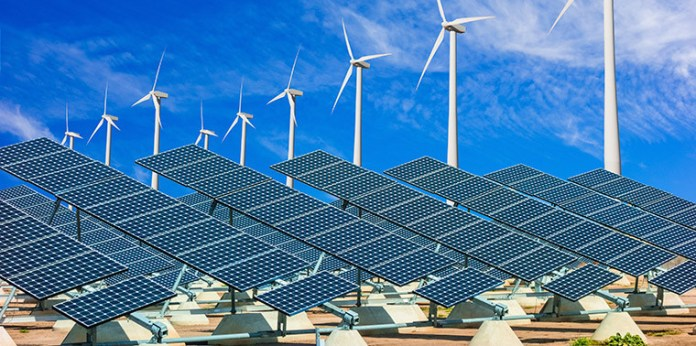
“Our goal is to provide reliable electricity and reduce dependence on grid supply and diesel generators,” Dr. Ahmed said, adding that renewable energy projects in the state are fully aligned with Nigeria’s Energy Transition Plan and the global push towards net-zero emissions by 2060. “What we have deployed so far is 100 percent renewable energy — solar, wind, and other clean technologies — and this has positioned Katsina as a renewable energy leader among subnational governments.” 
From Zero to More Than 30MW in Less Than Three Years
When the current administration took office, Katsina’s recorded power generation was essentially zero. Dr. Ahmed explained that the state embraced renewable energy because traditional grid connections were unreliable and expensive, especially for government facilities that relied heavily on diesel generators. “We started by asking hard questions about where Katsina was in terms of power and where we wanted to be. Out of that came a strategy to deploy renewable energy across key sectors.” 
Key installations under this strategy include solar power systems powering government facilities such as the State Secretariat, Government House, and major hospitals, all of which have transitioned from diesel generators to solar systems, resulting in substantial cost savings. The adviser revealed that Governor Radda approved the procurement of 20.1MW of solar power to supply electricity to 11 critical government facilities that previously accounted for 93 percent of the state’s energy expenses,Katsina deploys over 30MW renewable power.
Dr. Ahmed noted that of the more than 200 state facilities, just 11 accounted for the majority of energy costs, and installing solar systems at these key nodes would significantly cut both operational costs and reliance on unreliable grid power. “Deploying solar to these facilities will reduce spending on diesel, reduce emissions, and guarantee continuous power supply for essential services,” he explained. 
Broad Impact Beyond Government Facilities
The “Katsina deploys over 30MW renewable power in two years” achievement is not limited to government offices. According to the governor’s aide, renewable installations have spread across sectors vital to public wellbeing, including agriculture, healthcare, and education. Plans are underway to equip 361 primary healthcare centres across the state with standalone solar-powered systems to ensure uninterrupted electricity for critical health services,Katsina deploys over 30MW renewable power.
In the healthcare sector, Katsina General Hospital now enjoys around-the-clock solar power, and approvals have been given for similar systems at Kankiya General Hospital, Amadi Rimi Orthopaedic Hospital, and Turai Yar’Adua Maternity Hospital. These installations, Dr. Ahmed said, promise to transform service delivery and reduce operational costs in facilities that have long suffered from erratic grid supply,Katsina deploys over 30MW renewable power.
Education has also benefited from the renewable rollout, with solar systems approved for tertiary institutions and selected boarding schools. The state plans to extend these installations to primary schools to support e-learning and create conducive environments for students and teachers alike. 
https://ogelenews.ng/katsina-deploys-over-30mw-renewable-power-in-two-ye…
Partnerships, Investment and Future Plans
The renewable energy push in Katsina also includes initiatives in partnership with distribution companies. The State Executive Council recently approved the purchase of 200 electricity distribution transformers at a cost of approximately $1.5 million, to be funded jointly with the Kano Electricity Distribution Company (KEDCO). Under the arrangement, Katsina will provide half of the funds, with KEDCO covering the remaining half. This move is expected to enhance the state’s shareholding in the distribution company, where it currently holds 17 percent,Katsina deploys over 30MW renewable power.
Dr. Ahmed also outlined plans for hydropower generation through a partnership with the French Government and Ocean Energy at the Lanjewa Dam, noting that feasibility studies have been completed and approvals are pending. This reflects the administration’s broadened vision for renewable energy beyond solar to include other sustainable sources,Katsina deploys over 30MW renewable power.
Despite the progress, the adviser highlighted vandalism of infrastructure as a major challenge, urging residents to protect public power assets. “These are public investments and public infrastructure,” he said. He also pointed to legislative efforts, noting that the Katsina State Electricity Regulatory Commission Bill has passed the House of Assembly and awaits the governor’s assent to establish stronger regulatory oversight and sanctions for power sector violations.
A Broader Energy Vision for the State
The “Katsina deploys over 30MW renewable power in two years” milestone comes as part of a larger effort to meet the state’s total estimated electricity demand of around 70MW. Dr. Ahmed assured that at the current pace of deployment, the state is well-positioned to achieve that target in the coming years, bringing reliable, clean power to citizens and economic sectors alike,Katsina deploys over 30MW renewable power
His remarks echo wider renewable energy developments in the state, including the revival of the Lambar Rimi Wind Farm and solar hybrid projects that combine wind and solar capacity to boost generation. Katsina’s renewable agenda aligns with Nigeria’s national goals under the Energy Transition Plan and demonstrates how subnational governments can lead clean energy deployment within federated systems. 
For now, the progress in Katsina stands as a testament to the determination of state leadership to overcome persistent power challenges through renewable energy innovation and collaboration — a model that other regions grappling with energy poverty may look to emulate.
https://punchng.com/katsina-deploys-over-30mw-renewable-power-in-two-years-govs-aide