

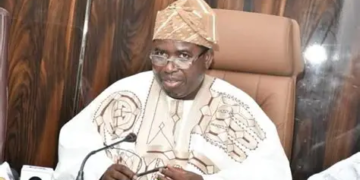














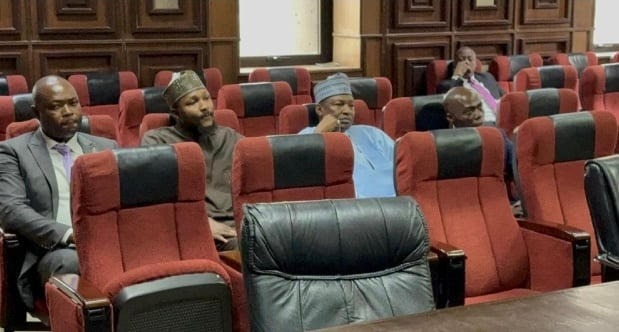
Malami, Son Arraigned in Abuja Over Alleged Terrorism
A Federal High Court in Abuja has commenced proceedings in one of the most high-profile security cases in recent Nigerian history. Former Attorney-General of the Federation and Minister of Justice, Abubakar Malami, SAN, and his son, Abdulaziz Abubakar Malami, were on Tuesday arraigned before Justice Joyce Abdulmalik on a five-count charge that includes alleged terrorism financing and unlawful possession of firearms.
The charges were brought by the Department of State Services (DSS), which accused the former chief law officer of knowingly abetting terrorism financing during his tenure as Attorney-General, and further alleged that both men were found in possession of prohibited weapons and ammunition without valid licences.
The Charges Explained
According to the charge marked FHC/ABJ/CR/63/2026, filed on February 3, 2026, Malami is alleged to have refused to prosecute suspected terrorism financiers whose case files were submitted to his office while he served as AGF. The prosecution contends that this conduct amounted to abetting terrorism financing, contrary to Section 26(2) of the Terrorism (Prevention and Prohibition) Act, 2022.
Counts two through five charge both Malami and his son with unlawful possession of a Sturm Magnum 17-0101 firearm, sixteen live Redstar AAA 5.20 cartridges and twenty-seven expended cartridges at their residence in Gesse Phase II Area, Birnin Kebbi Local Government Area, Kebbi State. These counts are framed as conduct preparatory to committing an act of terrorism and unlawful possession of firearms and ammunition, offences punishable under Section 29 of the Terrorism Act and relevant sections of the Firearms Act, 2004.
Both Malami and his son entered not guilty pleas when the counts were read to them in court.
Court Proceedings and Bail Application
At the hearing, prosecuting counsel Calistus Eze urged the court to remand the defendants in DSS custody and set a date for the commencement of trial. Defence counsel Shuaibu Aruwan, SAN, made an oral application for bail, noting that the former AGF and his son had already spent over two weeks in custody and that one of them was brought to court directly from a hospital.
Justice Abdulmalik, however, ruled that bail cannot be granted on oral application and directed the defence to file a formal written application. She adjourned the matter until February 20, 2026, for bail hearing and the trial’s substantive commencement.
Background to the Terrorism Financing Allegations
https://ogelenews.ng/malami-son-arraigned-abuja-terrorism-financing-ille…
The terrorism financing claims against Malami stem from his tenure as Attorney-General of the Federation and Minister of Justice in the administration of former President Muhammadu Buhari (2015-2023). Prosecutors allege that in November 2022, at the Federal Ministry of Justice in Abuja, Malami deliberately declined to prosecute individuals suspected of financing terrorism when their files were presented to his office. This refusal, the DSS contends, facilitated the continued financial support of terrorism activities.
Security sources earlier reported that Malami was taken into DSS custody shortly after being released on bail in a separate money-laundering case brought by the Economic and Financial Crimes Commission (EFCC). Those matters involve allegations of fraud and unlawful financial activities to the tune of billions of naira, but are separate from the terrorism financing and illegal arms possession charges before the Federal High Court in Abuja.
Legal and Public Interest Implications
Legal analysts say the case raises pressing questions about enforcement of anti-terrorism laws and the accountability of high-ranking public officials. Terrorism financing is an offence with significant national security implications, and every such charge must be tested in court on its merits. Experts emphasize that Malami and his son, like all defendants, are protected by the constitution’s presumption of innocence until proven guilty.
This prosecution comes at a time when Nigeria continues to face persistent terrorism threats from groups such as Boko Haram, Islamic State West Africa Province (ISWAP), and others. The outcome of this case could set legal precedents for how alleged lapses by senior government officials are addressed in court.
Next Steps in the Case
With the trial date set for later this month, court watchers and legal experts will be closely following developments. The formal bail application is expected to be a focal point when proceedings resume on February 20. The DSS will also begin presenting evidence to support the five counts of terrorism financing and illegal firearms possession.