


















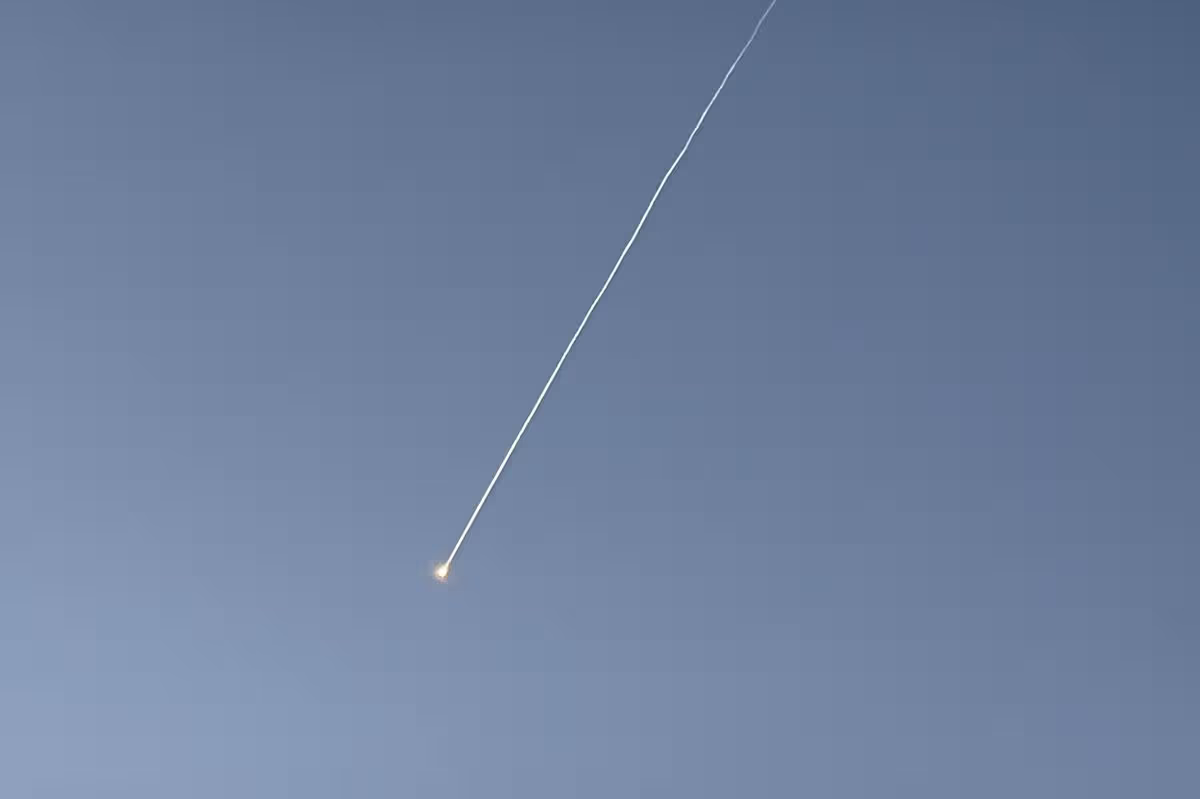

NATO forces shoot down third Iranian ballistic missile in Turkey
NATO forces shoot down third Iranian ballistic missile in Turkey as regional tensions deepened on Friday after Turkish authorities said NATO air defences intercepted yet another missile launched from Iran toward Turkish territory, marking the third such incident in just over a week. According to Reuters and the Associated Press, Turkey’s Defence Ministry said the latest interception was carried out by NATO-linked air defence systems, underscoring how rapidly the Iran war is spilling beyond its original battle lines. 
The incident is significant not only because of the missile itself, but because it happened on the territory of a NATO member state. Turkey, which shares a border with Iran and hosts major alliance infrastructure, is now in the uncomfortable position of being geographically close to the war while trying to avoid being dragged directly into it. That is why the headline NATO forces shoot down third Iranian ballistic missile in Turkey carries much more weight than a routine military brief. It suggests a conflict that is no longer fully containable within Iran, Israel and the Gulf. 
Reuters reported that this latest interception followed two previous incidents on March 4 and March 9. In the first case, the missile was intercepted before it reached Turkish airspace. In the second, it entered Turkish airspace before being shot down. Friday’s event therefore makes it the third Iranian ballistic missile linked to Turkey since the start of the current war, according to Turkish authorities. 
That timeline matters. NATO forces shoot down third Iranian ballistic missile in Turkey is not a one-off anomaly. It points to a pattern, and patterns are what push regional incidents into strategic crises. When a NATO member repeatedly reports incoming ballistic missiles from a war zone next door, the alliance does not need a formal treaty trigger to treat the matter seriously. The fact that NATO has already strengthened missile defences in and around Turkey shows that the threat is being taken as real and continuing. 
Still, caution is important. Reuters said Turkey asked Iran for clarification but did not report that Ankara had formally accused Tehran of intentionally targeting Turkey in this latest case. Iran had previously denied deliberately targeting Turkey. That means the most accurate version of the story is not that Iran has openly declared Turkey a target, but that Turkish officials say missiles launched from Iran have now been intercepted three times in connection with the wider war. 
The latest event also highlights Turkey’s sensitive strategic position. It is NATO’s second-largest military, sits on Iran’s border, hosts key alliance facilities, and has tried to balance regional diplomacy with hard security realities. Reuters noted that NATO and the United States have reinforced air and missile defence in the region, including deploying a U.S. Patriot system to Malatya province to strengthen protection for the Kurecik radar base, a critical installation in NATO’s missile defence architecture. 
https://ogelenews.ng/nato-forces-shoot-down-third-iranian-ballistic-miss…
That infrastructure angle is crucial because NATO forces shoot down third Iranian ballistic missile in Turkey is not just about one intercepted projectile. It is also about why Turkey matters so much to NATO’s broader defensive posture. The alliance’s ballistic missile defence system already treats the southeastern flank as sensitive. Repeated Iranian missile incidents make that flank even more central. NATO’s own ballistic missile defence page now explicitly refers to the March 2026 interception and says the alliance has increased its overall missile defence posture since then. 
The Associated Press version, surfaced through local republications, confirmed the broad core of the report: Turkey’s Defence Ministry said NATO air defences intercepted a third ballistic missile over Turkey since the start of the Iran war. Reuters added the diplomatic layer by saying Turkey has demanded clarification from Tehran while taking what it described as all necessary actions to protect its territory. 
That is what gives the story its real shape. NATO forces shoot down third Iranian ballistic missile in Turkey is both a military defence story and a diplomatic stress test. Turkey is trying to defend itself without overcommitting publicly to a wider war posture. So far, Reuters says Ankara has not formally invoked NATO’s collective consultation or collective defence clauses. That matters because Article 4 or Article 5 language would immediately shift the tone from defensive containment to alliance-level confrontation. 
The broader war backdrop makes the missile incident even more serious. AP’s running coverage of the conflict reported that the wider U.S.-Israel-Iran war has already driven oil prices higher, caused large-scale casualties and displacement, and drawn in multiple regional actors. In that setting, a missile incident over Turkey is not an isolated security scare. It is part of a region-wide escalation pattern in which the conflict keeps brushing against new borders and new states. 
For Ogele News, the cleanest veteran-journalist read is this: NATO forces shoot down third Iranian ballistic missile in Turkey confirms that the Iran war is now producing repeated direct security incidents for a NATO state, even if Turkey is still trying to avoid full alliance escalation. The third interception in such a short span makes it harder to dismiss the threat as accidental spillover. At the same time, the absence of a formal Turkish move toward Article 4 or 5 suggests Ankara still wants room for diplomatic management. 
What happens next will matter more than the rhetoric. If there is a fourth incident, pressure will grow on Turkey to define the missile launches more forcefully, and on NATO to decide whether passive defensive reinforcement is still enough. For now, the verified facts are clear: Turkish authorities say NATO air defences intercepted a third ballistic missile launched from Iran toward Turkey, previous interceptions were reported on March 4 and March 9, and the alliance has already strengthened regional missile defence around Turkish strategic infrastructure.

NATO forces shoot down third Iranian ballistic missile in Turkey