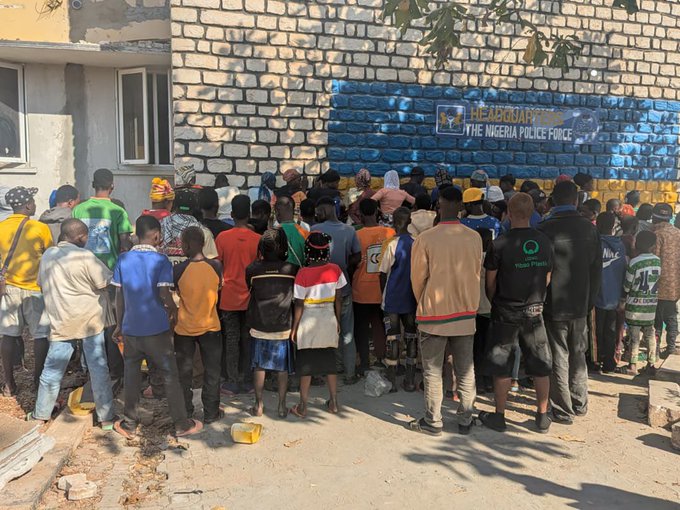


















How Nigerian Police Rescued 76 Children in Kaduna
Nigerian Police Rescue 76 Children in Kaduna: What Happened
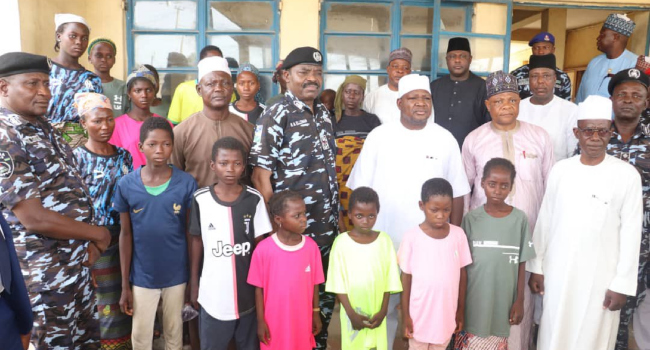
Nigerian police rescue 76 children in Kaduna after foiling a planned kidnapping operation in the Kasuwan Magani area of Kaduna State, a development that has once again drawn attention to the scale, sophistication, and persistence of child trafficking and bandit-linked crimes in northern Nigeria.
According to the Nigeria Police Force, the operation took place on January 5, 2026, following intelligence reports that suspected criminals were preparing to attack vehicles transporting children through the area. Acting on the information, police officers moved swiftly, disrupting the plot before harm could be done and rescuing dozens of minors who were allegedly being moved for illegal purposes.The Nigerian police rescue 76 children in Kaduna operation underscores the growing threat of organised child trafficking networks.
The incident is one of the largest child rescue operations recorded in Kaduna State in recent months and underscores both the depth of Nigeria’s security challenges and the importance of intelligence-led policing.
How Nigerian Police Rescued 76 Children in Kaduna
Police authorities said the rescue operation was carried out by officers from the Kasuwan Magani Division after receiving credible intelligence of a planned ambush targeting motorists.
The Divisional Police Officer (DPO) immediately mobilised operatives to the location. Upon arrival, the officers reportedly encountered the suspects and engaged them, successfully repelling the planned attack.The Nigerian police rescue 76 children in Kaduna operation underscores the growing threat of organised child trafficking networks.
During the operation, Nigerian police rescued 76 children in Kaduna, comprising both boys and girls aged between seven and 20 years. All the children were rescued unharmed.
A police statement signed by Force Public Relations Officer, CSP Benjamin Hundeyin, confirmed that the swift response prevented what could have been a large-scale kidnapping incident with serious humanitarian consequences, The nigerian Police Rescue 76 Children in Kaduna: What Happened
Who Are the Suspects Arrested in the Kaduna Rescue?
Three suspects were arrested at the scene and identified as:
• Jonathan John, 25
• Oliver Magaji, 27
• Bitrus Sawaba, 23
Preliminary investigations revealed that the suspects were allegedly transporting the children to various parts of Nigeria for child labour and other forms of domestic exploitation.The Nigerian police rescue 76 children in Kaduna operation underscores the growing threat of organised child trafficking networks.
Police sources said the suspects are currently in custody, while investigations have been intensified to identify additional collaborators and determine the full scope of the operation.
https://ogelenews.ng/nigerian-police-rescue-76-children-kaduna
The suspects are expected to be charged to court upon the conclusion of investigations.
Where Are the Rescued Children Now?
After the operation, the rescued minors were transferred to the Kaduna State Police Command Headquarters, where they are being kept in a secure environment.
The Nigerian police rescue 76 children in Kaduna operation underscores the growing threat of organised child trafficking networks.
Police authorities said arrangements are ongoing to identify the parents or guardians of the children and reunite them with their families.
Officials stressed that safeguarding the physical and psychological wellbeing of the rescued children remains a priority.
A Growing Pattern: Child Trafficking and Kidnapping in Northern Nigeria
The fact that Nigerian police rescued 76 children in Kaduna highlights a broader and deeply troubling trend across northern Nigeria, where criminal networks increasingly target minors for exploitation.
Children are often trafficked under the guise of employment, religious education, or domestic work. In some cases, they are intercepted while being transported across state lines, making detection difficult without actionable intelligence.
Security analysts say these networks thrive in areas where:
• Poverty remains widespread
• Border controls are weak
• Criminal gangs operate across multiple states
Kaduna, Nasarawa, Niger, and parts of the Federal Capital Territory have all recorded similar incidents in recent years.
Related Rescue in Nasarawa State Raises Wider Security Questions
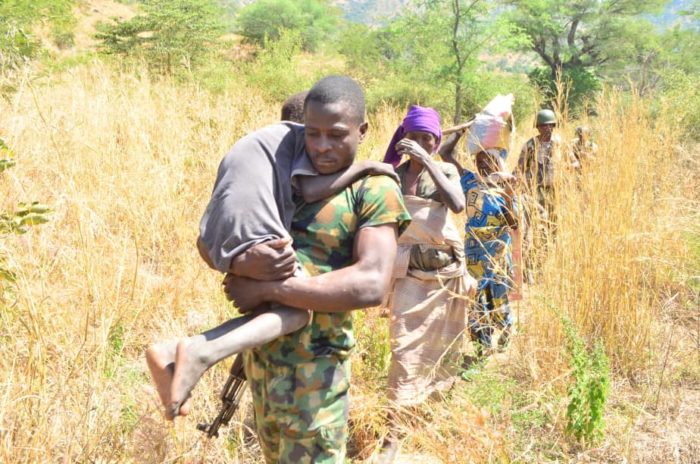
In a related development, the Nasarawa State Police Command recently recovered four children who went missing on New Year’s Eve in Karu Local Government Area.
The children had disappeared on December 31, 2025, prompting a joint investigation involving detectives from Nasarawa State and the Federal Capital Territory Police Command.The Nigerian police rescue 76 children in Kaduna operation underscores the growing threat of organised child trafficking networks.
Police confirmed that the children were safely recovered after a focused operation, reinforcing concerns that child abduction and trafficking networks operate across state boundaries.
The similarity between the Nasarawa and Kaduna cases suggests that child trafficking may be part of a coordinated regional criminal enterprise rather than isolated incidents.
Why This Case Matters Beyond Kaduna
While the successful operation shows the effectiveness of intelligence-led policing, it also exposes serious vulnerabilities in Nigeria’s security architecture.
That Nigerian police rescued 76 children in Kaduna before they could be moved elsewhere raises urgent questions:
• How many similar operations go undetected?
• How many children are currently in transit across Nigeria?
• How well are transport routes monitored?
Security experts warn that without sustained surveillance, inter-agency cooperation, and community intelligence, such crimes will continue to adapt and spread.
What This Means for Nigeria’s Security Strategy
The Kaduna rescue demonstrates that proactive policing can prevent tragedy, but experts argue it must be scaled and institutionalised.
Key lessons include:
• The importance of credible intelligence from local communities
• Rapid response by divisional police units
• Strong coordination between state commands
• Continuous monitoring of transport corridors
Many analysts believe that strengthening child protection units, enhancing digital tracking of criminal movements, and investing in community trust will significantly reduce similar crimes.
The Bigger Picture
That Nigerian police rescued 76 children in Kaduna is a victory worth acknowledging. Yet it also serves as a stark reminder that insecurity in Nigeria is evolving, targeting the most vulnerable and exploiting weak enforcement points.
As investigations continue and suspects face prosecution, the incident should prompt renewed public discussion on how Nigeria protects its children, secures its transport routes, and dismantles criminal networks before they strike.The Nigerian police rescue 76 children in Kaduna operation underscores the growing threat of organised child trafficking networks.