















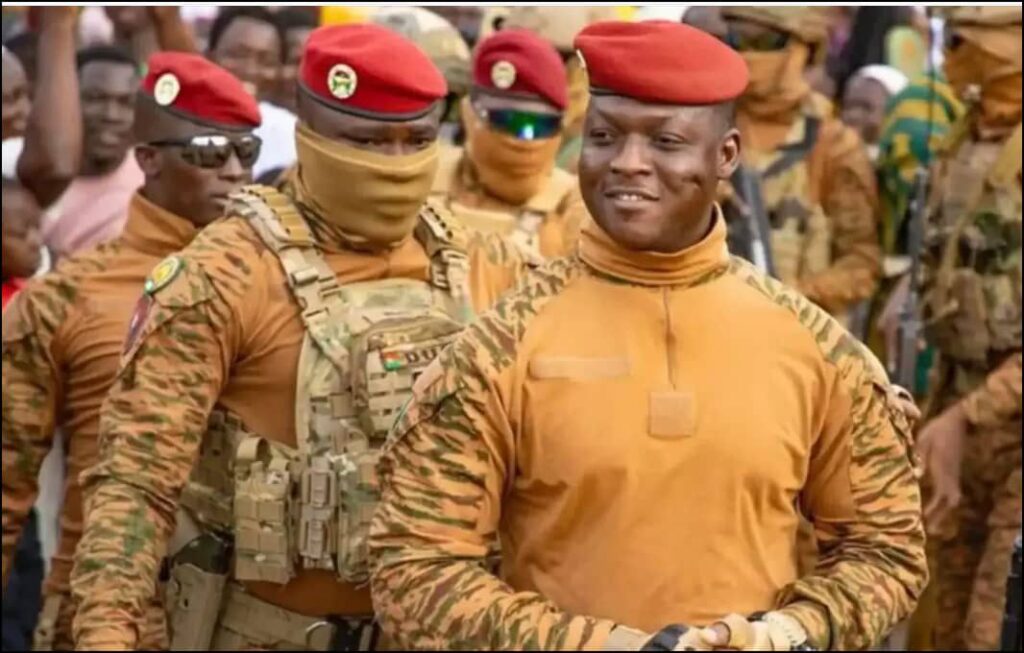
Nigerian soldiers detained in Burkina Faso have become the centre of a growing diplomatic concern after their aircraft made an emergency landing in Bobo-Dioulasso.
Eleven Nigerian soldiers have been detained in Burkina Faso after a Nigerian Air Force C-130 aircraft made an emergency landing in Bobo-Dioulasso, a major military zone in the country’s southwest. The incident has raised fresh diplomatic concerns across West Africa at a time of growing tension between regional security blocs.
Burkina Faso’s military authorities, which are part of the Alliance of Sahel States (AES) — a joint pact formed by Mali, Niger and Burkina Faso — claimed the Nigerian aircraft violated restricted airspace before landing. In a statement circulated through AES channels, the bloc warned that any foreign aircraft entering its territory without prior clearance risks being “neutralised,” underscoring its increasingly firm security posture.
The detention of Nigerian soldiers detained in Burkina Faso has raised questions about regional airspace control and AES security policy.
Nigerian Soldiers Detained in Burkina Faso: A Diplomatic Crisis
Security analyst Bryant Grant confirmed the detention on X, noting that the soldiers were taken into custody shortly after the landing. He added that the AES regime viewed the aircraft’s entry as a breach of its newly enforced airspace rules, which have become more rigid since the bloc distanced itself from ECOWAS.
Analysts warn that the handling of Nigerian soldiers detained in Burkina Faso could influence future cooperation between ECOWAS and the AES bloc.
The timing of the incident has attracted significant attention. Just a day earlier, Nigeria deployed military aircraft to the Benin Republic to help suppress an attempted coup — an operation carried out at the invitation of Beninese authorities. Because of the proximity of both events, observers say military movements across West Africa are now being closely watched, with countries taking firm positions on territorial sovereignty.
Sahel-region security analyst Brant Philip later provided additional insight, suggesting the Nigerian aircraft may have been on a long operational route toward Senegal, which would naturally bring it close to AES-controlled airspace. He wrote that “the only plausible reason why the Nigerian Air Force C-130 was flying over southwest Burkina Faso is that it was headed toward Senegal — nothing too suspicious.”
Philip explained that the aircraft’s transponder signal went off, either due to a technical issue or an onboard emergency. Once the transponder went silent, AES defense systems may have classified the aircraft as unidentified, prompting an immediate diversion order. He added that the aircraft initially appeared to be en route to Tamale, Ghana, before altering course and landing in Burkina Faso — a deviation likely to activate strict airspace monitoring systems in the region.
As of the time of filing this report, the Nigerian Armed Forces and the Federal Government have issued no official statement regarding the detained soldiers or the emergency landing. The silence from Abuja has prompted speculation about ongoing diplomatic engagement, as incidents involving detained military personnel typically demand urgent communication between governments.
The detention highlights a wider tension between ECOWAS, led by Nigeria, and the emerging AES bloc, which has adopted a stronger stance on sovereignty and airspace control following military takeovers in Niger, Mali and Burkina Faso. Analysts warn that emergency military movements, unclear communication or unexpected flight paths could trigger diplomatic confrontations if not handled carefully.
This latest development arrives during a sensitive period for West Africa, where shifting alliances and security priorities are redefining interstate relations. Nigeria’s intervention in the Benin Republic reaffirmed its commitment to defending democratic order, while AES countries have prioritised military autonomy and strict territorial oversight. If not resolved diplomatically, the detention of Nigerian soldiers in Burkina Faso could intensify the growing divide between the two blocs.
Many in the region are watching closely, as the outcome of this incident may influence future rules on airspace control, emergency landings and military cooperation. The coming days are expected to reveal whether dialogue will defuse the situation or whether it will become another flashpoint in the evolving security landscape of West Africa.