
















Obasanjo blames 1979 rice import policy reversal for Nigeria’s setback
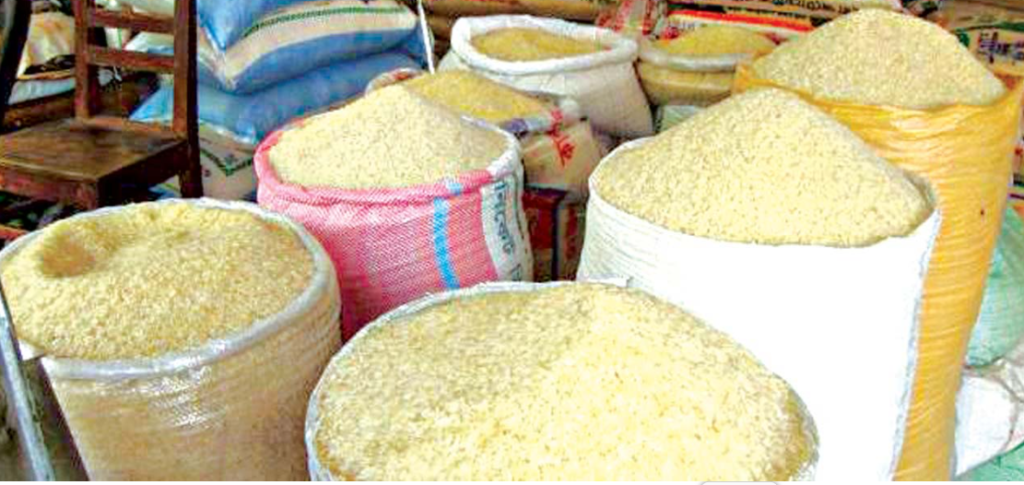
Former President Olusegun Obasanjo has blamed Nigeria’s long-standing dependence on imported rice on a policy reversal that followed the end of military rule in 1979, saying the decision undermined the country’s path toward self-sufficiency and set it back by decades.
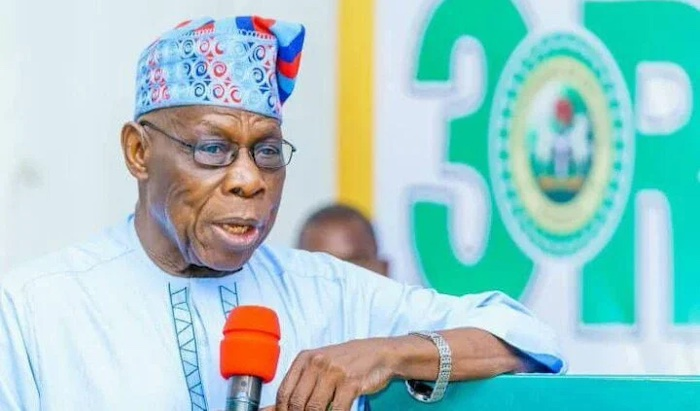
Obasanjo made the remarks on Thursday in Abuja at the International Memorial Lecture and Leadership Conference held to mark the 50th anniversary of the assassination of former Head of State, General Murtala Ramat Muhammed. The conference reflected on Muhammed’s historic “Africa Has Come of Age” address, delivered at the Organisation of African Unity summit in Addis Ababa, which emphasised African independence and economic self-reliance.
Speaking during the event, Obasanjo said his administration had taken deliberate steps to ensure Nigeria achieved rice self-sufficiency before handing over power to a civilian government in October 1979.
Obasanjo blames 1979 rice import policy reversal for Nigeria’s setback, explaining that his government had commissioned an agricultural assessment toward the end of military rule to determine national production capacity.
“By the time we left in July 1979, we wanted to be self-sufficient in rice production,” Obasanjo said. “We asked that a report be prepared on what was in the fields. The report showed that we would be self-sufficient that year.”
According to him, based on those findings, his administration imposed a ban on rice importation before formally transferring power to a civilian government.
The civilian administration that assumed office on October 1, 1979, was led by President Shehu Shagari, marking Nigeria’s transition from military rule to democratic governance.
Obasanjo blames 1979 rice import policy reversal for Nigeria’s setback, alleging that one of the early decisions of the incoming civilian administration was to lift the import ban, thereby reopening the country’s rice market to foreign suppliers.
“When the civilian administration came in, one of the first things they did was to lift the ban on rice importation so they could allocate import licences to their supporters and political associates,” Obasanjo said during the memorial lecture.
He argued that the policy reversal disrupted domestic production incentives and weakened Nigeria’s progress toward agricultural independence.
Obasanjo blames 1979 rice import policy reversal for Nigeria’s setback, maintaining that the country had been on the verge of achieving full rice self-sufficiency at the time of the transition.
His remarks highlight a long-standing debate about Nigeria’s agricultural policy consistency and the consequences of shifting economic priorities between successive governments.
Rice remains one of Nigeria’s most widely consumed staple foods, and the country has struggled for decades to balance domestic production with import demand. Successive administrations have introduced various programmes aimed at boosting local rice production, including import restrictions, farmer support initiatives, and investment in milling infrastructure.
However, Nigeria has continued to rely on imports to supplement domestic supply, particularly during periods of production shortfall.
Obasanjo blames 1979 rice import policy reversal for Nigeria’s setback, presenting the decision as a defining moment that altered Nigeria’s agricultural trajectory.
His comments also underscore broader concerns about policy continuity in Nigeria’s governance system. Frequent policy reversals, analysts say, can discourage long-term investment and weaken national development strategies.
Some agricultural economists note that while policy decisions play a critical role, other structural challenges have also affected Nigeria’s agricultural productivity, including infrastructure deficits, irrigation limitations, logistics costs, and market access constraints.
Nevertheless, Obasanjo maintains that Nigeria was close to achieving rice independence in 1979 and that maintaining the import restriction would have strengthened domestic production capacity.
Obasanjo blames 1979 rice import policy reversal for Nigeria’s setback, arguing that sustained policy discipline would have positioned Nigeria as a self-sufficient rice producer much earlier.
The former president’s remarks formed part of a broader reflection on leadership, national development, and economic independence during the memorial lecture honouring Murtala Muhammed’s legacy.
The conference brought together policymakers, scholars, and public figures to reflect on Nigeria’s past leadership decisions and their implications for present and future governance.
Obasanjo blames 1979 rice import policy reversal for Nigeria’s setback, using the historical example to emphasise the importance of policy consistency in achieving national economic goals.
At the time of filing this report, Ogele News reports Obasanjo’s remarks as delivered at the memorial lecture. The historical claims reflect his perspective on events surrounding Nigeria’s 1979 transition from military to civilian rule.
His message was clear: national development depends not only on visionary leadership but also on the discipline to sustain policies long enough for their benefits to take root.
For Nigeria, Obasanjo suggested, the lessons of 1979 remain relevant today.
https://punchng.com/obasanjo-blames-1979-rice-import-policy-reversal-for-nigerias-setback/
https://ogelenews.ng/obasanjo-blames-1979-rice-import-policy-reversal-ni…