














President Tinubu’s economic report
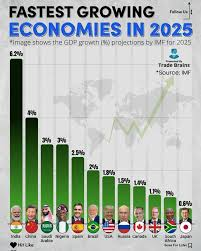
President Bola Ahmed Tinubu on Sunday released a year-end economic assessment claiming that Nigeria recorded robust economic growth exceeding 4 percent in 2025, alongside a sharp improvement in key macroeconomic indicators including inflation, foreign reserves, and capital market performance.
According to figures cited by the President and attributed to State House data, inflation declined to below 15 percent, Nigeria’s foreign reserves rose to $45.4 billion as of December 29, 2025, while the Nigerian Stock Exchange recorded a striking 48.12 percent gain over the course of the year.
The announcement forms the backbone of what the Presidency has described as President Tinubu’s economic report for 2025, positioning it as evidence that the administration’s reforms are beginning to stabilize the Nigerian economy after years of volatility.
Yet beyond the headline numbers, the report raises important questions about sustainability, lived economic reality, and the gap between macroeconomic performance and household experience.
President Tinubu’s Economic Report Says GDP Grew Beyond 4 Percent
Central to President Tinubu’s economic report is the claim that Nigeria’s Gross Domestic Product expanded by more than 4 percent in 2025. If verified, this would mark one of Nigeria’s strongest growth performances in recent years, particularly following sluggish expansion during periods of currency instability and policy uncertainty.
Economic growth at this level suggests increased activity across sectors such as:
- Energy and oil production
- Telecommunications
- Financial services
- Agriculture and agro-processing
However, economists caution that GDP growth alone does not automatically translate into improved living standards, especially in an economy where population growth remains high and income inequality is persistent.
For Nigeria, real economic progress is often measured not just by GDP expansion but by job creation, purchasing power, and cost of living relief.
https://www.nigerianstat.gov.ng
Inflation Below 15 Percent: Relief or Recalibration?
Another major highlight of President Tinubu’s economic report is the claim that inflation declined to below 15 percent, aligning with government targets.
Inflation has been one of the most politically sensitive issues under the Tinubu administration, particularly following:
- Fuel subsidy removal
- Currency adjustments
- Rising food prices
A reduction in headline inflation suggests improved price stability, tighter monetary coordination, and possible easing of supply-side pressures.
Yet for many Nigerians, especially low-income households, the perception of inflation is shaped more by:
- Food prices
- Transport costs
- Rent and utilities
Analysts note that while inflation figures may be moderating statistically, the cumulative effect of earlier price shocks continues to strain household budgets.
This tension between macroeconomic indicators and everyday experience remains a key test for Tinubu’s economic messaging.
Nigerian Stock Exchange Surges by 48.12 Percent
Perhaps the most dramatic figure in President Tinubu’s economic report is the 48.12 percent gain recorded by the Nigerian Stock Exchange in 2025.
Such a performance places Nigeria among the best-performing equity markets globally during the year and signals renewed investor confidence.
Market analysts attribute the surge to:
- Banking sector recapitalization optimism
- Improved fiscal clarity
- Increased participation by institutional investors
- Repricing of undervalued assets
However, capital market gains tend to benefit a narrow segment of the population, primarily investors and large financial institutions. The challenge for policymakers is ensuring that financial market optimism translates into:
- Credit availability for businesses
- Lower borrowing costs
- Broader economic inclusion
Foreign Reserves Rise to $45.4 Billion
Foreign reserves standing at $45.4 billion as of December 29, 2025, according to the report, represent another pillar of the administration’s economic narrative.

Stronger reserves provide Nigeria with:
- Greater currency stability
- Improved ability to manage external shocks
- Enhanced investor confidence
The increase suggests improved export earnings, possibly supported by higher oil production, better revenue management, or reduced capital flight.
Still, Nigeria’s reserve position remains closely tied to global oil prices and production levels, leaving the economy vulnerable to external fluctuations.
Reforms, Risks, and the Road Ahead
Supporters of the Tinubu administration argue that President Tinubu’s economic report reflects the early dividends of difficult but necessary reforms, particularly in fiscal discipline and market liberalization.
Critics, however, urge caution, pointing out that:
- Economic recovery remains uneven
- Poverty levels remain high
- Youth unemployment is still a major concern
The real test of the administration’s economic strategy will be whether growth can be sustained without triggering new inflationary pressures or social discontent.
What the Numbers Mean for Ordinary Nigerians
For the average Nigerian, economic reports often feel abstract unless they result in:
- Cheaper food
- Stable transport costs
- Job opportunities
- Improved public services
While President Tinubu’s economic report paints a picture of macroeconomic stabilization, translating these gains into tangible improvements remains the defining challenge of 2026.
Economic confidence is built not just on statistics, but on trust, predictability, and shared prosperity.
Conclusion
President Tinubu’s economic report presents a cautiously optimistic snapshot of Nigeria’s economic trajectory, highlighting growth, lower inflation, stronger reserves, and buoyant markets.
Yet history suggests that numbers alone do not secure public confidence. The months ahead will determine whether these gains deepen into lasting economic relief or remain largely on paper.
For now, the report marks a significant moment in the Tinubu administration’s effort to reset Nigeria’s economic narrative.
https://ogelenews.ng/president-tinubus-economic-report-growth-claims-mar…

President Tinubu’s economic report