

















Residents scoop fuel as tanker falls in Lagos
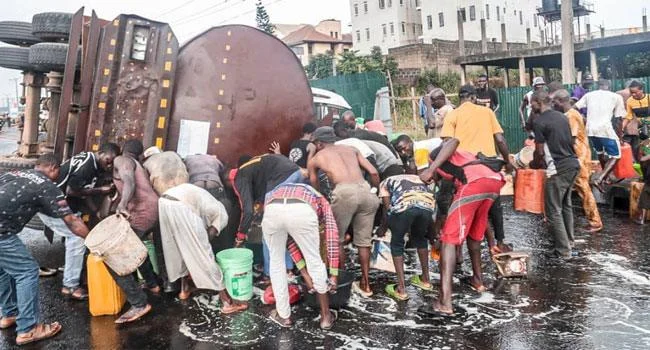
There was panic, confusion, and a familiar sense of déjà vu on a major Lagos roadway on Tuesday after a fuel tanker lost control and fell, spilling thousands of litres of petrol onto the road and surrounding drainage channels. Despite repeated warnings by emergency officials, residents scoop fuel as tanker falls in Lagos, exposing themselves to grave danger in a city already scarred by deadly tanker explosions.
Eyewitnesses said the tanker, fully loaded with Premium Motor Spirit (PMS), reportedly lost balance while navigating a busy section of the road during early morning traffic. The vehicle overturned, rupturing its tank and releasing fuel that quickly spread across the asphalt and into nearby gutters.
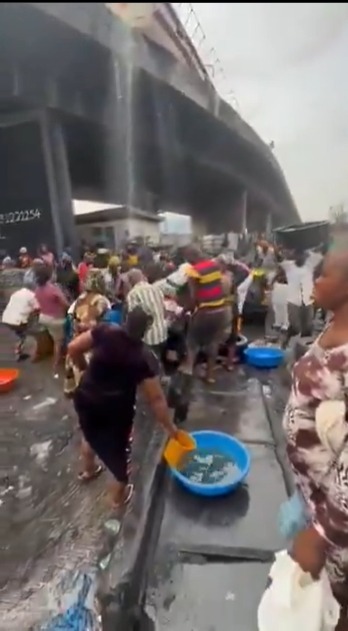
Within minutes, word spread through the neighbourhood. Plastic containers, jerrycans, buckets, and even nylon bags appeared as people rushed to the scene. Once again, residents scoop fuel as tanker falls in Lagos, ignoring the choking smell of petrol and the real risk of fire or explosion.
A Dangerous Pattern Lagos Knows Too Well
Scenes of people gathering spilled fuel have become disturbingly common in Lagos and other Nigerian cities. From Otedola Bridge to Ojodu Berger, from Ibafo to Mile 12, tanker accidents have repeatedly claimed lives, destroyed property, and traumatised communities.
Yet each time a tanker falls, residents scoop fuel as tanker falls in Lagos, driven by economic hardship, fuel scarcity fears, and the rising cost of living.
Some residents interviewed at the scene admitted they knew the danger but felt they had little choice.
“Fuel is expensive. Transport is killing us. If God is protecting us, nothing will happen,” one man said as he filled a yellow jerrycan.
Such statements reveal a deeper national problem, where survival instincts often override safety warnings.
https://ogelenews.ng/residents-scoop-fuel-tanker-falls-lagos
Emergency Response and Late Intervention
Officials from the Lagos State Traffic Management Authority (LASTMA), the Lagos State Fire and Rescue Service, and the police eventually arrived to cordon off the area. Firefighters sprayed chemical foam to neutralise the fuel and prevent ignition, while security agents tried to disperse the crowd.
But by the time authorities fully secured the scene, much of the fuel had already been scooped.
This slow response has become part of the criticism each time residents scoop fuel as tanker falls in Lagos. Safety experts argue that emergency services are often overwhelmed or arrive too late to prevent civilian exposure.
Why People Keep Scooping Fuel
Analysts say several factors explain
The repeated scenes of residents scooping fuel after tanker accidents in Lagos are not accidental. They sit at the intersection of poverty, fuel scarcity, weak enforcement, and poor emergency response infrastructure.
For many residents who rushed to the fallen tanker, the risk was obvious. The danger of explosion, burns, or death was clear. Yet the pressure of daily survival outweighed fear. With petrol prices high and incomes stagnant, free fuel becomes a dangerous temptation.
In communities where generators power homes, shops, and small businesses, losing access to fuel can mean losing a day’s income. That reality explains why, even as sirens wailed and officials warned of danger, residents continued scooping fuel from the overturned tanker.
Nigeria’s history of deadly tanker explosions should have changed behaviour, but poverty remains a powerful motivator.
The Ghost of Past Tragedies
Lagosians still remember the Otedola Bridge explosion, where dozens died after a tanker crashed and burst into flames. Similar incidents in other states have killed entire families.
Despite these painful memories, residents scoop fuel as tanker falls in Lagos, repeating a cycle of risk that experts describe as “predictable and preventable.”
Safety specialists warn that petrol fumes can ignite from the smallest spark, including mobile phones, vehicle engines, or static electricity from clothing.
Government Warnings and Public Responsibility
The Lagos State Government has repeatedly warned residents never to approach fallen tankers. Officials stress that tanker accidents are not opportunities but ticking bombs.
In a statement after the incident, a senior fire service official said, “Anyone who scoops fuel from a fallen tanker is gambling with death.”
Still, until deeper socio-economic issues are addressed, authorities fear residents scoop fuel as tanker falls in Lagos will remain a recurring headline.
Bigger Questions About Tanker Safety
Beyond public behaviour, the incident has reignited concerns about tanker regulation, road conditions, and vehicle maintenance. Many tankers operating in Lagos are old, poorly maintained, and overloaded.
Experts argue that without stricter enforcement, designated tanker routes, and safer fuel transport alternatives like pipelines, Lagos will continue to witness accidents.
A City Living on the Edge
Lagos is a city of hustle and survival, but each time residents scoop fuel as tanker falls in Lagos, the line between resilience and recklessness becomes thinner.
The incident ended without a fire outbreak this time. But many fear it is only a matter of time before tragedy strikes again.
From Otedola Bridge to inner-city roads, Lagos tanker accidents have followed a familiar script: crash, spill, crowd, danger.
Each incident raises urgent questions about tanker movement during peak hours, driver fatigue, vehicle maintenance, and road conditions. Until these root causes are addressed, tanker falls in Lagos will remain frequent, and residents will continue risking their lives for fuel.
Authorities insist that lessons have been learned, but residents argue that visible change has been slow.
https://lasema.lagosstate.gov.ng