


















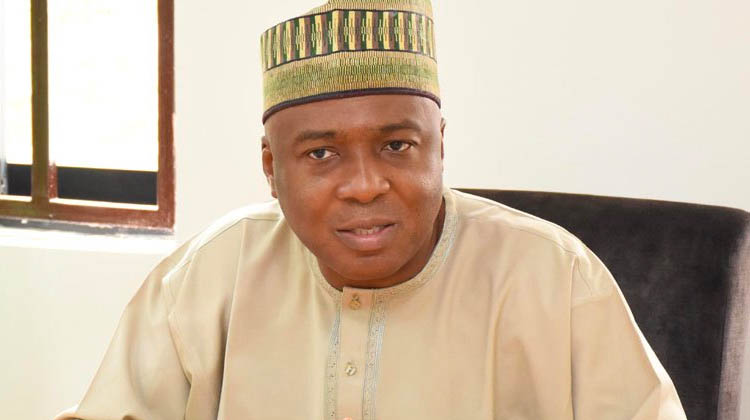
Saraki sends delegation to bandit-stricken Kwara communities
A high-powered delegation dispatched by Bukola Saraki, former Senate President and two-time Governor of Kwara State, has visited rural communities that have been subjected to repeated attacks by bandits, kidnappers, and armed gangs in the Ifelodun Local Government Area of the Kwara South Senatorial District. Saraki sends delegation to bandit-stricken Kwara communities.
The move comes amid a surge in insecurity that has driven displacement, disrupted livelihoods, and left families bereaved, wounded, or living in fear. 
Saraki’s delegation visited 19 communities stricken by violence to offer sympathy, support, and financial assistance to victims, traditional rulers, and residents who have endured loss, displacement, and trauma. 
The Security Context: Kwara’s Rising Insecurity
Kwara State has long been regarded as one of Nigeria’s more peaceful states. Until recently, its strategic location between the north and south fostered trade and mobility without widespread violence.
But over the past year, especially across northern and southern fringes such as Ifelodun Local Government Area, the security landscape has deteriorated sharply. Reports from community sources and credible media outlets indicate that bandits have carried out fatal attacks, kidnappings, and raids — including incidents in which at least 10 people were reportedly killed and several others were abducted. 
Local residents and community leaders have described a climate of fear, displacement, and erosion of public confidence in safety. Some families have fled to larger towns or the state capital to escape the violence, leaving homes and farms abandoned.
The wave of insecurity prompted civil society and political voices to urge stronger action from the government, including calls for more troops and better coordination with federal security agencies. 
Saraki’s Delegation: What It Did and Why It Matters
In a statement quoted by Punch, the delegation that visited the affected communities was led by Reverend C.O.S. Fawenu, Kwara PDP State Treasurer, and included a cross-section of party leaders, traditional stakeholders, and community figures. 
Their itinerary included visits to the palaces and homes of traditional rulers, meetings with residents, and engagements with victims of recent attacks. Saraki sends delegation to bandit-stricken Kwara communities.
In Agbeku, the delegation met His Royal Highness Oba Abdulazeez Shola Agboola Adeshina (Oba Idera II), extending condolences over repeated invasions that have claimed lives and displaced families. 
They also visited the palace of the Oniwo of Afin, where the monarch and his son were abducted in late December 2025, with the queen sustaining injuries in the attack. Saraki’s delegation brought financial relief and prayers, conveying the former governor’s concern for their recovery. 
At Bayagan-Ile, the delegation marked the recent release of Oba Kamiludeen Salami, who had been held captive for 25 days, and presented donations to support community rebuilding. 
Community leaders, traditional rulers, and clergy described Saraki’s gesture as reflective of leadership that transcends partisan politics and reaches into families’ suffering. 
https://ogelenews.ng/saraki-delegation-bandit-stricken-kwara-communities

Why the Visit Matters in a Broader Sense
At first glance, Saraki’s action may appear largely symbolic — a former governor showing concern for afflicted communities. But several deeper threads are visible:
- A Signal of Political Stakeholder Engagement
Saraki’s delegation — comprising leaders from the Peoples Democratic Party (PDP) — signals that political actors are aware that insecurity is a central concern for citizens. Whether or not Saraki leads the visitation personally (he chose not to, concerned about political misinterpretation), the engagement serves a political purpose: it demonstrates concern and presence in areas where government response is seen as insufficient. 
- A Gap in Public Sector Security Delivery
Repeated bandit attacks have exposed gaps in state and federal capacity to protect rural communities. Residents have reported prolonged attacks with limited security response, prompting calls for more robust force deployment. 
- Humanitarian and Moral Dimensions
Beyond politics, the humanitarian dimension of banditry cannot be overstated. Families are mourning lost loved ones; others have been kidnapped, displaced, or forced to live in makeshift conditions. An intervention that brings comfort, financial support, and acknowledgment from senior figures can have real psychosocial value, even as it falls short of addressing underlying insecurity. 
Saraki sends delegation to bandit-stricken Kwara communities.
- A Reminder of Broader Security Pressures in Nigeria
Kwara’s challenges are part of a larger national pattern. Across several states, armed groups, kidnappers, and criminal gangs exploit rural vulnerabilities. Efforts to deploy joint forest guards and enhanced security initiatives have been reported in other contexts, indicating that states are grappling with similar threats. 
The Human Toll of Bandit Attacks
Bandit attacks in Kwara have not been abstract numbers. Community sources confirm:
• At least 10 people were reportedly killed in an Oke-Ode area attack, including local leaders and residents. 
• Kidnappings — including traditional rulers and youths — have disrupted community leadership and family structures. 
• Many villages have been partially or fully deserted, as families seek safety elsewhere. 
These tangible outcomes gesture toward a security breakdown that local authorities and federal partners must address urgently.
What Communities Are Asking For
Traditional rulers and community heads expressed appreciation for the delegation’s visit. But more than gratitude, many have called for:
• Stronger security presence
• Consistent patrols and rapid response teams
• Improved coordination between locals and security forces
• Sustainable peace strategies
Their appeals underscore that while sympathy is welcome, structural protection is what will allow communities to return to stability. 
What Government Has Done So Far
In response to rising insecurity, the Kwara State Government has taken steps to bolster security, including deploying forest guards to patrol vulnerable forest corridors that bandits exploit. This initiative seeks to deny criminals safe hideouts and strengthen intelligence gathering in rural zones. 
The operational challenges, however, remain significant, given the scale of the terrain and resources required.
The Bottom Line
Bukola Saraki’s decision to send a delegation to bandit-stricken Kwara communities is humane and politically astute, but it also highlights a gap between traditional leadership engagement and effective security delivery.
For the thousands affected by violence, the delegation’s visit offers comfort. For policymakers, it underscores the urgent need to match gestures with sustained security strategy, community resilience plans, and deeper cooperation between state, federal, and local stakeholders.
If Kwara’s communities are to recover, the narrative must shift from sympathy to effective protection, recovery, and long-term stability.
https://punchng.com/saraki-sends-delegation-to-bandit-stricken-kwara-communities
Saraki sends delegation to bandit-stricken Kwara communities