



















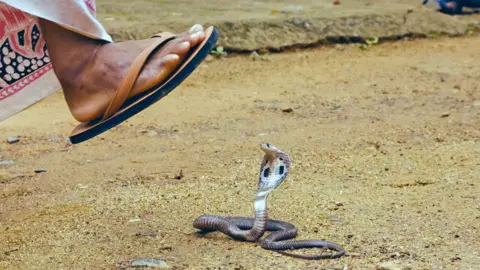
Snakebite cases drop for third year in Kaduna
Kaduna is reporting a third straight year of decline in snakebite cases, a rare piece of good news in a country where snakebite remains a silent emergency, mostly in rural communities.
The Kaduna State Commissioner for Health, Umma Ahmed, said facility records show reported cases fell from 68 in 2023 to 58 in 2024, and dropped again to 50 in 2025.  In a public health space where trends often move in the wrong direction, the numbers matter because they suggest Kaduna is not just reacting to emergencies, but building a system that prevents deaths.
Ahmed linked the improvement to two main interventions: better availability of anti-snake venom and a state-backed response structure that makes treatment easier to access when minutes count.  She said Kaduna began directing health facilities more than three years ago to keep anti-snake venom available as part of a deliberate plan to address snakebite envenoming. 
A key point in her explanation is cost. Snakebite treatment can bankrupt families when they are forced to purchase antivenom out-of-pocket. Kaduna, she said, currently covers treatment costs for snakebite victims through the Kaduna State Emergency Medical Services and Ambulance System, removing a major barrier that often delays care.  That matters because delays are often the difference between full recovery and serious complications.
On supply, the commissioner said the state maintains stock at the Kaduna State Health Supplies Management Agency, including about 176 doses available at the time of her comments.  She added that the antivenom is warehoused under appropriate storage conditions and distributed to designated secondary and tertiary health facilities based on assessed needs and reported consumption patterns.  In plain language: Kaduna is treating antivenom like a critical commodity, not an afterthought.
But even with improving numbers, the health commissioner did not paint a perfect picture. She identified recurring challenges that still affect outcomes: late presentation at health facilities, reliance on traditional treatment methods, and practical issues around storage, drug potency, and complications.  She also acknowledged that while the state’s overall stock position is described as stable, some facilities can still face short-term gaps when demand suddenly spikes or reporting delays disrupt replenishment. 
https://ogelenews.ng/snakebite-drop-kaduna-third-year

Kaduna’s experience is worth paying attention to because Nigeria’s wider snakebite burden remains heavy. Recent reporting, citing the Toxinological Society of Nigeria, puts the national estimate at about 43,000 snakebite cases annually and nearly 1,900 deaths.  Those are not just statistics. They represent farming families, children walking to school, and rural dwellers who may be hours away from a facility with antivenom on the shelf.
Globally, the World Health Organization classifies snakebite envenoming as a neglected tropical disease and stresses that antivenoms are the only specific treatment that can prevent or reverse many effects when given early and in adequate dose. WHO also notes antivenoms are on its Model List of Essential Medicines.  That statement cuts through the noise around home remedies: if someone has signs of envenoming, the priority is rapid medical care and appropriate antivenom.
This is also why Kaduna’s approach, if sustained and transparently measured, could offer a playbook: stock management that treats antivenom as essential, predictable financing that reduces out-of-pocket delays, and a coordinated distribution system that tries to prevent facilities from running dry.
Still, experts warn that Nigeria’s challenges extend beyond one state. Reports highlighted in national coverage point to a larger capacity gap where many facilities struggle with readiness, equipment, and consistent antivenom availability, especially outside major cities.  Kaduna’s gains, therefore, should not be used to downplay the national crisis. They should be used to prove what is possible when government policy meets logistics and funding.
The real test is what happens next: whether Kaduna can keep the trend going into 2026, whether rural awareness improves so victims seek care immediately, and whether the supply chain stays reliable as demand fluctuates seasonally. Snakebite may not trend daily like politics, but the outcomes are brutally final. If Kaduna’s numbers are truly improving for a third year, it is evidence that public health systems, when properly organised, can beat even the quietest killers.
https://punchng.com/snakebite-cases-drop-for-third-year-in-kaduna-health-commissioner

Snakebite cases drop for third year in Kaduna