
















Soldiers raid terrorist camp in Kogi
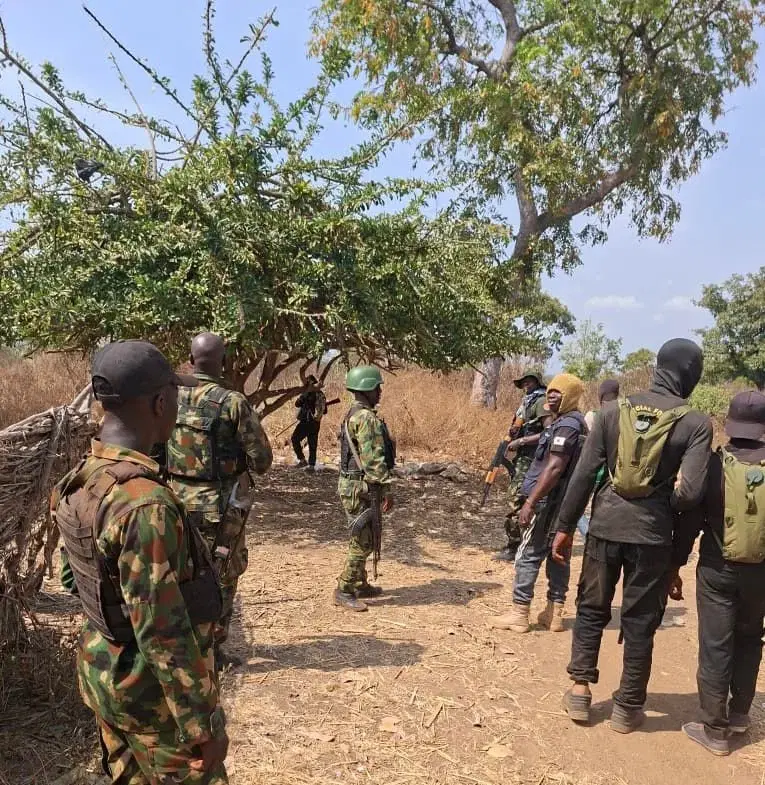
In a significant operational success under Operation Igbo Idanu I, troops of the 12 Brigade of the Nigerian Army have stormed a suspected terrorist hideout in Kogi State, dismantling a key camp and recovering a cache of arms and ammunition in what the military described as a strategic blow to the insurgent network operating in the region. The operation, which has been confirmed by official military channels, marks a continuation of intensified efforts by the Nigerian Armed Forces to degrade terrorist capabilities and enhance regional security. 
According to a statement released by the Army, the raid took place early on Wednesday in forested terrain that has long served as a hideout for terror suspects linked to notorious commanders identified locally as Kachalla Ibrahim and Shu’aibu. Troops moved swiftly and decisively, overrunning the camp and recovering multiple weapons, assorted ammunition, and other military equipment believed to be intended for use in violent attacks and criminal activity. 
The Raid and What Was Recovered
The Nigerian Army’s 12 Brigade confirmed that soldiers came upon the camp after sustained intelligence gathering and reconnaissance, part of a broader offensive pushed by the Defence Headquarters to dismantle armed enclaves and disrupt terror networks that have challenged security in parts of Kogi and neighbouring states. In addition to ammunition and weapons, the troops reportedly secured logistical items that could sustain prolonged insurgent operations. 
The materials recovered included rifles, magazines, and rounds of ammunition, quantities of which have not been publicly quantified by the Army. Nonetheless, the haul was described as substantial, prompting military officials to affirm that the raid inflicted a “decisive strategic blow” on the network’s capacity to move and engage. 
Security sources familiar with the operation said the terrain where the camp was located — part of the dense forests around the Lokoja axis of Kogi State — has for months been identified as a safe haven for militants and kidnappers. Violence in these enclaves has at times spilled over into attacks on travellers, ambushes of security patrols, and abductions, contributing to insecurity that has hindered economic and social activities in affected communities. 
https://ogelenews.ng/soldiers-raid-terrorist-camp-recover-ammunition-kogi

The Broader Security Context
The raid in Kogi is part of a broader series of military operations aimed at rolling back terrorist, bandit, and kidnapping networks across Nigeria. In recent months, Nigerian troops have conducted large-scale offensives in several states, including multi-location raids that have freed hostages, neutralised terror cells, and recovered weapons caches. Reports from other operations show that troops have rescued kidnapped victims and dismantled terror hideouts, signalling a sustained push against organised violent groups. 
In a related operation elsewhere in the state, Army troops reportedly rescued at least 14 kidnapped victims during another assault on a terrorist camp in the forests around Kogi, further illustrating the dual focus on degrading terror cells while also extracting civilians seized by these networks. 
Such operations underscore a broader security strategy being pursued by the Nigerian military, which has emphasised intelligence-led raids, joint task force collaborations, and enhanced battlefield mobility to outflank insurgent groups that have adapted to guerrilla tactics in remote terrain. These efforts are part of a continuing effort by national security agencies to stabilise regions affected by violence and restore the safety of citizens and travellers alike. 
Military and Government Response
Military leadership has praised the troops involved in the Kogi raid for their professionalism and tactical effectiveness. The raid was executed without reported casualties among the troops, reflecting increased military capability and improved operational planning. Defence Headquarters has underscored the importance of such successes in boosting national security and reaffirming the Army’s commitment to neutralising terror threats. 
Government officials at the federal and state levels have also welcomed the operation’s success, framing it as part of ongoing efforts to protect communities, foster economic activity, and secure transport corridors that have been vulnerable to criminal activity. They reiterated that operations like this are essential in safeguarding lives and reducing the influence of armed groups whose activities have destabilised parts of Kogi and neighbouring regions. 
What This Means for Security in Kogi
The dismantling of the terrorist camp and recovery of ammunition is expected to weaken the operational capability of the terror network in Kogi State. However, security analysts caution that isolated raids, while impactful, must be integrated with broader intelligence sharing, community policing, and socio-economic interventions to fully uproot the drivers of insurgency. Militancy and criminal enterprise in forest enclaves are often sustained by porous borders between states, weak local governance, and limited economic opportunities — factors that can fuel recruitment and shelter for armed groups. 
Nonetheless, the success of this operation marks a tangible degradation of an armed group that, until recently, had operated with relative impunity. Recovering weapons and ammunition — potentially including automatic rifles and explosive materials — hinders the group’s ability to plan and execute attacks, providing a window for security forces to consolidate gains and expand protective measures for vulnerable communities. 
Why This Matters
The raid also sends a broader message about the Nigerian military’s resolve and evolving capabilities in confronting internal security threats. Beyond the immediate tactical advantage of removing weaponry from hostile hands, such operations demonstrate a willingness to pursue terror networks to their strongholds, even in challenging terrain. This can enhance public confidence in security institutions and deter future criminal activities by signalling that insurgent hideouts are not beyond reach. 
As Nigeria continues to grapple with multiple security fronts — from insurgency in the Northeast to banditry and kidnapping in the Northwest and Middle Belt — successful operations like the one in Kogi are critical benchmarks of progress. The continued recovery of arms and ammunition not only disrupts immediate threats but also contributes to the long-term objective of dismantling networks that rely on violence and fear to sustain their operations. 
In the weeks ahead, military and security agencies will likely intensify their efforts to pursue remnants of the terror group and expand cooperation with local communities to ensure that regained territory remains secure. Whether through joint intelligence units, community outreach, or sustained patrols, the goal remains clear: to ensure that forest enclaves no longer serve as havens for armed groups bent on destabilising peace and security in Kogi State and beyond.
https://guardian.ng/news/troops-overrun-terrorist-camp-in-kogi-recover-arms
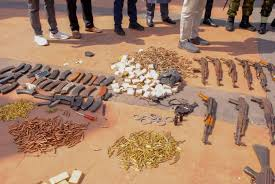
Soldiers raid terrorist camp recover ammunition in Kogi