














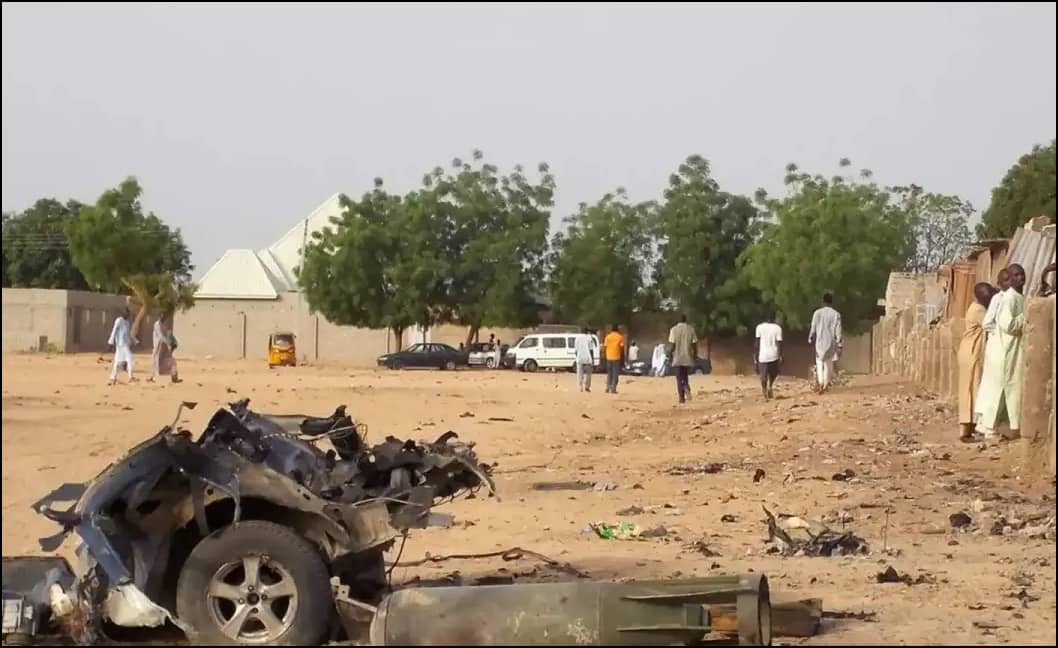
Suicide bombing in Pulka Borno State killed at least five soldiers and civilians on Sunday morning after an attacker detonated an explosive device at a military checkpoint in Gwoza Local Government Area of Borno State.
A suicide bomber attacked a military checkpoint in Pulka town, Gwoza Local Government Area of Borno State, on Sunday morning, killing five soldiers and civilians in a deadly blast that has renewed fears about the evolving threat of extremist violence in Nigeria’s North-East.
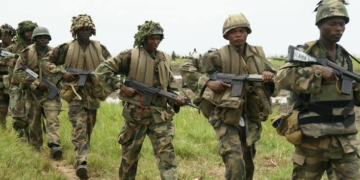
The explosion occurred as troops were manning a checkpoint controlling movement into and out of the town. According to security and local sources, the attacker infiltrated the area overnight before carrying out the attack at daybreak, when civilians were beginning to pass through the checkpoint.
A security source who spoke to Daily Trust said the assailant was suspected to be a member of the Islamic State West African Province (ISWAP), believed to have been hiding in the Mandara Mountains, a rugged region that straddles parts of Nigeria and Cameroon.
“Some people revealed that he passed the night close to the military checkpoint, planning the heinous act,” the source said. “In the morning, when the road was opened for passersby, he pretended to be one of them and detonated the bomb in their midst. Five soldiers lost their lives instantly.”
Residents said the blast caused panic across Pulka, a town that has endured years of insurgency-related violence and displacement. Emergency responders and security operatives cordoned off the area shortly after the explosion, while injured victims were evacuated for treatment.
First Suicide Attack in Over a Year
A resident described the incident as the first suicide bombing recorded in Pulka in more than a year, noting that the relative calm experienced recently had raised cautious optimism among residents.
“For over a year now, this is the only suicide attack that has been recorded here,” the resident said. “It shows that the threat has not disappeared. It calls for a new approach by security operatives to prevent a recurrence.”
https://ogelenews.ng/suicide-bombing-pulka-borno-state
Security analysts say the suicide bombing in Pulka Borno State reflects a shift in tactics by ISWAP elements operating around the Mandara Mountains.
The attack has revived painful memories of previous suicide bombings in Gwoza and surrounding communities, where civilians have repeatedly borne the brunt of extremist violence.
A Pattern of Deadly Attacks in Borno.
On June 30, 2024, two female suicide bombers detonated explosive devices at a wedding ceremony in Gwoza town, killing at least 18 people, including children and a pregnant woman. The attack shocked the community and highlighted the continued targeting of soft civilian gatherings.
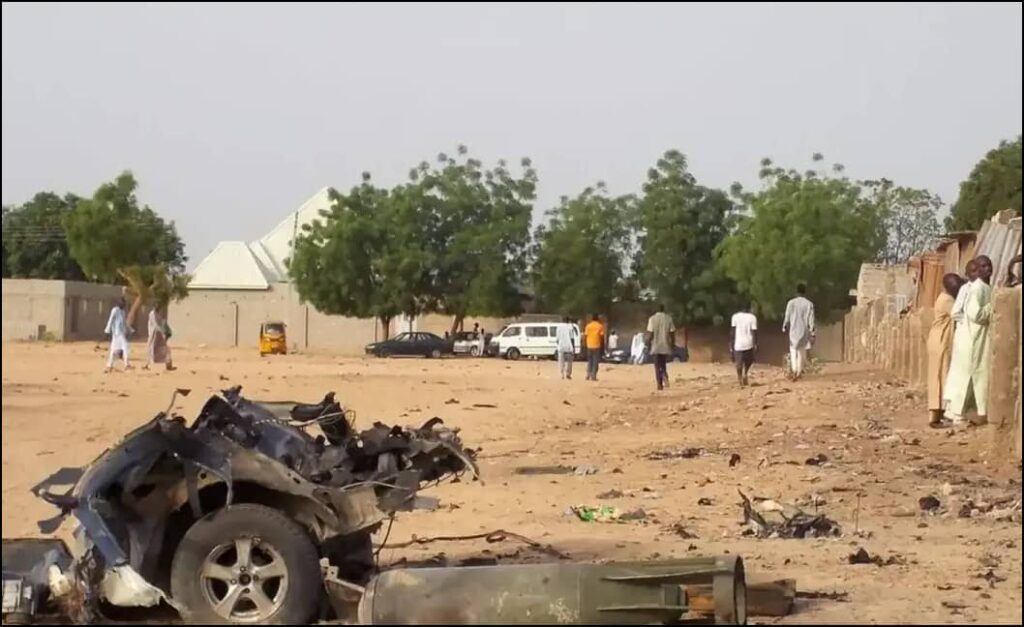
Similarly, on June 21, 2025, at least 11 civilians were killed and several others injured when a suicide bomber struck a viewing centre in Konduga Local Government Area, another flashpoint in Borno State.
Security Concerns and the Way Forward Security analysts say the suicide bombing in Borno State highlights the persistent threat posed by insurgent groups and the urgent need for improved intelligence coordination.
Security analysts warn that the suicide bombing in Pulka Borno State,that These attacks underscore the adaptive tactics of insurgent groups such as ISWAP and Boko Haram, which have increasingly relied on suicide bombings after facing sustained military pressure in recent years.
These attacks underscore the adaptive tactics of insurgent groups such as ISWAP and Boko Haram, which have increasingly relied on suicide bombings after facing sustained military pressure in recent years.
reflects a strategic shift by extremist groups seeking to exploit gaps in surveillance, local intelligence, and checkpoint security.
While Nigerian troops have recorded successes against insurgent camps, experts say sleeper cells and lone attackers continue to pose a significant threat, especially in border communities and mountainous terrain.
Residents and local leaders have renewed calls for stronger intelligence gathering, improved community engagement, and enhanced protection for both soldiers and civilians operating around security checkpoints.
For many in Pulka, the attack is a grim reminder that despite years of counter-insurgency operations, peace in parts of Borno State remains fragile.
The suicide bombing in Pulka Borno State has renewed calls for intelligence-led operations and stronger protection for civilians in North-East Nigeria.
As investigations continue, authorities have urged residents to remain vigilant and to report suspicious movements, stressing that community cooperation remains critical in preventing further attacks.
https://www.amnesty.org/en/location/africa/west-and-central-africa/nigeria