
















Tanker driver flees after crash kills dispatch rider in Lagos
A dispatch rider has been killed in a fatal road crash on the Apapa-Oshodi Expressway in Lagos after a fully loaded diesel tanker reportedly rammed into his motorcycle and crushed him beneath the vehicle, while the tanker driver fled the scene immediately after the collision. Lagos traffic authorities said the rider died on the spot.
That is the central fact behind the headline, Tanker driver flees after crash kills dispatch rider in Lagos. But the deeper story is not only about one driver who ran away. It is about the deadly mix of heavy-duty vehicles, poor road discipline, and the vulnerability of commercial riders on some of the busiest freight corridors in Lagos. According to the Lagos State Traffic Management Authority, the crash happened near Second Rainbow, inward Mile 2, along the Apapa-Oshodi Expressway, a route long associated with tanker congestion, container traffic and high-risk road movement, Tanker driver flees after crash kills dispatch rider in Lagos.
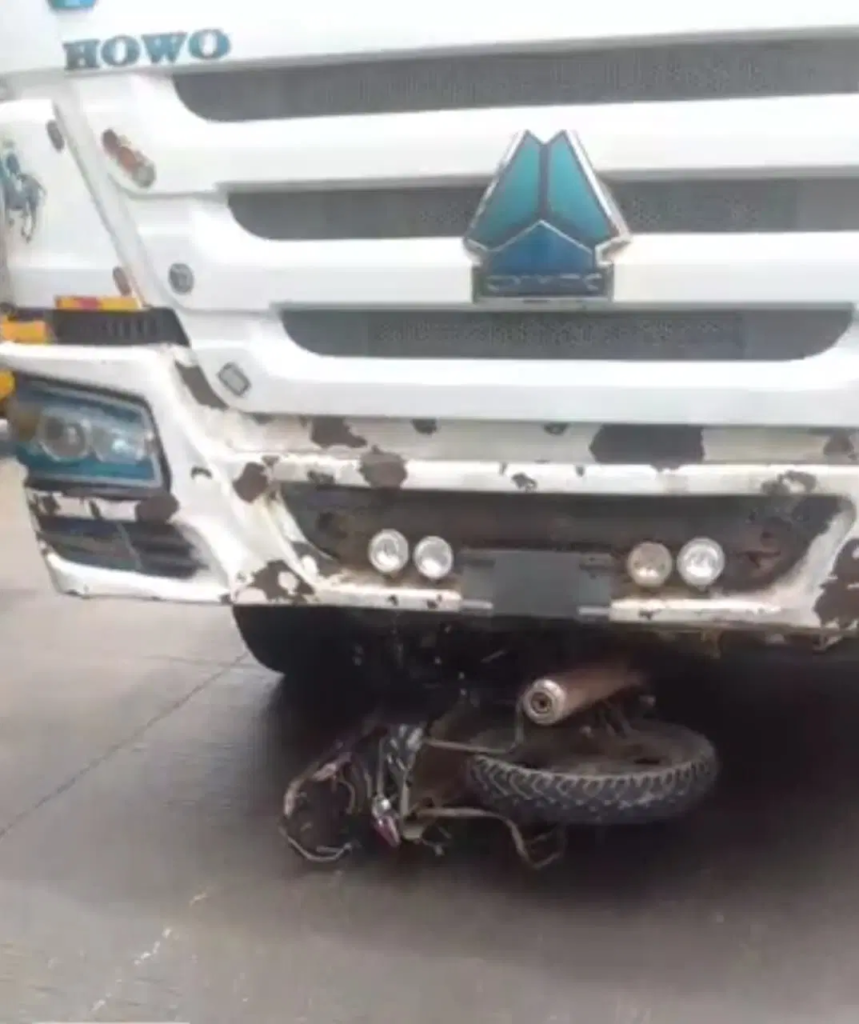
In its account of the incident, LASTMA said the HOWO tanker was fully loaded with diesel and violently rammed into the dispatch motorcycle. The impact trapped the rider underneath the tanker and killed him instantly. The agency’s spokesperson, Adebayo Taofiq, said security findings showed that the tanker was in motion when it struck the motorcycle, turning what might have been an ordinary workday for the rider into a sudden roadside death.
The phrase Tanker driver flees after crash kills dispatch rider in Lagos carries an especially disturbing detail: the driver did not stay behind to face the aftermath. Reports say he escaped immediately after the crash, leaving the victim under the tanker. That detail matters because it turns a traffic tragedy into something even more morally jarring. Hit-and-run cases do not only raise questions about recklessness. They also expose a culture of evasion in which drivers involved in fatal collisions often choose flight over accountability.
LASTMA said its officers responded quickly, secured the crash scene, recovered the tanker and handed it over to the police at Kirikiri for further investigation. Officials also said the body of the deceased rider was evacuated after the incident. That follow-up is important because fatal tanker crashes in Lagos often create secondary dangers, including fire risk, traffic paralysis and public panic, especially where petroleum products are involved. In this case, authorities said the tanker was loaded with diesel, which immediately raised the stakes of the rescue and recovery effort,Tanker driver flees after crash kills dispatch rider in Lagos.
This is why Tanker driver flees after crash kills dispatch rider in Lagos is more than a short metro brief. It is another warning from a corridor that has become one of the most dangerous road environments in the state. The Apapa-Oshodi axis is central to Lagos commerce because it channels trucks, tankers and trailers moving in and out of port-related routes. But the same economic importance has also made it a danger zone for smaller road users, especially motorcyclists, dispatch riders and traffic officers.
https://ogelenews.ng/tanker-driver-flees-after-crash-kills-dispatch-ride…
There is a wider pattern here. Lagos and neighbouring corridors have recorded repeated heavy-vehicle crashes in recent months. Just last month, an Ogun tanker crash on the Lagos-Abeokuta Expressway killed six people after what the Federal Road Safety Corps described as brake failure in an articulated vehicle. Five days ago, a tanker-trailer collision in the Ajah axis of Lagos triggered a fatal gas explosion that killed two people and destroyed warehouses and shops. These incidents are not identical, but together they underline the scale of the heavy-vehicle safety problem around Lagos.
What makes dispatch riders especially vulnerable is the structure of their work. They spend long hours on congested roads, often under delivery pressure, weaving through dangerous spaces dominated by buses, trailers, fuel tankers and impatient motorists. A rider on a motorcycle has almost no protection when a fully loaded truck or tanker makes contact. In such a collision, the physics are brutally unequal. So when Tanker driver flees after crash kills dispatch rider in Lagos, the story is also about the fragile place that thousands of dispatch riders occupy in the urban economy: essential to commerce, yet dangerously exposed.
The conduct of the fleeing driver also sharpens the public interest in the case. Road crashes caused by negligence are tragic enough. But where a driver runs away after a fatal collision, public anger deepens because it suggests abandonment of both legal and human responsibility. Reports indicate the police have taken custody of the tanker, which may aid identification of the driver and further investigation. For now, however, the victim’s name had not been widely published in the initial reports.
The Lagos State government has in recent years repeatedly warned against dangerous driving, illegal stopping, and indiscipline involving heavy vehicles. Yet accidents continue to expose weak compliance and weak enforcement. That is why the story Tanker driver flees after crash kills dispatch rider in Lagos should also be read as a policy story. It raises questions about driver training, route regulation, monitoring of tankers, and whether enough deterrence exists for drivers who violate safety standards or flee crash scenes.
There is also the matter of freight traffic management. The Apapa-Oshodi corridor has for years symbolised a larger Lagos contradiction: an economy that depends on road haulage, but a road culture that often cannot safely contain it. Tankers and trailers are critical to fuel movement, port logistics and national supply chains. But every time one of those vehicles crushes a smaller road user, the human cost of that system becomes painfully visible. The roads that move goods are the same roads where workers, riders and ordinary commuters are trying to stay alive.
That is the real weight behind Tanker driver flees after crash kills dispatch rider in Lagos. It is not just about one horrific collision. It is about the everyday gamble built into movement along some of Lagos’ hardest-used corridors. A dispatch rider heads out to make a delivery. A tanker heads down the expressway loaded with diesel. A moment of recklessness, loss of control or failed judgment occurs. One person dies instantly. Another disappears into the city. That pattern has become too familiar.
For ordinary Lagosians, there is a hard lesson in this recurring kind of story. Road safety is not an abstract government campaign. It is about whether a person leaving for work returns home. It is about whether commercial pressure on riders, fatigue among truck drivers, or indiscipline around articulated vehicles is allowed to become normal. It is also about whether the law reaches those who flee fatal scenes. In that sense, Tanker driver flees after crash kills dispatch rider in Lagos is not only a metro headline. It is a measure of how exposed life can be on the city’s roads.
In the end, the most painful part of this story is its familiarity. Lagos has heard too many versions of it before: a truck, a tanker, a rider, a body on the asphalt, a fleeing driver, and another burst of official condolence and warning. Until heavy-vehicle discipline improves and enforcement becomes both visible and consistent, such stories may keep returning. And each time they do, another working person pays the price with his life.
https://punchng.com/hit-and-run-driver-kills-dispatch-rider-in-lagos-2/

Tanker driver flees after crash kills dispatch rider in Lagos