

















99% of Nigerians locked out of housing market
Nigeria’s housing sector is facing what experts now describe as a near-total affordability collapse, with an alarming estimate that 99% of Nigerians are locked out of the housing market, unable to buy homes due to rising costs, weak incomes, and lack of accessible mortgage financing.
The stark warning reflects the deepening structural crisis in Nigeria’s housing ecosystem, where soaring construction costs, inflation, and limited credit access have combined to place home ownership beyond the reach of most citizens.
Housing experts say the reality behind the claim that 99% of Nigerians locked out of housing market is not merely rhetorical exaggeration but an indication of systemic dysfunction affecting housing affordability nationwide.
Housing Affordability Crisis Reaches Breaking Point
The assertion that 99% of Nigerians locked out of housing market underscores the widening gap between housing costs and household income levels.
Nigeria’s housing deficit has already ballooned to approximately 28 million units, driven by rapid population growth, urbanisation, and limited affordable housing supply. 
This deficit has been compounded by sharp increases in construction costs. Prices of building materials such as cement, granite, and steel have surged dramatically in recent years, forcing developers to raise housing prices beyond the reach of average Nigerians. 
Experts argue that the affordability crisis is now so severe that home ownership is effectively restricted to a tiny fraction of high-income earners.
This reality explains why analysts warn that 99% of Nigerians locked out of housing market, particularly those in low- and middle-income brackets.
Mortgage Access Remains Extremely Limited
One of the most significant barriers to housing access in Nigeria is the lack of accessible mortgage financing.
Nigeria’s mortgage system remains underdeveloped, with lenders constrained by lack of long-term funds and limited liquidity to extend affordable housing loans. 
This structural weakness has had devastating consequences for home ownership.
Government officials have previously acknowledged that more than 80% of Nigerians cannot afford mortgage financing, largely due to low income levels and economic hardship. 
Experts say these figures reinforce the reality behind the warning that 99% of Nigerians locked out of housing market, as most households lack access to affordable financing.
Without accessible mortgage systems, home ownership remains unattainable for millions.
Rising Poverty and Weak Purchasing Power Worsen Housing Crisis
The housing affordability crisis is directly linked to Nigeria’s broader economic conditions.
According to official data, about 43% of Nigerians live below the poverty line, while another 25% remain economically vulnerable. 
These income constraints significantly limit housing affordability.
Experts say weak purchasing power is a major reason why 99% of Nigerians locked out of housing market, as most households cannot afford upfront housing costs.
Economic inflation has further worsened the situation.
As housing prices continue rising, the gap between income and housing affordability widens.
https://ogelenews.ng/99-of-nigerians-locked-out-of-housing-market
Structural Barriers Make Housing Inaccessible
Several structural barriers contribute to Nigeria’s housing affordability crisis:
• High construction costs
• Expensive land acquisition
• Limited mortgage access
• Low household incomes
• Inflation and economic instability
Experts say these structural barriers explain why 99% of Nigerians locked out of housing market, especially young professionals and middle-income earners.
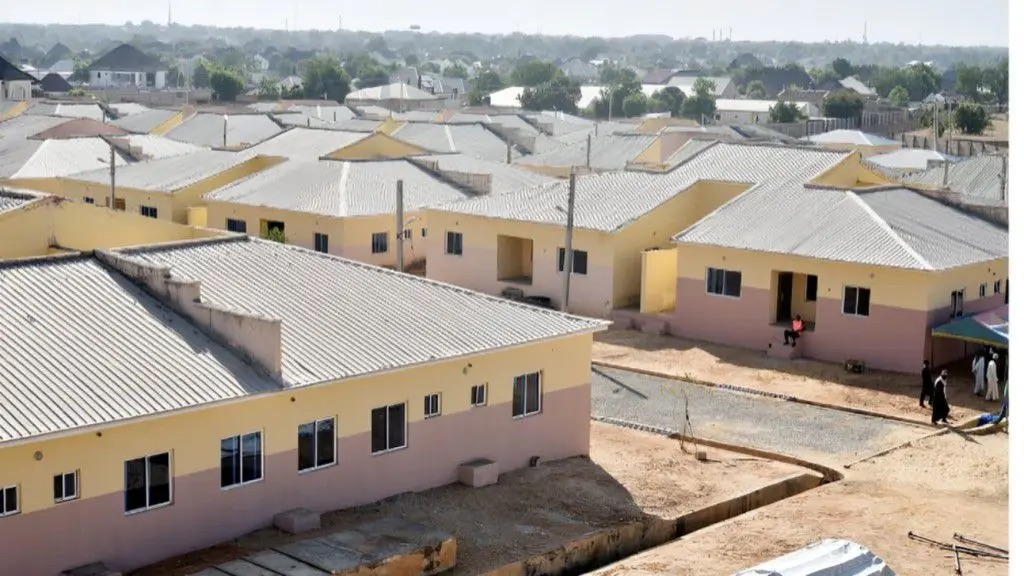
Urban housing shortages and high rent costs have also forced many Nigerians into informal settlements or overcrowded living conditions.
Housing affordability has become one of Nigeria’s most pressing socioeconomic challenges.
Housing Market Now Accessible Only to Elite Few
Experts say Nigeria’s housing market is increasingly becoming a luxury sector accessible only to wealthy individuals.
Private market housing has become unaffordable for most citizens, with housing prices rising faster than incomes. 
This trend reinforces warnings that 99% of Nigerians locked out of housing market, with housing increasingly concentrated among high-income elites.
The middle class, once considered the backbone of housing demand, is now struggling to afford homes.
This shift has significant implications for social stability and economic growth.
Economic Implications of Housing Affordability Crisis
The housing crisis has broader economic consequences.
Housing plays a crucial role in economic development, employment, and wealth creation.
When citizens cannot access housing, economic inequality increases.
Experts warn that 99% of Nigerians locked out of housing market could have long-term economic and social consequences.
Housing shortages also contribute to urban overcrowding and infrastructure strain.
Government Housing Initiatives Face Implementation Challenges
The government has introduced housing programmes aimed at improving access.
Institutions such as the Nigeria Mortgage Refinance Company were created to expand mortgage access and improve housing affordability. 
However, implementation challenges persist.
Experts say current efforts remain insufficient to address the scale of the crisis.
This is why the warning that 99% of Nigerians locked out of housing market has sparked urgent calls for reform.
Experts say Nigeria must strengthen mortgage access, improve housing finance, and increase affordable housing supply.
Expert Calls for Urgent Policy Reform
Housing experts have called for urgent intervention to prevent further deterioration.
Recommended reforms include:
• Expanding affordable mortgage access
• Increasing government housing investment
• Reducing construction costs
• Improving land administration
Experts say these reforms are essential to reverse the trend where 99% of Nigerians locked out of housing market.
Without intervention, housing affordability will continue to worsen.
Conclusion: Housing Crisis Reflects Structural Economic Failure
The warning that 99% of Nigerians locked out of housing market reflects a broader structural failure in Nigeria’s housing and economic systems.
Housing affordability has collapsed for most citizens.
The crisis highlights the urgent need for comprehensive housing reform.
Experts say addressing mortgage access, construction costs, and economic inequality is critical.
Without decisive action, home ownership will remain out of reach for millions.
The housing crisis now represents one of Nigeria’s most pressing economic and social challenges.
https://punchng.com/99-of-nigerians-locked-out-of-housing-market-expert-warns