











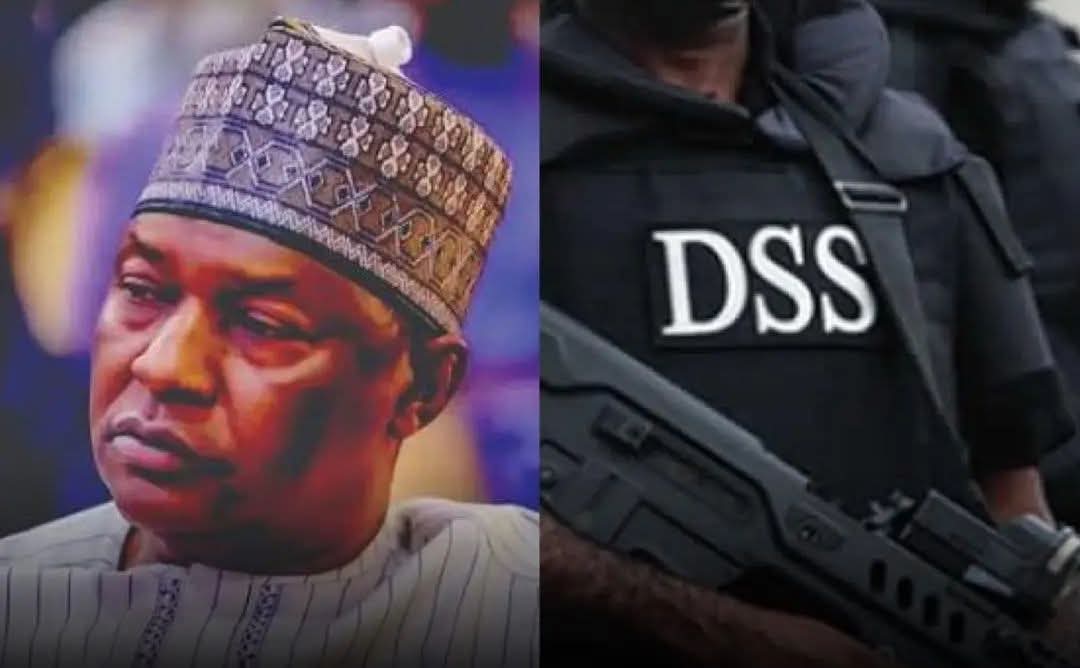
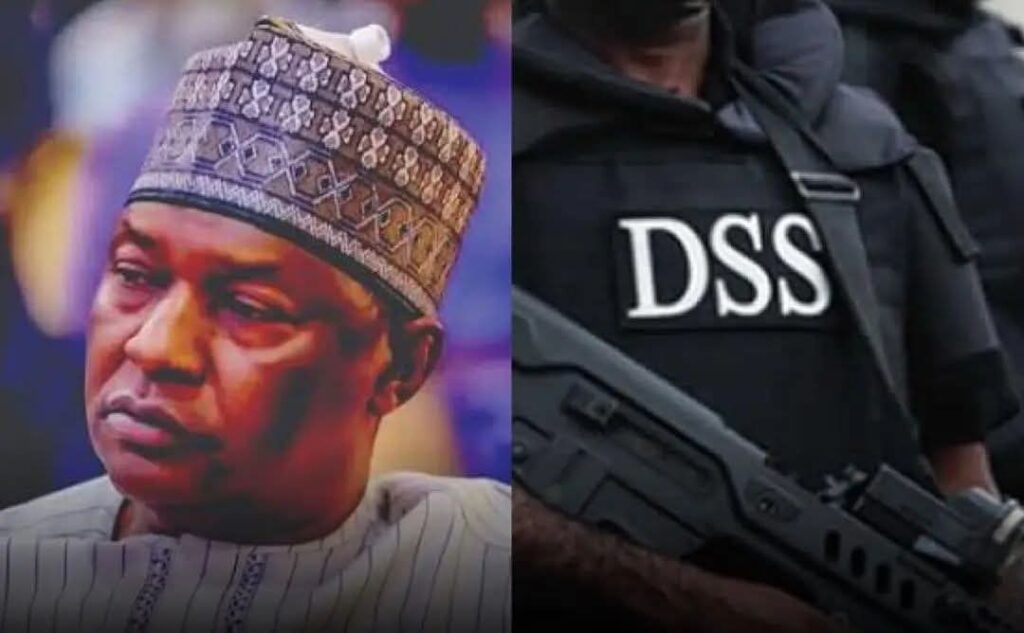
Abubakar Malami DSS custody
Former Attorney-General of the Federation and Minister of Justice, Abubakar Malami, has been taken into custody by the Department of State Services following a visit to Kuje Correctional Centre in the Federal Capital Territory, triggering intense political and legal scrutiny across Nigeria.
Security sources confirmed that Malami was intercepted and invited for questioning shortly after leaving the correctional facility, where he was said to have gone on a private visit. While authorities have not formally disclosed the reasons for his detention, multiple officials familiar with the matter say the development is linked to ongoing investigations into activities during his tenure as Nigeria’s chief law officer.
Abubakar Malami DSS custody. The incident marks one of the most high-profile post-office encounters between a former senior government official and Nigeria’s domestic intelligence agency in recent years.
What We Know So Far
According to security and legal sources, Abubakar Malami was taken into DSS custody shortly after exiting Kuje Prison, where he reportedly visited individuals currently facing trial over high-profile financial and security-related offences.
Officials insist the move does not yet amount to an arrest but rather an invitation for questioning as part of “ongoing investigations.” However, the circumstances surrounding the timing and location of the intervention have raised significant questions.
Kuje Correctional Centre is one of Nigeria’s most sensitive custodial facilities, housing suspects linked to terrorism, corruption, and major criminal cases. Any interaction involving former top government officials at the facility is considered a matter of national security interest.
Why Malami Matters
As Attorney-General of the Federation from 2015 to 2023, Malami wielded enormous influence over Nigeria’s legal system. His office supervised prosecutions, approved or discontinued major cases, and advised the federal government on sensitive legal and constitutional matters.
https://ogelenews.ng/abubakar-malami-dss-custody-kuje-prison
Abubakar Malami DSS custody. During his tenure, Malami was a central figure in Nigeria’s anti-corruption framework, but he also faced repeated allegations of selective prosecution, abuse of discretion, and interference in high-profile cases.
Civil society groups had long accused the former attorney-general of using his office to shield political allies while pursuing opponents, claims he consistently denied.
The current DSS action has therefore revived unresolved debates about accountability for senior public officials after leaving office.
DSS Silence, Legal Community Reacts
As of the time of filing this report, the Department of State Services has not issued an official statement explaining why Malami was taken into custody after the Kuje Prison visit.
The silence has fueled speculation within legal and political circles.
Senior lawyers contacted by Ogele News described the situation as “extraordinary but not unlawful,” noting that the DSS has wide investigative powers under Nigerian law, particularly where national security or interference with judicial processes is suspected. Abubakar Malami DSS custody
However, they cautioned that transparency is essential.
“When a former attorney-general is taken into DSS custody, the public deserves clarity,” one senior advocate said. “Anything short of that risks undermining confidence in due process.”
Political Undertones and Public Perception
The development has also taken on political significance.
Malami served under the administration of former President Muhammadu Buhari, and his tenure remains one of the most debated in Nigeria’s recent legal history. Since leaving office, he has maintained a relatively low public profile, though he is widely believed to retain strong political connections. Abubakar Malami DSS custody
Opposition figures have framed the DSS action as a long-overdue step toward accountability, while some allies warn against what they describe as “politicisation of security agencies.”
Social media reaction has been swift and polarised, with many Nigerians demanding a full investigation into Malami’s time in office, while others caution against trial by public opinion.
The Kuje Prison Factor
Kuje Correctional Centre occupies a unique place in Nigeria’s security architecture.
Following the 2022 terrorist attack that led to a mass jailbreak, the facility has remained under heightened surveillance. Any unusual access, visits, or engagements involving inmates are closely monitored by intelligence agencies. Abubakar Malami DSS custody
Security analysts say Malami’s presence at the facility, given his former role and influence, would naturally attract DSS attention.
“In security terms, context matters,” a retired intelligence officer explained. “Who you visit, why you visit, and what you discuss can raise legitimate concerns.”
What Happens Next
Legal experts say several scenarios are possible:
• Malami may be released after questioning if investigators find no actionable issues.
• He could be invited for further questioning under caution.
• Formal charges could follow if evidence of wrongdoing emerges.
For now, the DSS is understood to be reviewing details of the prison visit, including authorization, purpose, and any potential links to ongoing investigations.
A Broader Signal on Accountability
Beyond Abubakar Malami as an individual, the incident sends a broader message about post-office scrutiny in Nigeria.
Successive governments have pledged to strengthen accountability for public officials, but critics argue that enforcement has been uneven.
If handled transparently and lawfully, analysts say the DSS action could reinforce the principle that no official is above scrutiny after leaving office.
If mishandled, however, it risks deepening public mistrust in security institutions.
Bottom Line
The decision to take former Attorney-General Abubakar Malami into DSS custody after a Kuje Prison visit has opened a new chapter in Nigeria’s accountability debate.
As Nigerians await official clarification, the episode underscores a central tension in democratic governance: balancing security oversight, due process, and political neutrality.Abubakar Malami DSS custody
The coming days will determine whether this moment becomes a routine security inquiry—or a landmark test of Nigeria’s commitment to post-office accountability.
Abubakar Malami DSS custody