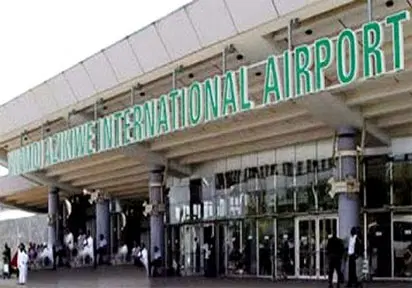


















Abuja airport registers 10,000 Go Cashless cards
Abuja airport registers 10,000 Go Cashless cards as Nnamdi Azikiwe International Airport moves deeper into the Federal Airports Authority of Nigeria (FAAN) cashless policy, with officials saying registrations have climbed sharply following the full enforcement of electronic payment at the airport toll gate.
The Airport Manager, Ahmed Danjuma, said no fewer than 10,000 “Go Cashless” cards have been registered at the Abuja airport since the commencement of implementation. He disclosed this in an interview with the News Agency of Nigeria (NAN) on Tuesday, March 3, 2026, in Abuja.
Danjuma explained that the temporary gridlock witnessed on Monday and into the early hours of Tuesday at the toll gate was largely driven by late compliance. According to him, although registration began in August 2025, a large number of airport users did not register early despite sensitisation, only rushing in when cash collection stopped.
That’s the practical meaning behind the headline Abuja airport registers 10,000 Go Cashless cards: the policy is no longer optional at the toll gate, and the rush to comply is now showing up as traffic.
What “Go Cashless” is, and why it’s happening now
FAAN’s cashless drive has been building for months. In September 2025, FAAN announced that payments at major revenue points at Lagos and Abuja airports would become strictly cashless under an initiative widely described as “Operation Go Cashless.”
The Abuja airport’s current toll-gate experience is one of the first real stress tests: when many users are still learning the system at the same time the system becomes mandatory.
In the Abuja manager’s account, full cashless enforcement at the toll gate began March 1, 2026, in line with wider government reforms aimed at eliminating cash collection at toll points and improving transparency and revenue optimisation.
So when you read Abuja airport registers 10,000 Go Cashless cards, it sits inside a broader policy shift: less cash handling, more electronic traceability, and tighter control over revenue points.
Why the toll gate became the choke point
The pattern described by airport officials is familiar in Nigeria: people ignore registration and sensitisation until enforcement becomes real, then everyone shows up at once.
Danjuma said the airport began registering users months earlier, but many drivers and airport users did not “bother” until the full enforcement kicked in, leading to queues and delays at the toll gate.
Separately, Nigeria Info reported FAAN’s explanation that congestion occurred as many drivers tried to register at the toll gates despite advisories to register ahead of time at designated points.
This is why Abuja airport registers 10,000 Go Cashless cards is also a commuter story, not just a policy story: it is about how Nigerians respond to enforcement.
https://ogelenews.ng/abuja-airport-registers-10000-go-cashless-cards
What the card is used for
FAAN’s “Go Cashless” system is tied to an airport card model designed for cashless payments within FAAN revenue points. FAAN’s published FAQ describes the FAAN Airport Card as a prepaid contactless card intended to enable seamless cashless payments for airport users.
FAAN has also used its public channels to push the registration flow and pickup process for the “Go Cashless” card across airports.
That’s the system underneath the headline Abuja airport registers 10,000 Go Cashless cards: a push to move airport payments away from cash and into a controlled electronic lane.
What officials say the policy will achieve
The Abuja airport manager framed the switch as part of a reform to improve transparency and revenue optimisation.
FAAN, in earlier communications around the policy, also positioned cashless payments as a way to reduce cash-handling risks and improve operational efficiency at airports.
In plain language: the goal is to reduce leakages, reduce cash disputes, and make payment records easier to audit.
That’s the governance argument behind Abuja airport registers 10,000 Go Cashless cards.
What travellers and drivers should do now
If Abuja airport is now strictly cashless at the toll gate, then the advice is simple and practical:
- Don’t wait until you reach the toll point to start registration (that’s what creates the gridlock).
- Register ahead and collect your card through FAAN’s designated process.
- Expect enforcement to tighten as the policy scales nationwide.
The key point is that Abuja airport registers 10,000 Go Cashless cards because enforcement has started biting, not because Nigerians suddenly fell in love with registration.
The bigger picture
Abuja is not an isolated case. The policy was announced for major airports first, with a plan to expand.
So what plays out at the Nnamdi Azikiwe International Airport toll gate is a preview of what other airports and revenue points may experience: a compliance surge, initial congestion, then gradual normalisation as more users get onboarded.
For now, the airport’s figure is the headline: Abuja airport registers 10,000 Go Cashless cards—and the next headline Nigerians will demand is whether the system becomes smoother, faster, and less chaotic as the weeks go by.
https://punchng.com/abuja-airport-registers-10000-go-cashless-cards