
















Army chief urges troops to uphold unity, sacrifice
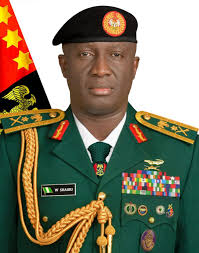
At a time when Nigeria’s security forces remain under pressure across multiple theatres, the Chief of Army Staff, Lt.-Gen. Waidi Shaibu, has called on troops to hold fast to the values that keep armies standing in difficult times: unity, discipline, sacrifice and a steady commitment to duty.
The message came during a special Eid-el-Fitr Sallah luncheon for frontline personnel within the 8 Division Area of Responsibility in Dan-Ali, Danmusa Local Government Area of Katsina State, where officers and soldiers serving under Operation Fasan Yamma gathered for a moment of celebration, reflection and reassurance from the top command.
The phrase Army chief urges troops to uphold unity, sacrifice may sound ceremonial at first glance, but in the present Nigerian context it carries operational weight. Katsina, like much of the North-West, has faced persistent insecurity driven by banditry, kidnappings and recurring attacks on rural communities. In that setting, morale is not a soft issue. It is part of combat readiness, Army chief urges troops to uphold unity, sacrifice.
Speaking through the Commander, Infantry Corps and Centre, Maj.-Gen. Godwin Mutkut, Shaibu said the occasion was not merely about marking the end of Ramadan. It was also a reminder of shared purpose among soldiers serving under strain. He noted that this year’s Ramadan coincided with the Christian Lenten season, meaning Muslim and Christian personnel underwent periods of fasting and reflection at the same time, a convergence he presented as a living symbol of cohesion within the force.
That is the deeper meaning behind Army chief urges troops to uphold unity, sacrifice. In a military confronting internal security threats on several fronts, cohesion is not an abstract virtue. It is a survival tool. Shaibu’s message framed both Ramadan and Lent as seasons that reflect qualities soldiers must carry into the field: self-restraint, endurance, humility, moral renewal and shared commitment.
He also paid tribute to personnel who have died in service, describing them as fallen heroes whose sacrifices continue to inspire those still in uniform. That note matters. Every military facing prolonged internal conflict must work against fatigue, grief and the erosion of morale. By publicly honouring the dead and addressing those still deployed far from home, the Army Chief was doing more than offering seasonal greetings. He was reinforcing the moral contract between leadership and troops.
The message on welfare was equally important. Shaibu assured troops that the Nigerian Army would continue to improve living conditions, strengthen professional development, and enhance support systems for soldiers and their families. He made the point plainly: operational strength is not built only on weapons and tactics, but also on morale, confidence and the well-being of personnel, Army chief urges troops to uphold unity, sacrifice.
https://ogelenews.ng/army-chief-urges-troops-to-uphold-unity-sacrifice
In that light, Army chief urges troops to uphold unity, sacrifice becomes more than a festive headline. It reflects an old military truth that armies under stress need not only firepower but faith in one another and confidence that the institution remembers the human cost of service. In Nigeria, where troops are deployed against bandits, terrorists and other armed groups, that reminder comes at a necessary time. Reuters and AP reported only days ago that Nigerian troops repelled a major insurgent assault on a base in Mallam Fatori, Borno State, underlining the scale of pressure still facing the armed forces.
There was also political backing around the same period. President Bola Tinubu told military personnel that Nigeria’s diversity remained a source of strength and pledged that the welfare of soldiers and their families would receive priority attention. That wider official language echoed the same themes of unity, hardship and national gratitude that shaped Shaibu’s message in Katsina.
Still, the value of this story lies in its setting. Operation Fasan Yamma is not a seminar room assignment. It is a live theatre in a region battered by bandit violence and fear. When the General Officer Commanding 8 Division, Maj.-Gen. Paul Koughna, described the luncheon as part of efforts to boost troop morale, he was acknowledging that soldiers fighting insecurity need visible support as much as orders. On behalf of Governor Dikko Radda, Katsina’s Commissioner for Internal Security and Home Affairs, Mua’zu Nasiru, also pledged continued state support through welfare, logistics and collaboration.
So, Army chief urges troops to uphold unity, sacrifice is best read not as a routine holiday statement, but as a morale signal from the top. It tells soldiers that leadership sees their burden. It tells the public that the Army understands morale as part of security. And it tells the country that at a moment of strain, the military wants to project internal cohesion rather than fatigue or fragmentation.
There is another reason this matters. Security crises often expose institutional cracks. Ethnic suspicion, religious difference, poor welfare and long deployments can wear down any force over time. By pointing to the overlap of Ramadan and Lent, Shaibu was not making a decorative point. He was arguing that the Army’s diversity is a source of strength when anchored in shared duty. For a country as divided and as complex as Nigeria, that is a message with significance beyond the barracks.
This is why Army chief urges troops to uphold unity, sacrifice works best when framed as both a security and leadership story. The real subject is not just what was said, but why it was said there, to those troops, at this moment. Insecurity in the North-West has not vanished. The demands on troops remain heavy. Families remain separated. Risks remain real. What leadership can offer, alongside logistics and welfare, is clarity of purpose.
In the end, the most compelling part of this story is not ceremonial language, but the blunt reality behind it. Troops in the field are being asked to carry the burden of Nigeria’s unfinished security battles. Leadership, in turn, is trying to sustain their fighting spirit with a message rooted in unity, sacrifice and institutional support. That is the proper frame for this report. Not as a passing holiday event, but as a snapshot of how the Army is trying to hold its centre while the country continues to wrestle with insecurity.
https://punchng.com/insecurity-army-chief-urges-troops-to-uphold-unity-sacrifice/

Army chief urges troops to uphold unity, sacrifice