

















Atiku ICPC partisan allegation
Former Vice-President Atiku Abubakar has strongly criticised the Independent Corrupt Practices and Other Related Offences Commission, accusing the anti-graft agency of acting in a partisan manner following an alleged attempt to arrest former Kaduna State governor Nasir El-Rufai at the airport.
The Atiku ICPC partisan allegation has intensified Nigeria’s already charged political atmosphere, raising fresh concerns about the neutrality of anti-corruption agencies and their role in the country’s democratic process.
What Happened at the Airport
According to Atiku, the alleged incident occurred when El-Rufai arrived in Nigeria from an overseas trip. Atiku said security operatives attempted to arrest him upon arrival, but the attempt failed after intervention by his aides and legal team. 
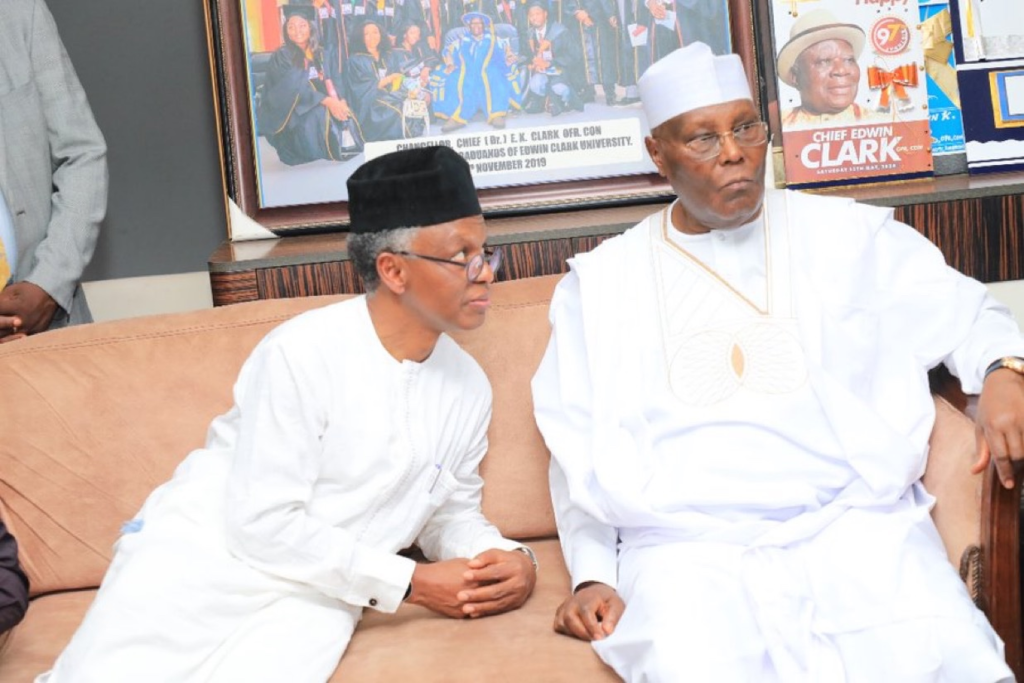
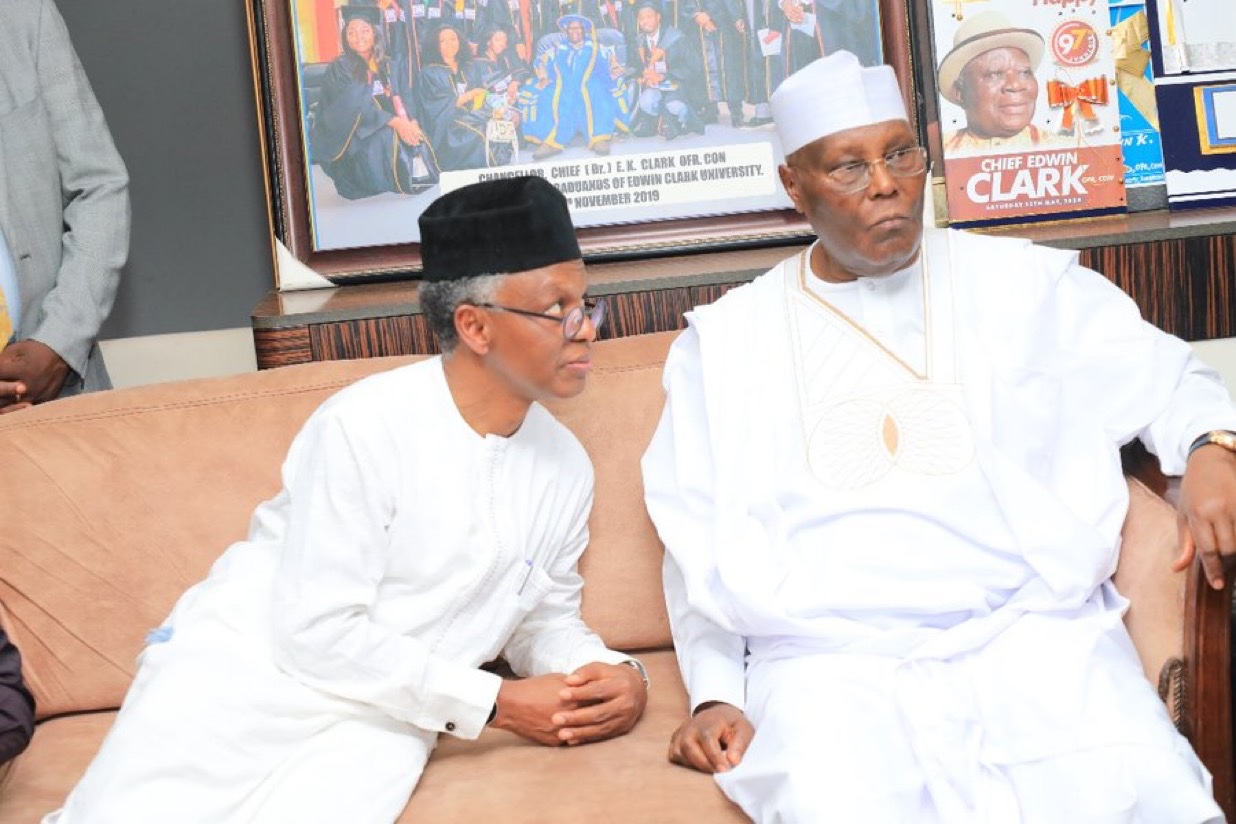
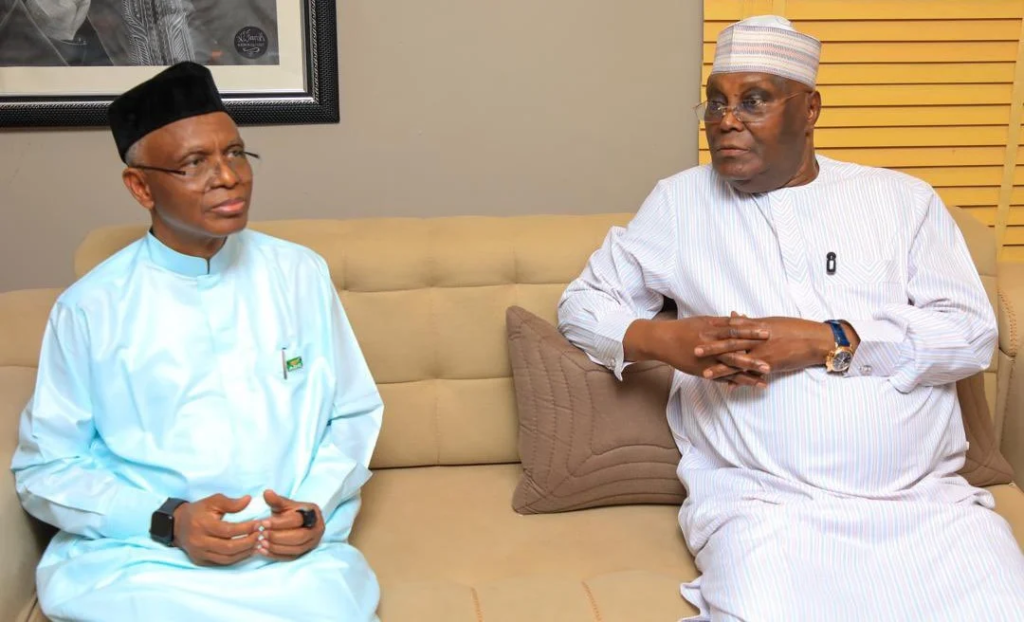
In a statement shared on social media, Atiku revealed that he visited El-Rufai at his residence shortly after the incident in a show of solidarity.
He described the alleged arrest attempt as politically motivated and accused the ICPC of acting in a partisan manner.
Atiku wrote that he paid a solidarity visit to El-Rufai following “the failed attempt by the partisan ICPC to arrest him at the airport upon his arrival in the country.” 
The Atiku ICPC partisan allegation immediately sparked nationwide debate, with political observers divided over the implications.
ICPC Yet to Officially Confirm Incident
As of the time of reporting, neither the ICPC nor any other security agency had officially confirmed the alleged arrest attempt. 
This lack of official confirmation has further fueled speculation and political controversy surrounding the incident.
Some reports indicated that security operatives confronted El-Rufai at the airport but did not present a formal arrest warrant before allowing him to leave. 
El-Rufai’s legal representatives have described the incident as unlawful and suggested that appropriate legal action may be considered.
The Atiku ICPC partisan allegation therefore remains a politically sensitive issue pending official clarification.
Political Context Behind the Allegations
The controversy comes amid growing political tension following El-Rufai’s recent political realignment and criticism of federal authorities.
El-Rufai had previously warned of possible politically motivated arrest and detention, claiming that he and his associates were being subjected to investigations and pressure from security agencies. 
His recent association with opposition political forces has further heightened political sensitivity.
Political analysts believe the Atiku ICPC partisan allegation reflects broader tensions between the ruling establishment and opposition figures.
Atiku’s Broader Warning to Anti-Corruption Agencies
Beyond defending El-Rufai, Atiku used the opportunity to issue a broader warning to anti-corruption agencies.
He urged the ICPC and other institutions to maintain neutrality and avoid actions that could undermine public trust.
Atiku emphasised that anti-corruption agencies must remain independent and avoid political bias.
Observers say the Atiku ICPC partisan allegation raises important questions about institutional neutrality.
https://ogelenews.ng/atiku-icpc-partisan-allegation
ICPC’s Role and Ongoing Investigations
The ICPC is one of Nigeria’s key anti-corruption agencies, responsible for investigating corruption and prosecuting offenders.
The agency has previously investigated individuals associated with El-Rufai’s administration.
In January 2026, the ICPC arraigned an associate of El-Rufai on charges involving alleged financial misconduct. 
These investigations have contributed to the broader political controversy surrounding the former governor.
The Atiku ICPC partisan allegation must therefore be understood within the context of ongoing anti-corruption investigations.
Legal and Constitutional Issues
Legal experts note that any arrest must follow due process, including presentation of a warrant and formal charges.
Failure to follow proper legal procedures could violate constitutional protections.
The Atiku ICPC partisan allegation highlights concerns about due process and rule of law.
Nigeria’s Constitution guarantees citizens protection against unlawful arrest.
Observers say adherence to legal procedures is essential for maintaining public confidence in law enforcement institutions.
Political Implications Ahead of Future Elections
The Atiku ICPC partisan allegation comes at a politically sensitive time as Nigeria prepares for future electoral contests.
Political tensions between government and opposition figures have intensified.
Analysts say actions involving prominent political figures often attract heightened scrutiny.
The Atiku ICPC partisan allegation could influence political discourse and public perception of anti-corruption efforts.
Public Reaction and National Debate
The controversy has generated significant public reaction across Nigeria.
Supporters of El-Rufai and opposition figures have expressed concern about possible political targeting.
Others argue that anti-corruption agencies must be allowed to perform their duties without interference.
The Atiku ICPC partisan allegation reflects broader debates about governance, accountability and political neutrality.
Civil society organisations have called for transparency and adherence to the rule of law.
What Happens Next
It remains unclear whether the ICPC will respond officially to the allegations.
Observers say an official clarification could help resolve public uncertainty.
The Atiku ICPC partisan allegation underscores the importance of transparency in law enforcement.
For now, the controversy continues to unfold, with political and legal implications still emerging.
The incident represents a critical moment in Nigeria’s evolving political landscape.
The Atiku ICPC partisan allegation may have lasting implications for public trust in anti-corruption institutions.
https://punchng.com/atiku-slams-partisan-icpc-over-failed-attempt-to-arrest-el-rufai