

















Borno bombings
The wave of Borno bombings that tore through Maiduguri on Monday night has reignited national outrage, forcing Nigeria’s top defence leadership to relocate to the troubled city in what officials describe as a decisive move to contain a resurgent insurgency.
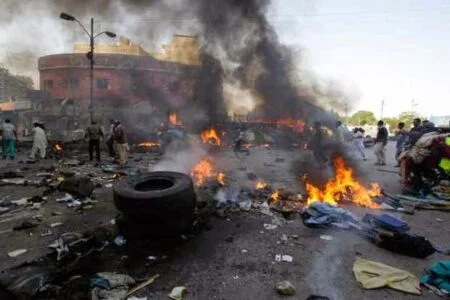
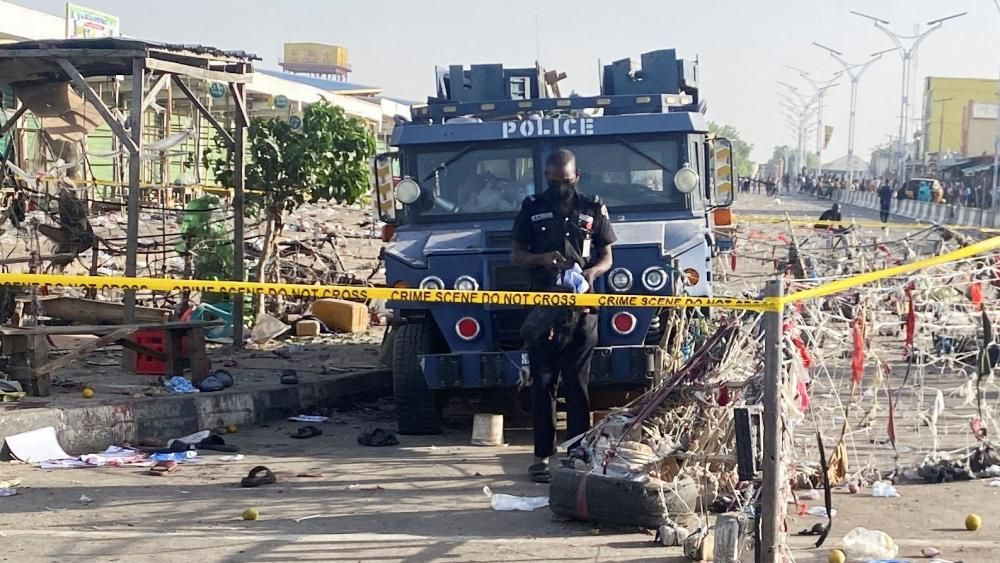
At least 23 people were killed and more than 100 others injured in a series of coordinated explosions that struck key civilian locations, including a busy market, a post office, and the entrance to the University of Maiduguri Teaching Hospital.
The attacks, widely believed to be suicide bombings, occurred during the evening rush as residents broke their Ramadan fast, amplifying both casualties and psychological impact.
A City Shaken Again
For years, Maiduguri had experienced relative calm compared to the peak of the Boko Haram insurgency. That fragile stability was shattered by the latest Borno bombings, which many analysts now describe as one of the deadliest incidents in the city in recent years.
Witnesses recounted scenes of chaos, with emergency responders struggling to evacuate victims amid panic and confusion. Hospitals were quickly overwhelmed as casualties poured in, some requiring urgent surgical attention.
Although no group has formally claimed responsibility, security sources point to Boko Haram and its rival faction, the Islamic State West Africa Province (ISWAP), both of which have intensified attacks across the northeast in recent weeks.
Tinubu Orders Defence Chiefs to Maiduguri
In response to the Borno bombings, President Bola Tinubu ordered Nigeria’s defence chiefs and top security officials to relocate to Maiduguri to take direct control of operations.
“I have directed security chiefs to move to Maiduguri to take charge of the situation,” the President said, describing the attacks as desperate attempts by terrorist elements under pressure.
The directive marks a rare but significant step, signaling the federal government’s intention to centralize command and intensify counter-terrorism operations in the region.
Security has since been tightened across Maiduguri, with increased patrols, checkpoints, and intelligence surveillance aimed at preventing further attacks.
Pattern of Resurgence
The latest Borno bombings are not isolated. They form part of a broader resurgence of militant activity across northeastern Nigeria.
Recent weeks have seen:
- Attacks on military bases
- Increased abductions
- Coordinated raids on rural communities
These developments suggest that insurgent groups are regaining operational momentum despite years of military pressure.
Experts warn that the ability to strike a heavily fortified city like Maiduguri indicates serious intelligence gaps and evolving tactics among insurgents.
https://ogelenews.ng/borno-bombings-defence-chiefs-maiduguri
Why Maiduguri Matters
Maiduguri is not just another city. It is the epicentre of Nigeria’s counter-insurgency campaign and the symbolic birthplace of Boko Haram.
An attack here sends a powerful message.
The Borno bombings targeted:
- Economic hubs (markets)
- Public institutions (post office)
- Critical healthcare infrastructure
This pattern reflects a deliberate attempt to undermine both civilian morale and state authority.
Public Anger and Political Pressure
The killings have sparked widespread anger across Nigeria, with citizens questioning the effectiveness of ongoing security strategies.
Political stakeholders, civil society groups, and residents have all called for:
- Improved intelligence gathering
- Better protection of urban centres
- Accountability within the security architecture
The outrage following the Borno bombings is not just about the loss of lives, but about the perception that gains made over the years may be slipping.
Humanitarian Impact
Beyond the immediate casualties, the attacks carry deeper humanitarian consequences.
Borno State already hosts millions of internally displaced persons due to over a decade of insurgency.
Renewed violence risks:
- Triggering fresh displacement
- Disrupting fragile recovery efforts
- Increasing pressure on already stretched healthcare systems
For residents, the Borno bombings represent a painful reminder that peace remains fragile.
The Road Ahead
The relocation of defence chiefs to Maiduguri signals urgency, but it also raises expectations.
Security analysts argue that success will depend on:
- Intelligence-driven operations
- Civil-military cooperation
- Sustained investment in surveillance and technology
The federal government now faces a critical test: whether it can translate this high-level intervention into lasting security gains.
Conclusion
The Borno bombings have once again exposed the persistent threat of insurgency in Nigeria’s northeast.
While the swift deployment of defence chiefs may help stabilize the situation, the deeper challenge remains: dismantling the networks that continue to orchestrate such deadly attacks.
For now, Maiduguri mourns its dead, tends to its wounded, and braces for what comes next.