














Burkina Faso releases Nigerian Air Force crew
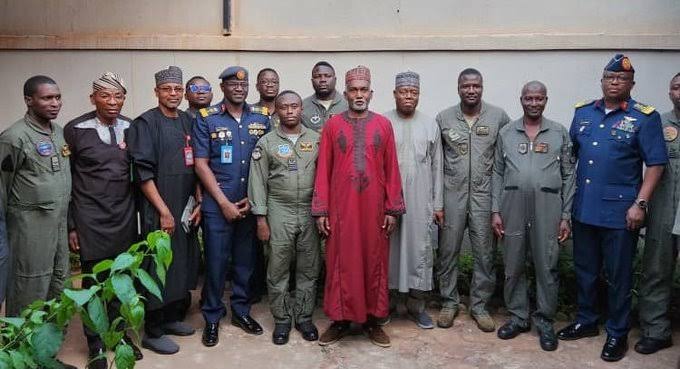
Burkina Faso releases Nigerian Air Force crew after diplomatic talks brought an end to the detention of 11 Nigerian military personnel who made an emergency landing in the West African country earlier this month.
The officers, who had been held since December 8, returned safely to Nigeria after sustained diplomatic engagement between both governments. Nigerian authorities confirmed the development late Friday, stressing that the matter was resolved through dialogue rather than confrontation at a time when regional trust in West Africa remains fragile.
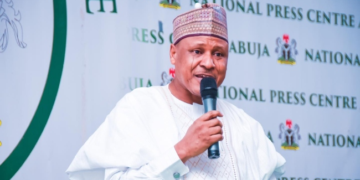
Nigeria’s Minister of Foreign Affairs, Yusuf Tuggar, described the release as the result of “measured and respectful engagement,” reinforcing Nigeria’s preference for quiet diplomacy amid shifting political and security alignments across the Sahel.
How the incident unfolded
According to officials familiar with the situation, the Nigerian Air Force aircraft was on an authorised operational flight when it developed technical issues that made a precautionary landing unavoidable. The aircraft subsequently touched down in Burkina Faso without prior clearance, triggering an immediate security response.
Emergency landings are not uncommon in military aviation. However, the prevailing regional climate meant the incident was treated with heightened sensitivity. Burkinabè authorities detained the crew while verifying the aircraft’s mission profile, flight clearance, and command authorisation from Abuja.
https://ogelenews.ng/burkina-faso-releases-nigerian-air-force-crew
Security sources indicated that there was no allegation of espionage or hostile intent. Instead, the detention followed internal protocols applied to unexpected foreign military activity within national airspace.
A cautious response shaped by regional tensions
Burkina Faso has, alongside Mali and Niger, adopted a more guarded posture toward external military movements since the formation of the Alliance of Sahel States. The bloc emerged amid disagreements with the Economic Community of West African States over sanctions, governance transitions, and security cooperation frameworks.
These dynamics have reshaped how Sahelian governments respond to cross-border incidents, even those involving neighbouring countries with long-standing military and diplomatic ties.
A regional analyst noted that in earlier years, such an incident might have been resolved swiftly at operational level. “Today, sovereignty concerns and political realignments mean every unexpected military movement is scrutinised far more closely,” the analyst said.
Diplomatic engagement behind the scenes
Once Nigerian authorities became aware of the detention, the Ministry of Foreign Affairs activated diplomatic channels. Nigeria’s embassy in Ouagadougou worked alongside senior officials in Abuja to provide documentation and clarification on the aircraft’s mission and emergency circumstances.
The development confirms that Burkina Faso releases Nigerian Air Force crew following sustained dialogue between Abuja and Ouagadougou.
Foreign Minister Tuggar confirmed that discussions were anchored on mutual respect, transparency, and existing bilateral and regional protocols governing airspace use and military cooperation.
“There was no breach of international norms,” a senior Nigerian official said. “The situation required patience, clarity, and restraint, and those principles guided the engagement.”
Following the exchange of assurances, Burkina Faso authorised that the, Burkina Faso releases Nigerian Air Force crew
Nigeria’s measured public posture
Throughout the episode, Nigerian officials avoided inflammatory rhetoric. Government statements consistently framed the matter as a misunderstanding resolved through diplomacy, signalling Abuja’s intention to preserve functional relations with Burkina Faso despite wider regional disagreements.
The Nigerian Air Force, in a brief statement after the officers’ return, expressed appreciation to the federal government for its intervention and reaffirmed its commitment to operational professionalism and compliance with international aviation standards.
Families of the detained personnel also expressed relief. One relative described the period as “emotionally draining,” but said confidence in diplomatic channels helped sustain hope during the delay.
Broader regional implications
The incident underscores the increasingly delicate nature of military coordination in West Africa, where insurgency, arms trafficking, and transnational crime demand cooperation even as political divisions widen.
Nigeria, which shares deep economic, cultural, and security ties across the Sahel, has repeatedly argued that isolation and breakdowns in communication risk worsening instability rather than containing it.
Security experts warn that mismanaged misunderstandings between regional militaries could escalate rapidly if not handled with restraint.
“This case shows why protocols must be continuously reviewed and respected,” said a former regional defence official. “Emergency situations will happen. What matters is whether governments choose escalation or engagement.”
Looking ahead
With the safe return of the Nigerian Air Force personnel, attention is now shifting to prevention. Diplomats and security officials suggest that clearer advance notification systems, improved military-to-military communication, and renewed confidence-building measures could reduce the risk of similar incidents.
For now, Abuja appears determined to close the chapter quietly. There has been no indication of formal protest or retaliatory action, reinforcing Nigeria’s broader message that dialogue remains preferable even in a tense regional environment.
As West Africa continues to navigate political realignment and security uncertainty, the episode stands as a reminder that diplomacy, when applied deliberately, can still defuse situations that might otherwise spiral into crisis.
Analysts say the decision by Ouagadougou to ensure that Burkina Faso releases Nigerian Air Force crew without escalation reflects the value of quiet diplomacy in a tense regional climate.