

















https://ogelenews.ng/central-bank-monetary-policy-nigeria
Central Bank Monetary Policy Decision Explained
Central Bank Holds Steady on Monetary Policy as Inflation Pressures Persist
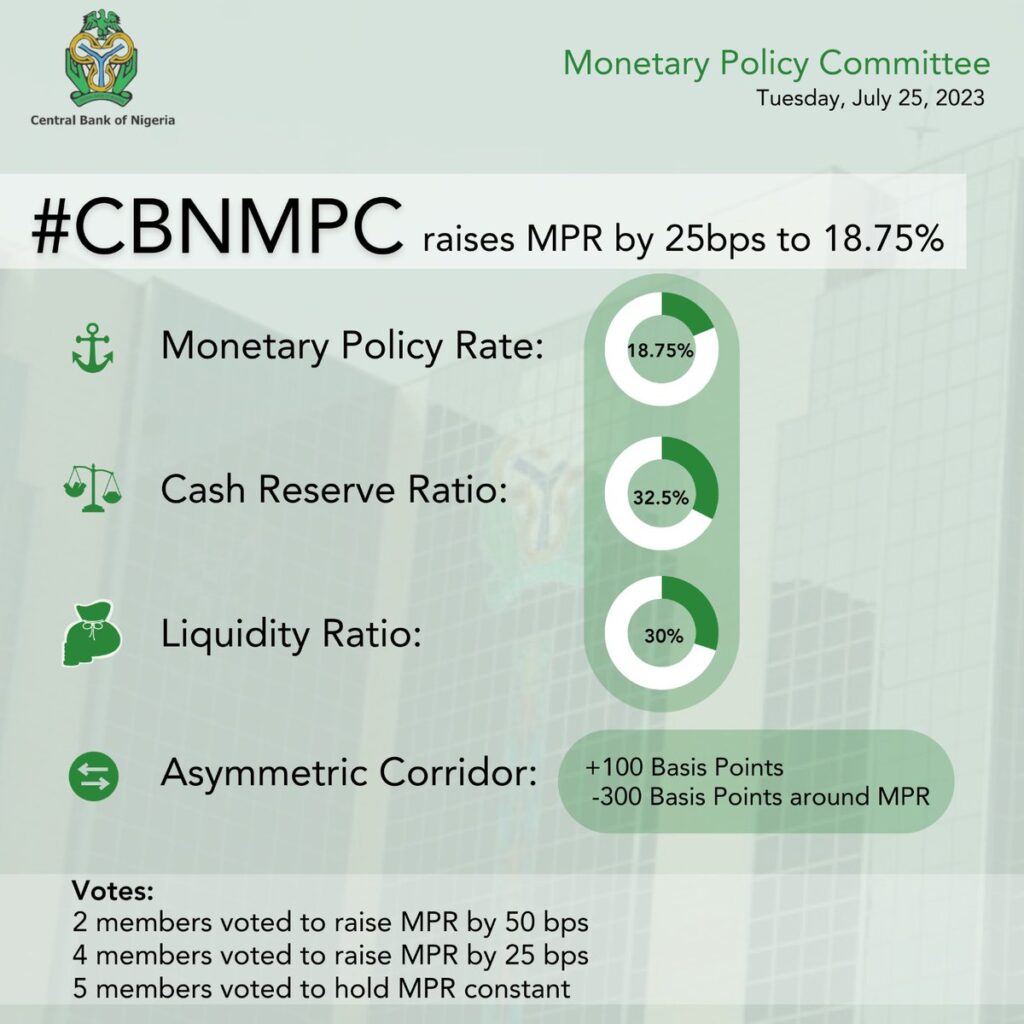
The decision by the Central Bank of Nigeria to hold steady on its current monetary stance has triggered renewed debate across Nigeria’s financial and economic landscape, as analysts weigh the implications for inflation control, economic growth, and investor confidence.
At its latest policy meeting, the Central Bank opted to maintain existing key interest rates, resisting pressure from some quarters to tighten further in response to stubborn inflation levels. The move signals a cautious balancing act, one that reflects both the urgency of taming rising prices and the risk of choking an already fragile economy.
For the Central Bank, monetary policy has become a delicate instrument in an economy facing multiple shocks, from currency volatility and food inflation to weak consumer purchasing power and sluggish industrial output.Central Bank Holds Steady on Monetary Policy as Nigeria’s monetary authorities attempt to balance inflation control with economic stability amid persistent price pressures.
Why the Central Bank Monetary Policy Decision Matters
The Central Bank monetary policy decision is not just a technical adjustment debated by economists. It directly affects how expensive it is to borrow money, how attractive Nigerian assets appear to investors, and how stable the naira remains in foreign exchange markets.
By holding rates steady, the Central Bank is signalling that it believes further tightening could do more harm than good at this stage. High interest rates already mean costlier loans for businesses, reduced access to credit for households, and increased pressure on government borrowing.
Analysts note that the current Central Bank monetary policy reflects a pause rather than a pivot, suggesting policymakers are waiting to see how earlier rate hikes continue to filter through the economy.
Inflation Pressures Still Dominate Policy Thinking
Inflation remains the elephant in the room. Food prices, transportation costs, and imported goods continue to stretch household budgets, especially for low and middle-income Nigerians. Despite previous tightening cycles, inflation has proven resilient, driven by structural factors such as insecurity in food-producing regions, logistics bottlenecks, and currency depreciation.
Within this context, the Central Bank monetary policy stance appears designed to avoid worsening economic pain while still keeping inflation expectations anchored. Officials are keenly aware that aggressive rate hikes may suppress demand without addressing the root causes of price instability.
Economists argue that monetary tools alone cannot solve inflation driven by supply-side constraints, a reality that continues to shape the Central Bank’s cautious approach.
Impact on Lending and Business Activity
For banks and borrowers, the Central Bank monetary policy decision offers temporary relief. By keeping rates unchanged, commercial lenders avoid immediate pressure to reprice loans upward, while businesses gain some predictability in financing costs.
Small and medium-scale enterprises, many of which are already struggling with high operating expenses, stand to benefit from the pause. However, analysts warn that access to credit remains tight, as banks remain risk-averse in an uncertain macroeconomic environment.
The manufacturing and real sectors, which rely heavily on credit to expand production and employment, are watching closely for signs that monetary conditions may ease later in the year.
Foreign Exchange and Investor Confidence
Another key consideration is the foreign exchange market. Central Bank monetary policy plays a critical role in shaping investor sentiment toward the naira. Stable interest rates can help reduce uncertainty, but they may also limit the appeal of Nigerian assets if inflation remains high.
Foreign portfolio investors often weigh interest rate returns against currency risk. A steady policy stance suggests the Central Bank is prioritising stability over short-term capital inflows, a strategy some analysts see as prudent given recent volatility in global financial markets.
Still, concerns remain about whether the current Central Bank monetary policy is strong enough to support sustained confidence in the naira without complementary fiscal and structural reforms.
Analysts Divided on the Road Ahead
Economic analysts are split on whether holding rates was the right call. Some argue that further tightening was necessary to send a strong anti-inflation signal. Others believe that aggressive monetary action would only deepen economic hardship without addressing supply constraints.
What is clear is that Central Bank monetary policy is operating in a narrow corridor, with limited room for error. Policymakers must weigh inflation risks against unemployment, growth, and social stability, all within a politically sensitive environment.
Several analysts have called for closer coordination between monetary and fiscal authorities, noting that interest rates alone cannot stabilise prices or drive sustainable growth.
What Nigerians Should Expect Next
Looking ahead, the Central Bank monetary policy outlook will depend heavily on inflation trends, exchange rate performance, and global economic conditions. Any significant rise in inflation or renewed pressure on the naira could force a policy rethink.
For now, the message from the Central Bank is one of caution and watchful waiting. Businesses, investors, and households are advised to prepare for continued tight financial conditions, even as policymakers monitor economic signals.
Ultimately, the effectiveness of Central Bank monetary policy will hinge on broader reforms, improved security, stronger food production, and a more predictable fiscal environment.
The Bigger Picture
The decision to hold rates steady underscores a broader truth about Nigeria’s economic moment: monetary policy alone cannot fix structural weaknesses. While the Central Bank continues to play a stabilising role, lasting relief from inflation and economic uncertainty will require coordinated action across government institutions.
For Nigerians navigating rising costs and economic uncertainty, the Central Bank’s latest move offers stability, but not yet relief.
https://www.cbn.gov.ng/MonetaryPolicy/MPC.asp
Central Bank Monetary Policy.