


















Chad shuts Sudan border
Chad’s government has announced that it is closing its border with Sudan until further notice, citing repeated incursions linked to Sudan’s civil war and warning that the measure is meant to stop any spillover of the conflict into Chadian territory. 
In a statement carried by AFP and republished by multiple outlets, Chad’s communications minister Mahamat Gassim Cherif said the decision followed “repeated incursions and violations” by forces involved in the Sudan conflict on Chadian soil, and that authorities were acting to prevent the fighting from spreading. 
The announcement means Chad shuts Sudan border crossings at a time when fighting in Sudan’s western regions, particularly around Darfur corridors near the frontier, has remained volatile and has already generated large displacement flows into eastern Chad over the course of the war. 
What we know about the closure
According to reports, Chad shuts Sudan border as a security precaution after clashes between Chadian troops and armed groups operating across the frontier. 
Sudan Tribune reported that Chad shut several border crossings, including the key Adré crossing (opposite West Darfur), and linked the decision to intensified fighting near the border areas, including around Tine/Al-Tina corridors. 
Another report, Darfur24, also said multiple crossings were affected and described the closure as being implemented without prior notice in some locations, as tensions increased along the frontier. 
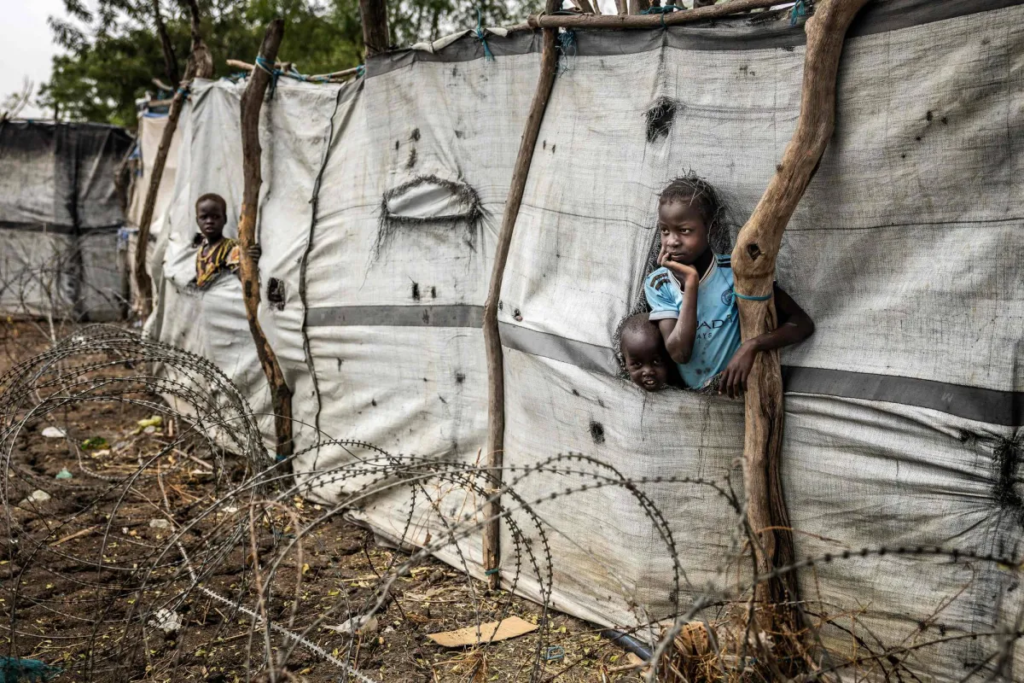
In plain terms, Chad shuts Sudan border is not a routine administrative move. It is a security decision with immediate humanitarian and economic consequences, especially for border communities that rely on cross-border trade, and for refugees and displaced persons who have used established corridors to reach safety.
Why Chad is taking this step now
The Chadian government’s argument is built around one issue: border security.
Over the past weeks and months, there have been recurring reports of armed actors linked to Sudan’s war drifting toward or crossing into Chadian territory, raising the risk of direct confrontations between Chadian forces and Sudanese fighters. 
This is not the first time Chad has taken hard border measures since Sudan’s war began in 2023. But the latest move is sharper in tone, and the phrase “until further notice” signals a closure that could last as long as authorities believe the cross-border threat remains active. 
That is why Chad shuts Sudan border is being widely interpreted as part of a broader attempt by N’Djamena to avoid being dragged into the Sudan conflict, even indirectly.
https://ogelenews.ng/chad-shuts-sudan-border-until-further-notice

The humanitarian angle: refugees, aid routes, and fragile corridors
Eastern Chad has been one of the major refuge zones for people fleeing violence in Sudan. International humanitarian agencies have repeatedly warned that refugee needs are rising, while funding and access remain under pressure. 
At the same time, border corridors have become more sensitive, not only because of armed activity but also because aid delivery routes can be disrupted when authorities tighten movement in response to security threats.
ReliefWeb updates and UN-linked briefings have highlighted how insecurity around the El Fasher–Tine axis and nearby corridors can quickly worsen conditions for displaced people and humanitarian operations along the Chad-facing routes. 
This is the delicate balance: Chad shuts Sudan border to protect its sovereignty and limit risk, but the closure can also complicate movement for civilians who may be seeking safety or assistance.
What the closure could mean for trade and border communities
Beyond the humanitarian layer, border closures hit everyday livelihoods. Markets, transporters, and small merchants who move goods between towns on both sides of the frontier often depend on predictable crossing access.
When Chad shuts Sudan border, prices can rise in local markets, fuel scarcity can deepen, and informal routes can become more attractive, which can increase insecurity rather than reduce it. None of that is guaranteed, but it is a familiar pattern in border economies when official crossings become restricted.
What to watch next
Even with the announcement that Chad shuts Sudan border, five questions will define what happens next:
1. Which crossings are fully closed and which are partially restricted? (Reports mention Adré and other points, but operational details can vary by day.) 
2. Will Chad create humanitarian exceptions for refugees, medical cases, or aid convoys?
3. Will Sudan’s warring parties respond, publicly or through movements near the frontier, that either reduce or escalate tensions?
4. How long will “until further notice” last, and what conditions will Chad set for reopening? 
5. Will regional bodies or the UN engage to stabilize the border corridor and protect civilian routes? 
For now, the confirmed headline remains: Chad shuts Sudan border until further notice, citing repeated incursions and the need to prevent conflict spillover. 
https://punchng.com/chad-shuts-sudan-border-until-further-notice