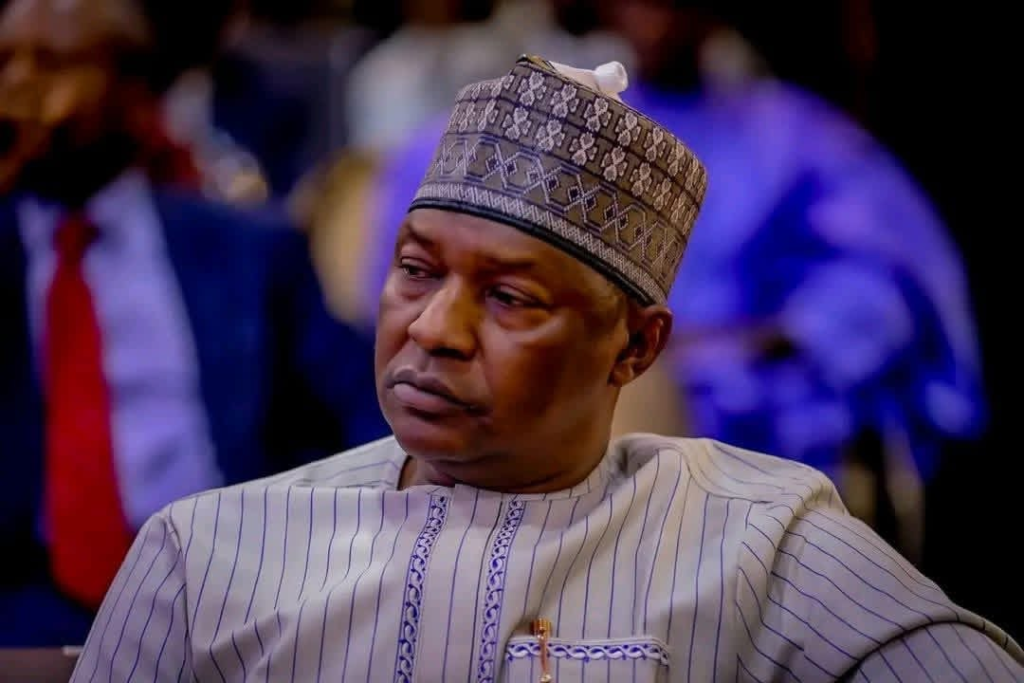


















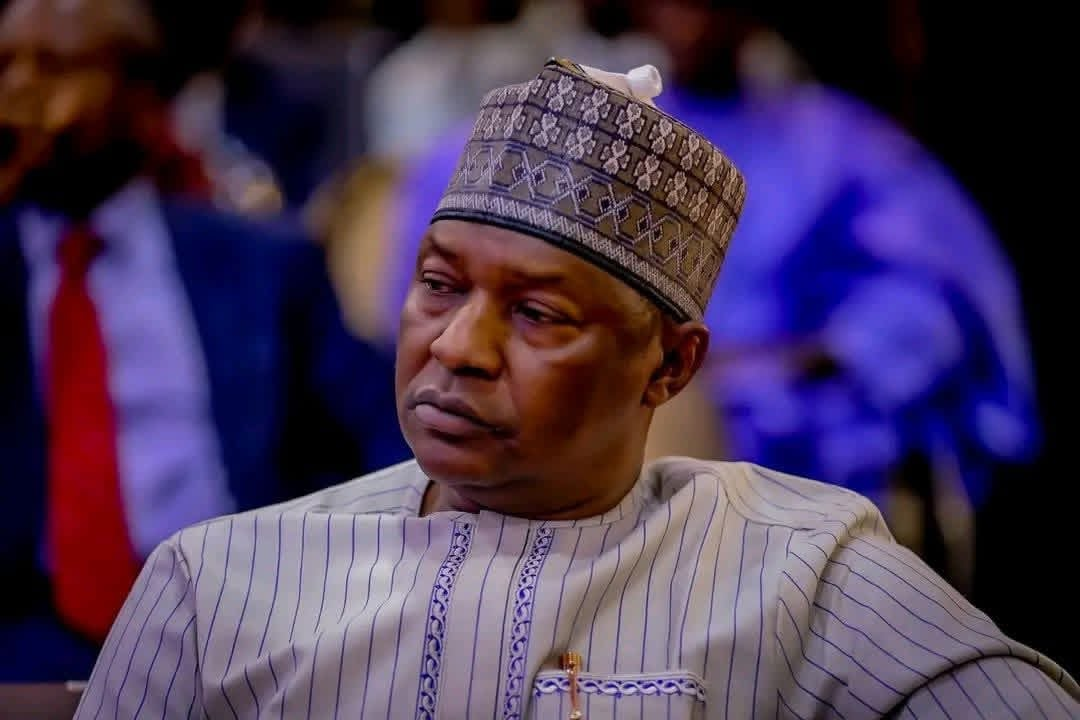

Court grants Malami, son N200m bail in terrorism financing case
Court grants Malami, son N200m bail in terrorism financing case after the Federal High Court sitting in Abuja admitted former Attorney-General of the Federation, Abubakar Malami (SAN), and his son Abdulaziz Malami to bail in the sum of ₦200 million each, following their arraignment on a five-count charge filed by the Department of State Services (DSS).
Justice Joyce Abdulmalik, who presided over the matter, imposed strict bail conditions, including two sureties each in like sum and a requirement that one of the sureties must produce the title deed of a developed property in Maitama or Asokoro, Abuja. The defendants were also ordered to deposit their international passports with the court.
For many Nigerians, the headline Court grants Malami, son N200m bail in terrorism financing case immediately raises hard questions: what exactly are the allegations, why is a former justice minister facing a terrorism-related prosecution, and what does the court’s ruling actually mean?
The charges: what DSS is accusing Malami and his son of
The prosecution case, as reported, is anchored on allegations that touch both terrorism-financing related conduct and illegal possession of firearms/ammunition.
Punch reported that in the charge marked FHC/ABJ/CR/63/2026, the DSS accused Malami of knowingly abetting terrorism financing by allegedly refusing to prosecute suspected terrorism financiers whose case files were forwarded to his office while he served as AGF and Minister of Justice around November 2022.
The Guardian’s account also frames the first count similarly and adds that the remaining counts include allegations linked to unlawful possession of a firearm and ammunition, with the prosecution referencing the Terrorism (Prevention and Prohibition) Act, 2022 and the Firearms Act, 2004.
TheCable reported that DSS alleged the defendants possessed a Sturm Magnum 17-0101 firearm, 16 live rounds, and 27 expended cartridges at their residence in Birnin Kebbi without a licence, and that such possession amounted to preparing to commit an act of terrorism under the Terrorism Act.
So, while Court grants Malami, son N200m bail in terrorism financing case reads like a single line, the legal substance is layered: alleged official misconduct tied to prosecution decisions, plus alleged weapons possession.
https://ogelenews.ng/court-grants-malami-son-n200m
What the judge decided and why the conditions are heavy
Bail in Nigeria is not a gift; it is a bargain. The court weighs the seriousness of the allegation, the likelihood the defendants will appear for trial, and whether they might interfere with witnesses or investigations.
In this case, the court granted bail but tied it to conditions designed to ensure the defendants remain within reach. The requirement for prime Abuja property documentation is one of the more severe forms of financial assurance courts use, particularly in cases framed as threats to public safety.
TheCable’s report is explicit: the court ordered two sureties each, with one surety presenting a title deed for a developed property in Maitama or Asokoro, and the defendants were directed to deposit their passports.
This is why Court grants Malami, son N200m bail in terrorism financing case should not be rewritten as “Malami freed.” The bail is conditional, and the defendants may remain in custody until those conditions are perfected.
The political sensitivity: why this case is explosive
Any case that combines an ex-AGF, terrorism-related allegations, and firearms claims will naturally attract political heat. But the most sensitive part is the allegation that the former Attorney-General refused to prosecute terrorism financiers.
If that allegation is pursued aggressively in court, it will force a public legal examination of what prosecutors consider “discretion” versus what the state calls “abetting.” That argument is the real courtroom battlefield behind the headline Court grants Malami, son N200m bail in terrorism financing case.
What to watch next
From here, Nigerians should watch four things:
- Whether bail conditions are met quickly or the defendants remain in custody pending perfection.
- The prosecution’s evidence strategy: how DSS intends to prove “abetting” through alleged refusal to prosecute, and what documents or witnesses it will rely on.
- Defence objections: jurisdiction, sufficiency of proof, and whether the allegations belong in a criminal terrorism-financing framework or a different legal lane. (This is inference based on typical defence strategy; the filings themselves were not provided in the reports.)
- Scheduling and adjournments: high-profile cases often move slowly, and the public interest will be in whether the court maintains firm control of proceedings.
For now, one fact is settled for today’s news cycle: Court grants Malami, son N200m bail in terrorism financing case—but the courtroom story is only beginning.
https://punchng.com/court-grants-malami-son-n200m-bail-in-terrorism-financing-case