








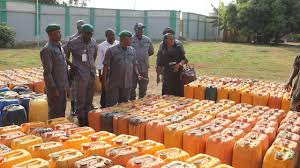
Customs auction N14.8m petrol in Ikeja
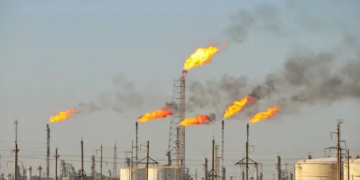
The Nigeria Customs Service has auctioned petrol worth N14.8 million in Ikeja, Lagos, in what officials describe as part of a sustained crackdown on fuel smuggling and economic sabotage along Nigeria’s border corridors.
The exercise, carried out under the agency’s anti-smuggling operation known as Operation Whirlwind, saw the public sale of 14,875 litres of Premium Motor Spirit (PMS) at the Customs Training College in Ikeja. According to Punch, the products were intercepted while being illegally transported out of Nigeria to neighbouring countries.
The Customs auction N14.8m petrol in Ikeja development is not just an enforcement headline. It reflects a deeper and ongoing struggle by authorities to control the illegal diversion of petroleum products, a practice that has long distorted Nigeria’s fuel supply chain.
Speaking during the auction, the National Coordinator of Operation Whirlwind, Abubakar Aliyu, said the seized petrol had a duty-paid value of N14.875 million and was intercepted across the Lagos/Ogun border axis.
He disclosed that the seizure was the result of intelligence-led operations carried out over several weeks, during which Customs operatives dismantled a coordinated smuggling network. According to him, 595 jerrycans of petrol were recovered from key smuggling routes, including Imeko, Ilara, Ilaro, Idiroko, and Seme-Badagry.
The significance of the Customs auction N14.8m petrol in Ikeja lies in what happens after interception. Instead of destroying the products or allowing them to re-enter illegal channels, the Customs Service opted for a transparent public auction, effectively reintegrating the fuel into the domestic supply chain.
That approach serves two purposes. First, it prevents the seized fuel from returning to smugglers. Second, it ensures that the product contributes to local availability rather than deepening artificial scarcity.
Aliyu emphasised that petroleum smuggling is not a harmless activity. According to him, it undermines the national economy, deprives the government of revenue, disrupts supply distribution, and fuels criminal networks that threaten national security.
This is where the Customs auction N14.8m petrol in Ikeja story connects to a larger economic reality. Nigeria operates in a region where fuel price differences between countries create strong incentives for smuggling. Petrol is often diverted from Nigeria, where prices are relatively lower, to neighbouring countries where it can be sold at a higher profit.
https://ogelenews.ng/customs-auction-n14-8m-petrol-ikeja
That price gap has made border communities hotspots for illegal fuel movement. It has also forced security agencies to deploy targeted operations like Operation Whirlwind to track and intercept such activities.
The Customs Service said its enforcement strategy has been strengthened through improved surveillance, intelligence gathering, and inter-agency cooperation.
The Customs auction N14.8m petrol in Ikeja also reflects a growing shift toward transparency in the disposal of seized goods. According to officials, the auction process involved multiple stakeholders, including security agencies, civil society groups, and the media, to ensure accountability.
That transparency is critical. In the past, the disposal of seized petroleum products has sometimes been criticised for lack of oversight. By opening the process, Customs is attempting to build public trust while demonstrating compliance with due process.
There is also a strategic dimension to the operation. By consistently intercepting and auctioning smuggled fuel, authorities aim to reduce the profitability of illegal trade. If smugglers lose both product and investment, the business model becomes less attractive.
Still, the persistence of cases like Customs auction N14.8m petrol in Ikeja shows that enforcement alone is not enough. Smuggling thrives on economic incentives. As long as cross-border price disparities remain significant, the temptation to divert fuel will continue.
This places pressure on both policy and enforcement. Authorities must not only intercept illegal movement but also address the structural conditions that enable it.
Operation Whirlwind, according to Customs, is designed precisely for that purpose. It targets the illegal cross-border movement of petroleum products and seeks to safeguard Nigeria’s energy security by ensuring that fuel meant for domestic use is not diverted.
The agency also acknowledged the role of the Office of the National Security Adviser and the Nigerian Midstream and Downstream Petroleum Regulatory Authority in strengthening coordination and regulatory oversight.
That coordination matters because fuel smuggling is not just a Customs issue. It intersects with energy policy, border security, pricing frameworks, and regional trade dynamics.
For Lagos, the location of the auction is also significant. As Nigeria’s commercial hub and a major gateway for goods and fuel distribution, the state plays a central role in both legitimate trade and illicit diversion networks.
The Customs auction N14.8m petrol in Ikeja therefore sends a message beyond the immediate event. It signals that enforcement is tightening in one of the country’s most critical economic zones.
At the same time, Customs issued a warning to smugglers, stating that the agency remains committed to tracking, intercepting, and dismantling illegal networks wherever they operate.
For ordinary Nigerians, the impact of such operations is indirect but important. When smuggling is reduced, more fuel remains within the domestic system, potentially easing supply pressure and stabilising availability.
However, the long-term solution lies beyond seizures and auctions. It will depend on a combination of consistent enforcement, economic policy adjustments, and regional cooperation.
For now, the facts are clear. The Nigeria Customs Service has carried out the Customs auction N14.8m petrol in Ikeja, selling nearly 15,000 litres of seized fuel that was originally intended for illegal export. The operation is part of a broader effort to combat smuggling, protect national resources, and strengthen the integrity of Nigeria’s fuel distribution system.
What remains to be seen is whether sustained enforcement can significantly reduce the scale of the problem, or whether smuggling networks will continue to adapt.
But for now, one message stands out clearly. The days of easy, unchecked fuel diversion are being challenged, and operations like this are at the centre of that fight.
https://punchng.com/customs-auction-n14-8m-petrol-in-ikeja