












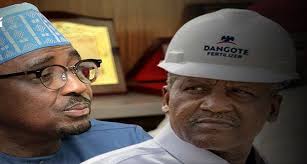
Dangote NMDPRA school fees allegation has sparked fresh controversy after President of the Dangote Group, Aliko Dangote, accused the Chief Executive Officer of the Nigerian Midstream and Downstream Petroleum Regulatory Authority (NMDPRA), Farouk Ahmed, of allegedly spending about $5 million on the secondary school education of his four children in Switzerland. The Dangote NMDPRA school fees allegation has sparked national debate over accountability in Nigeria’s petroleum regulatory sector.
The controversy surrounding the Dangote NMDPRA school fees allegation has not only raised concerns among investors but also sparked debates within political circles. This incident highlights the critical intersection between public service and personal integrity, reminding us of the ethics expected from those in high-ranking positions.
At the press briefing, Dangote also highlighted the importance of maintaining a transparent system in Nigeria, where public officials are held accountable for their financial decisions. He emphasized that this incident could deter foreign investment if not addressed properly, as potential investors often seek assurance of ethical conduct before committing their resources.
Dangote NMDPRA School Fees Allegation and Its Implications
Moreover, the response of regulatory bodies to this allegation will be crucial in shaping the public’s perception of accountability in governance. Failure to act could lead to a loss of confidence in the institutions meant to protect the interests of the citizens.
In light of this, civic groups and advocacy organizations have rallied to demand transparency and accountability from public officials. They stress that the long-term health of Nigeria’s political landscape depends on the ethical behavior of its leaders.
Dangote’s call for Ahmed to appear before the Code of Conduct Tribunal signifies a potential turning point in the fight against corruption. Such measures not only hold individuals accountable but also instill a culture of integrity in public service, which is vital for Nigeria’s development.
Additionally, experts in ethics and governance have weighed in on the allegations, suggesting that more stringent policies should be implemented to monitor expenditure by public officials. This could involve regular audits and public disclosures of financial transactions to ensure transparency.
Dangote made the allegation on Sunday while speaking at a press briefing held at the Dangote Petroleum Refinery in Lekki, Lagos, where he demanded a full investigation and public explanation from the regulator.
The stark contrast Dangote pointed out between the financial capacity of public officials and the struggles of ordinary families underscores the urgent need for reform. His remarks resonate with many Nigerians who are advocating for a system that prioritizes the welfare of its citizens over personal gain.
Public sentiment appears to be shifting as citizens demand greater accountability. The recent allegations have fueled discussions on social media, with many users expressing outrage and calling for investigations into other public officials’ expenditures.
As the situation unfolds, political analysts are closely monitoring the response from the NMDPRA and government agencies. Their reactions will be crucial in determining the trajectory of this scandal and its broader implications for governance in Nigeria.
In the past, similar allegations against public officials have resulted in significant political fallout, often leading to resignations or reforms aimed at increasing transparency. Observers are eager to see if this case will lead to tangible changes in how public officials manage their financial affairs.
Furthermore, Dangote’s assertion that the failure to address these allegations could be seen as economic sabotage highlights the potential repercussions of a lax regulatory environment. It serves as a warning to those in power that neglecting accountability could have dire consequences for Nigeria’s economy.
As the public awaits a response, it’s essential for the discourse around this issue to remain constructive. Advocating for a more transparent government can foster a culture of accountability that ultimately benefits all citizens.
In conclusion, as the nation grapples with the ramifications of the Dangote NMDPRA school fees allegation, it is critical to remember that accountability is not just a demand from the public but a vital necessity for the nation’s growth and integrity. The outcome of this investigation has the potential to set a precedent for future conduct among public officials.
Finally, the ongoing dialogue surrounding the allegations serves as a reminder of the collective responsibility all stakeholders share in ensuring that governance is conducted with the highest ethical standards. This level of commitment is essential for the prosperity of Nigeria.
As the investigation proceeds, it will be interesting to see how public opinion shifts and how it may impact future governance in Nigeria. The hope is that this incident will catalyze much-needed reforms in the public sector, setting a foundation for a more accountable and transparent government.
According to Dangote, the alleged expenditure raises serious questions about accountability, transparency, and ethical conduct in public office. He said Ahmed should be required to appear before the Code of Conduct Tribunal to explain how such funds were sourced, noting that unresolved allegations of this scale could damage public trust and investor confidence.
The billionaire businessman said he was relaying concerns that had been brought to his attention and stressed that the matter should not be ignored if Nigeria hopes to strengthen institutional credibility.
Dangote questioned how a public official could afford such fees, stating that the cost of educating four children in foreign secondary schools for six years appeared inconsistent with earnings from government service. He added that in normal circumstances, such spending would attract scrutiny from tax and anti-corruption authorities.
“When income does not match expenditure of this magnitude, questions naturally arise,” Dangote said, noting that even private-sector individuals who spend such sums are often required to justify their finances.
https://ogelenews.ng/dangote-nmdpra-school-fees-allegation
He expressed concern about the social contrast highlighted by the allegation, pointing out that many families across Nigeria struggle to raise as little as ₦100,000 for school fees, forcing children out of school. Dangote said the alleged foreign education expenses stood in sharp contrast to the realities faced by ordinary Nigerians.
The businessman added that his own children attended secondary schools in Nigeria, stressing that he was not motivated by personal rivalry or a call for Ahmed’s removal, but by the need for accountability.
As of the time of filing this report, Farouk Ahmed and the NMDPRA have not issued an official response to the allegation.
“I am not asking for his sack,” Dangote said. “I am asking for a proper investigation. If he can clearly explain how these fees were paid without compromising his office, Nigerians deserve to hear it.”
He warned that failure to address the Dangote NMDPRA school fees allegation could amount to economic sabotage, particularly in a sector as critical as petroleum regulation. Dangote said the Code of Conduct Bureau or any other appropriate government agency should be empowered to examine the matter thoroughly.
Dangote further stated that if the allegation is denied, he would be prepared to present evidence of the payments and pursue legal avenues to compel the Swiss schools involved to disclose financial records linked to the official.
In the wake of such serious allegations, it’s imperative that both civil society and the private sector work together to promote transparency and hold public officials accountable. By doing so, they can help to foster an environment where ethical leadership is the norm, rather than the exception.
Beyond the allegation, Dangote criticised what he described as entrenched interests within Nigeria’s downstream petroleum sector. He argued that continued large-scale importation of refined petroleum products undermines national development and discourages domestic value addition.
He described it as troubling that African countries still depend heavily on imported refined products despite repeated calls for local refining, adding that the volume of imports allowed into Nigeria was unethical and harmful to long-term economic growth.
Since the commissioning of the Dangote Refinery, the businessman has faced resistance from some industry stakeholders, including labour unions such as the Petroleum and Natural Gas Senior Staff Association of Nigeria (PENGASSN). That dispute was later resolved following intervention by the Federal Government.
As we continue to monitor the situation, it is essential for citizens to engage actively in discussions about governance. The outcome of the Dangote NMDPRA school fees allegation could very well shape the future of public accountability in Nigeria.
For regulatory background, visit the Code of Conduct Bureau: https://www.ccb.gov.ng