
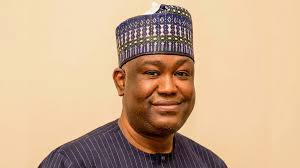



















Disu declares total war on police corruption, impunity
Nigeria’s new Acting Inspector-General of Police has signalled a decisive break with the past, declaring total war on police corruption and impunity and vowing to restore professionalism, accountability and public trust in the Nigeria Police Force.
Tunji Disu, who was recently appointed Acting Inspector-General of Police by President Bola Tinubu, said corruption and impunity “will no longer have a place” in the Force and that officers must embrace integrity, discipline and respect for human rights as the foundation of modern policing. 
Disu’s declaration places anti-corruption and structural reform at the heart of his leadership agenda, elevating these priorities to the very core of national security strategy.
Who is Disu and why this matters
Disu took over as Acting Inspector-General of Police following the resignation of his predecessor, Kayode Egbetokun, who stepped down citing family reasons. 
President Tinubu decorated Disu at the Presidential Villa in Abuja and publicly charged him with transforming the Force into a more effective, accountable and public-centric institution. 
As the most senior officer in the Nigeria Police Force, the Inspector-General of Police holds constitutional responsibility for the command and supervision of policing across the country. 
Observers describe Disu’s appointment as a potential turning point that could reset public expectations of law enforcement — especially after years of criticism over abuses, extortion, incompetence and misconduct. His anti-corruption stance is widely viewed as a direct response to public outcry and civil protests such as the End SARS movement that called for accountability and justice from the police. 
Total war on police corruption, impunity — what he said
In a live address shortly after assuming duty at Force Headquarters, Disu used stark language to outline his priorities.
He said that corruption within the police — from bribery to misuse of equipment and administrative malpractice — undermines public confidence and prevents the Force from fulfilling its constitutional mandate.
“The era of impunity is over,” Disu said, reiterating that officers found wanting will face sanctions and those who choose integrity will be supported. “Corruption and impunity have no place in modern policing.” 
He further emphasised that the citizen is the ultimate boss of the police, stressing that effective law enforcement cannot be achieved without trust between the public and the Force. “We must be accountable, and we must protect rights while enforcing laws,” he told reporters. 
The anti-corruption pledge forms the core of what Disu called a zero-tolerance stance, aimed at remaking the Force from the inside out — beginning with leadership, command culture, discipline, promotions, and rewards. 
Why the anti-corruption push matters
For many Nigerians, the declaration that Disu is declaring total war on police corruption, impunity is not just symbolic.
Studies and surveys have consistently placed corruption and impunity near the top of grievances against the Nigeria Police Force. Critics point to:
• extortion of motorists and citizens during roadside stops
• unprofessional arrests and detentions
• lack of transparency in case handling
• failure to investigate cold cases
• selective enforcement of the law
Such long-standing complaints have fuelled mistrust and hampered cooperation between communities and officers. The crackdown Disu describes aims to end all of that.
Reforming police corruption and impunity would also align Nigeria with international standards for ethical policing — a prerequisite for foreign partnerships, training, technology exchange and multilateral cooperation in crime prevention.
https://ogelenews.ng/disu-declares-total-war-on-police-corruption

What practical reforms might look like
While Disu described his stance in broad terms, analysts say his agenda is likely to include:
- Strengthened internal discipline
This means empowered internal affairs units and tougher sanctions for officers proven to have engaged in corrupt behaviour or abuses of power. 
- Enhanced training and leadership development
Officers will be required to undergo updated professional training that emphasises human rights, intelligence-led policing, and ethical conduct. 
- Community policing overhaul
Part of reducing corruption is rebuilding public confidence in local neighbourhood policing, a vision Disu has referenced in interviews. 
- Transparency in internal processes
Making promotions, transfers, disciplinary actions and operational reviews open to audit or civilian oversight can curb backdoor deals and nepotism. 
Challenges ahead
Experts stress that rooting out police corruption and impunity is a complex task.
Decades of entrenched malpractice, resource gaps, outdated systems and bargaining culture within law enforcement means that public expectations will need to be managed alongside genuine reform.
Some say the police force also needs better remuneration for officers so that financial desperation does not drive unethical behaviour — a point Disu himself has acknowledged. 
The Inspector-General’s anti-corruption push will also require strong political support, continuous public scrutiny, and regular progress reporting to sustain momentum.
Public reactions so far
Civil society advocates and youth groups welcomed Disu’s declaration that he is declaring total war on police corruption, impunity, calling it a “promising start” but cautioning that words must translate into measurable actions.
Human rights organisations have proposed benchmarks such as independent complaint panels, community oversight boards, and transparent case outcomes as conditions for evaluating progress.
Some former officers have also expressed support for the zero-tolerance policy, saying that internal discipline will improve morale among rank-and-file members who have been unfairly caught in the crossfire of public disapproval.
What comes next
Disu’s declaration that he is declaring total war on police corruption, impunity will set the tone for how the Nigeria Police Force operates in the coming months.
Key things to watch include:
• new guidelines on ethics and conduct
• public reporting on corruption cases and prosecutions
• restructuring of internal investigation units
• greater engagement with community groups
• partnership with anti-corruption agencies
The public is now waiting to see how the anti-corruption rhetoric becomes lived reality on the streets, precincts and police stations where Nigerians interact with law enforcement daily.
https://punchng.com/disu-declares-total-war-on-police-corruption-impunity

Disu declares total war on police corruption, impunity