














EFCC
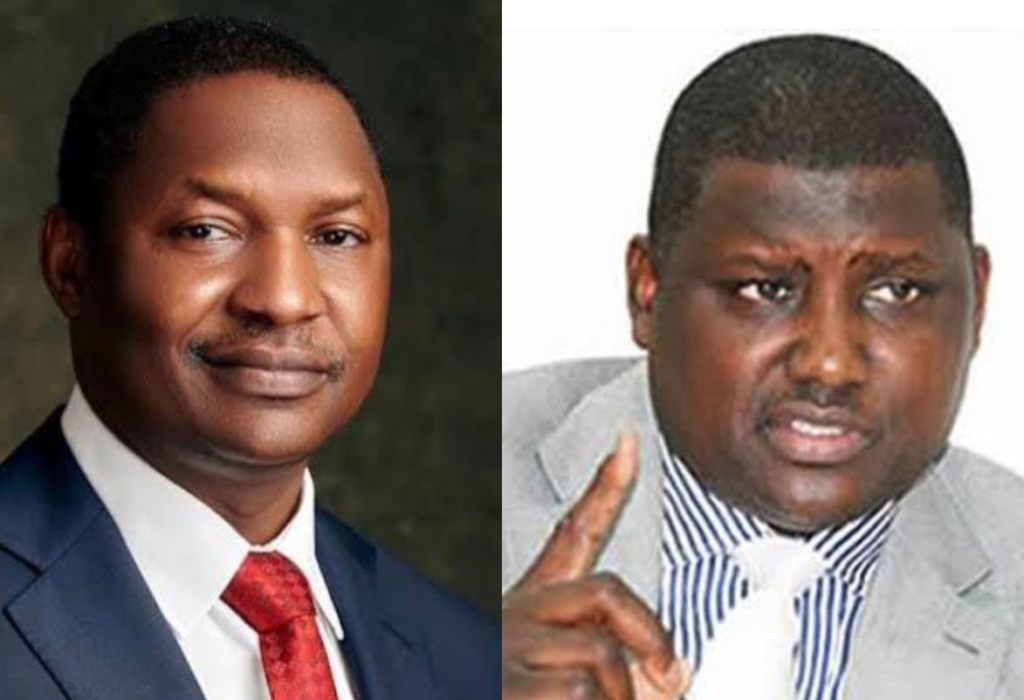
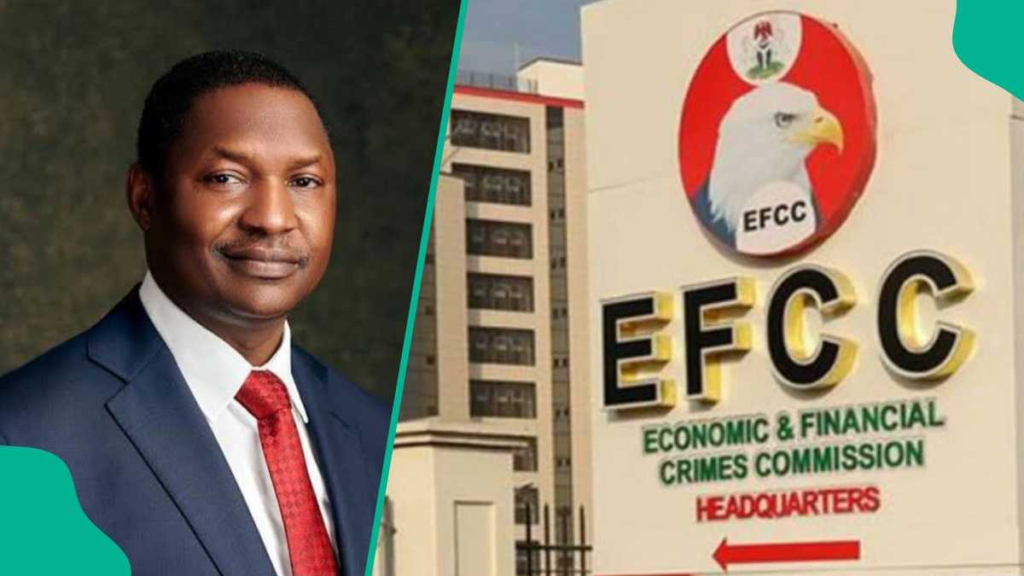
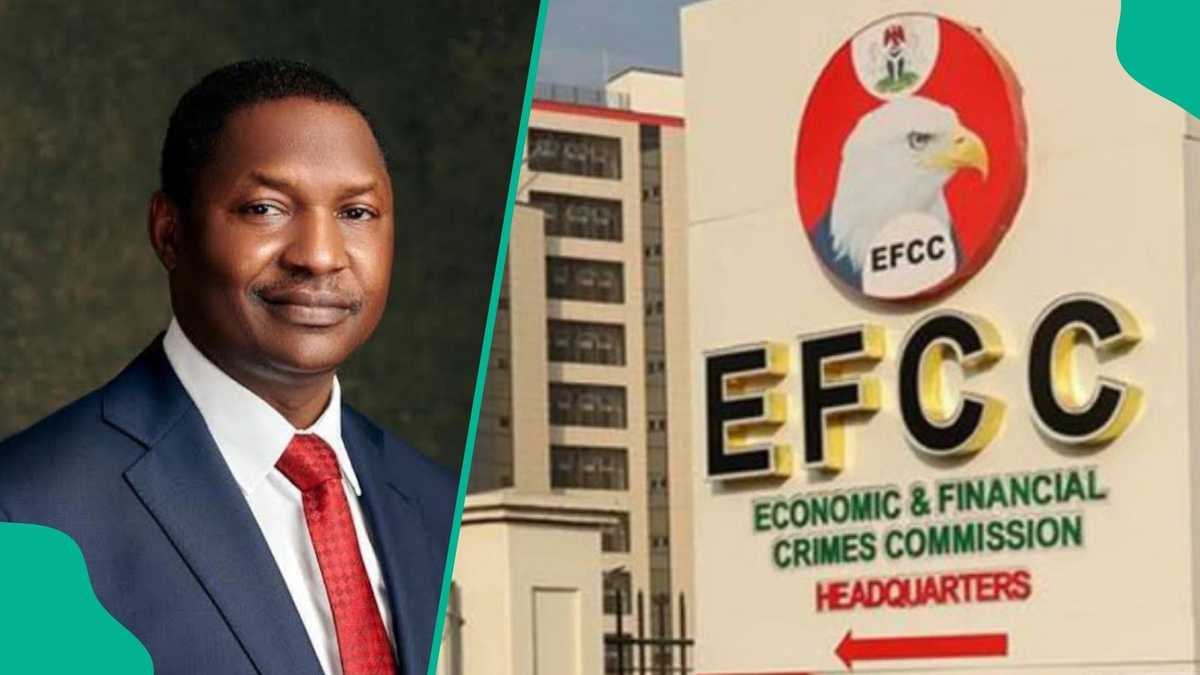
The long-running shadow cast by Nigeria’s unresolved corruption cases resurfaced sharply this week after former Chairman of the defunct Pension Reform Task Team, Abdulrasheed Maina, openly questioned the scale of alleged recoveries linked to former Attorney-General of the Federation, Abubakar Malami, insisting that the Economic and Financial Crimes Commission (EFCC) can recover far more than the ₦270 billion currently being discussed.
Maina’s comments, which quickly triggered renewed public debate, came amid heightened scrutiny of past and present anti-corruption efforts, particularly cases involving senior government officials. His remarks have once again drawn attention to unresolved questions surrounding asset recovery, prosecutorial discretion, and the political handling of high-profile corruption allegations in Nigeria.
Maina Challenges the ₦270bn Figure
Speaking through associates familiar with his position, the former pension boss questioned the credibility and completeness of the ₦270bn figure reportedly linked to recoverable assets associated with Malami’s tenure as Attorney-General.
“What is ₦270bn?” Maina was quoted as saying. “That figure does not reflect the true scale of assets that can be recovered if investigations are conducted thoroughly and without political interference.”
The statement has fueled public interest because Maina himself remains one of the most controversial figures in Nigeria’s anti-corruption history, having been convicted in connection with the massive pension fraud scandal that rocked the country more than a decade ago.
A Familiar Voice in Nigeria’s Corruption Discourse
Abdulrasheed Maina is no stranger to controversy. Once positioned as a reformer tasked with sanitising Nigeria’s pension system, he later became the face of one of the country’s most embarrassing corruption sagas, involving the diversion of billions of naira meant for retired civil servants.
Despite his conviction, Maina has continued to make public claims implicating senior officials, often asserting that he was selectively prosecuted while others with deeper influence escaped accountability.
His latest comments targeting Abubakar Malami revive those longstanding claims, suggesting that Nigeria’s anti-corruption campaign has been uneven and politically selective.
Why Malami’s Name Has Returned to the Spotlight
Abubakar Malami served as Nigeria’s Attorney-General and Minister of Justice for eight years, overseeing the EFCC, ICPC, and other prosecutorial agencies during a period marked by aggressive anti-corruption rhetoric.
However, critics have long accused Malami of shielding political allies, stalling prosecutions, and influencing plea bargains that allegedly shortchanged the Nigerian state.
Maina’s assertion that the EFCC can recover more assets from Malami-linked cases taps into a broader public sentiment: that Nigeria’s anti-corruption war often targets the weak while sparing the powerful.
EFCC and the Question of Selective Justice
The EFCC has not officially responded to Maina’s claim, but the agency remains under growing pressure to demonstrate independence and transparency, especially as public confidence in anti-graft institutions continues to waver.
Legal analysts note that asset recovery in Nigeria is frequently undermined by:
• Poor documentation
• Political interference
• Out-of-court settlements
• Weak prosecution of high-level suspects
If Maina’s claim that recoverable assets exceed ₦270bn is accurate, it raises uncomfortable questions about whether investigations have been deliberately constrained.
Public Reaction and Political Undertones
On social media and in political circles, reactions have been sharply divided. Some Nigerians dismiss Maina’s comments as an attempt to deflect attention from his own crimes. Others argue that his insider knowledge of the system gives weight to his allegations.
What remains clear is that the conversation has shifted back to the unresolved legacy of Nigeria’s anti-corruption architecture, particularly the role played by former Attorneys-General in shaping prosecutorial outcomes.
Legal Experts Weigh In
Senior legal practitioners say Maina’s claims, while controversial, underscore a structural problem.
One Abuja-based lawyer told Ogele News:
“The Attorney-General’s office is the most powerful gatekeeper in Nigeria’s justice system. If asset recovery was compromised at that level, ₦270bn may indeed be only a fraction.”
Experts argue that meaningful recovery of looted assets requires not just EFCC action, but judicial reforms that remove political discretion from prosecution decisions.
The Bigger Question: Accountability or Political Theatre?
Beyond Maina and Malami, the controversy touches a deeper nerve. Nigerians have heard asset recovery figures before—billions announced, few explained, and even fewer traced to tangible public benefit.
As inflation bites harder and public trust in institutions declines, citizens are demanding clarity:
• Who approved settlements?
• Who halted prosecutions?
• Where did recovered funds go?
Without answers, corruption narratives risk becoming political theatre rather than justice.
What Happens Next
For now, Maina’s comments remain allegations. But they arrive at a moment when:
• The EFCC is under pressure to reassert credibility
• The Tinubu administration faces expectations of renewed accountability
• Nigerians are increasingly skeptical of selective anti-corruption campaigns
Whether the EFCC reopens or deepens investigations linked to Malami remains to be seen. What is undeniable is that the ₦270bn question has reopened a conversation Nigeria has never fully resolved.
Conclusion
Abdulrasheed Maina’s blunt question—“What is ₦270bn?”—has reignited debate over the true scale of corruption and asset recovery in Nigeria. Coming from a convicted former insider, the claim is both controversial and unsettling.
If Nigeria’s anti-corruption institutions are serious about restoring public trust, transparency around asset recovery figures, prosecutorial decisions, and political accountability must move beyond rhetoric.
Until then, the ₦270bn figure will remain less a milestone and more a symbol of unanswered questions.