

















eight charcoal workers abducted in Plateau community
Fresh fears have gripped parts of Plateau State after eight charcoal workers abducted in Plateau community became the latest grim headline from the troubled Wase axis, where gunmen continue to prey on ordinary residents trying to earn a living under worsening insecurity.
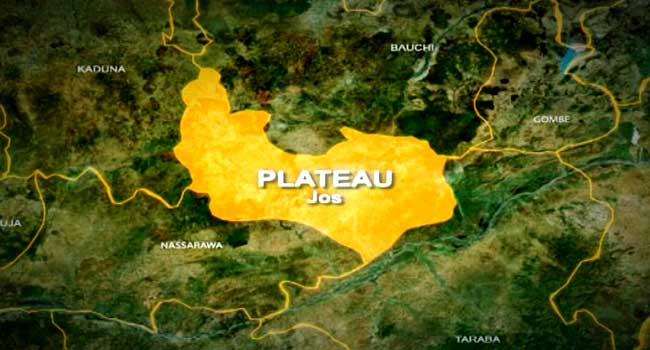
According to Punch, the incident occurred in Nyalun community, Bashar District, Wase Local Government Area, where gunmen abducted eight charcoal burners on Tuesday evening as they were returning home after processing charcoal on the outskirts of the community. The report said the victims were travelling in a vehicle loaded with charcoal when the attackers stopped them and whisked them away.
The story of eight charcoal workers abducted in Plateau community is not just another security statistic. It is a reminder of how deeply insecurity now cuts into rural survival. These were labouring men, not political actors, not combatants, not wealthy commuters. They were people trying to make ends meet in a hard economy, only to be swallowed by the violence that has come to define too many parts of Nigeria’s hinterland.
Punch reported that a youth leader in Wase, Shapi’i Sambo, confirmed the attack and said the kidnappers initially took 10 occupants of the vehicle before later releasing two of them in Garga, Kanam Local Government Area, to relay a ransom demand. That detail gives the incident an even darker edge. It suggests a calculated operation, not a random roadside attack. The release of two victims was apparently part of the kidnappers’ communication strategy.
One of those released, identified as Mummuni Musa, told Punch that the victims were tied up before he and another person were freed to carry the message home. According to the report, the abductors instructed them to tell the owner of the vehicle to sell it and use the proceeds to pay ransom for the remaining eight captives. That is a brutal message in itself. It reflects a level of desperation and criminal certainty that has become disturbingly common in rural abduction cases.
The identities of the victims were also published. Punch named them as Hassan Sa’idu, Shamsudden Abubakar, Usamatu Yakubu, Dayyabu Usman Waziri, Inkilulu Dauda, Ado Sambo, Sule Dahiru, and Umar Amadu. Naming matters in stories like this. It pulls the incident out of abstraction. It reminds the public that behind the headline eight charcoal workers abducted in Plateau community are real men, real families, and real homes now suspended in fear.
There is another important detail in the report. Sambo said the gunmen were believed to have taken the victims into the Kukawa bush, described as a known hideout for criminal groups. That detail points to a deeper problem than one isolated kidnapping. It suggests that armed gangs are operating in terrain they know well, in areas where local fear is already entrenched and where communities often believe the state is too slow, too thinly spread, or too reactive to stop them.
https://ogelenews.ng/eight-charcoal-workers-abducted-in-plateau-community
That is what makes the eight charcoal workers abducted in Plateau community story part of a wider security pattern. Punch noted that communities in Wase and Kanam have in recent years recorded repeated cases of kidnapping and banditry. It added that this latest incident came about two weeks after gunmen killed soldiers and vigilantes in Kanam Local Government Area. In other words, this is not a fresh wound in an otherwise stable corridor. It is another strike in an area already bruised by recurring violence.
The wider Plateau security context makes the story even more urgent. In separate reports this week, Punch said President Bola Tinubu condemned recent attacks in Plateau and Kaduna, while also urging security agencies to intensify efforts and act on early warning intelligence. Another report said the President invited Plateau Governor Caleb Mutfwang for consultations after killings in the state pushed the death toll in a separate attack to 28. Those developments show that Plateau is already under national attention for insecurity, and the case of eight charcoal workers abducted in Plateau community only adds to the sense of a state under sustained strain.
Still, there is a line good reporting must keep. As of the time Punch filed its report, efforts to reach the spokesperson of the Plateau State Police Command, DSP Alabo Alfred, were unsuccessful. That means the incident was publicly detailed through community-level confirmation, but not yet matched by an official police statement in the report reviewed. That distinction is important. It does not weaken the story, but it does require careful language and avoidance of claims beyond the available facts.
What the story does show clearly is this: insecurity in rural Nigeria is no longer an occasional disruption. For many communities, it is now a condition of daily life. People farm under it, travel under it, trade under it, and now, in the case of eight charcoal workers abducted in Plateau community, even basic manual labour is being carried out under the shadow of armed violence.
This is why such incidents hit harder than many political statements. They expose how thin protection can feel outside major urban centres. A man should be able to work, load charcoal, and head home without disappearing into a criminal bush corridor. Yet that simple expectation is becoming fragile in too many parts of the country.
There is also a social cost to this pattern. Rural economies depend on movement, trust, and small-scale labour. Once those are under siege, the effect goes beyond the immediate victims. Transporters become afraid. Traders become cautious. Families become poorer. Young people begin to see flight, not work, as the safer option. That is how insecurity hollows out communities long before it makes national headlines.
For now, the known facts are straightforward. The eight charcoal workers abducted in Plateau community were taken on Tuesday evening in Nyalun community of Wase LGA while returning from charcoal work; two others were released to relay a ransom message; the victims were reportedly taken toward the Kukawa bush; and the incident happened against the backdrop of repeated kidnapping and banditry in the Wase-Kanam axis.
What comes next will matter. If security forces move quickly and effectively, the focus may shift to rescue and arrests. If not, the eight charcoal workers abducted in Plateau community story may become one more entry in a familiar and painful Nigerian archive: working people taken off the road, families forced into ransom panic, and communities left to count another failure of protection.
For now, that is the hardest truth in this story. In Plateau’s rural belt, survival is no longer only about finding work. It is also about whether one can return home alive from it.
https://punchng.com/eight-charcoal-workers-abducted-in-plateau-community