

















Electoral Act Senate revisits clause 60 amid protests
Tensions are running high in Nigeria’s political landscape as the Senate reconvened an emergency plenary to revisit Clause 60 of the Electoral Act (Amendment) Bill, 2026, the provision linked to electronic transmission of election results. The development has reignited debates about electoral transparency, legislative urgency, and citizens’ trust in the democratic process — especially with less than a year to the 2027 general elections. 
The Senate, led by Senate President Godswill Akpabio, called lawmakers back to the National Assembly complex midweek to consider motions to amend what critics say was a diluted version of Clause 60(3), a critical part of the Electoral Act that many Nigerians believe should mandate real-time electronic transmission of results from polling units directly to the Independent National Electoral Commission’s (INEC) Result Viewing (IReV) portal. 
The Trigger: A Contentious Clause and Public Backlash
At the centre of the controversy is Clause 60(3) of the Electoral Act Amendment Bill, which in its original proposed form would have required presiding officers to electronically transmit results in real time immediately after Form EC8A was signed at polling units. That version reflected reforms long advocated by civil society groups, election observers and experts as a way to reduce post-election disputes and bolster transparency. 
However, when the Senate passed the bill earlier in February 2026, it removed the phrase “real-time” and retained discretionary language, meaning results can be transmitted electronically “in a manner as prescribed by the Commission,” without a statutory obligation to upload them instantly from polling units. Many interpreted this as a retreat from meaningful reform, arguing it leaves gaps for manipulation and delays that have plagued previous elections. 
The move sparked immediate backlash. Civil society organisations and youth groups staged protests at the National Assembly gates in Abuja, demanding lawmakers restore real-time transmission — a demand echoed by opposition figures and ordinary Nigerians on social media. One widely shared video from Reuters showed crowds gathering in Abuja to pressure the Senate on the issue, underscoring the intensity of public feeling. 
What Happened in the Senate Chamber
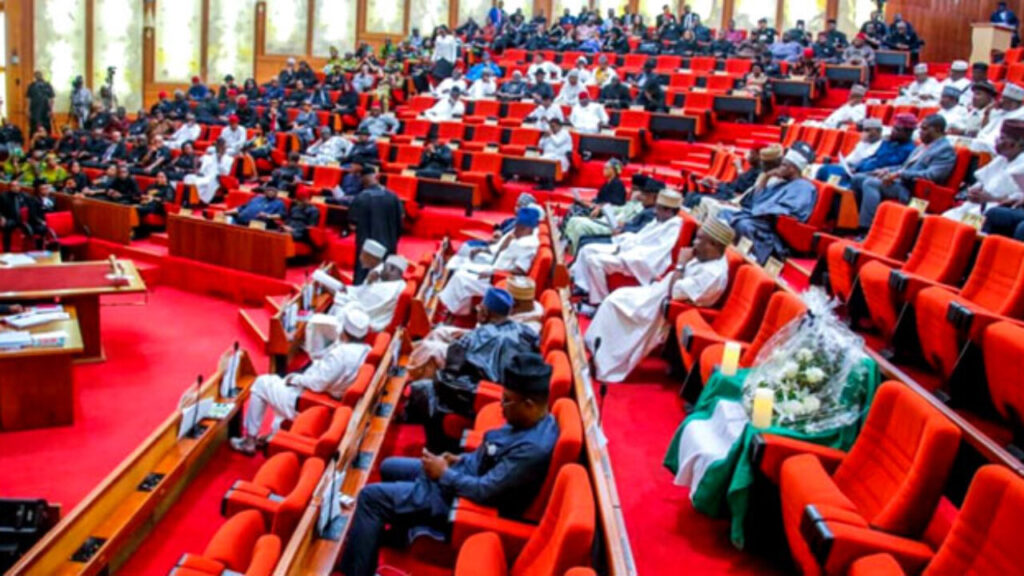
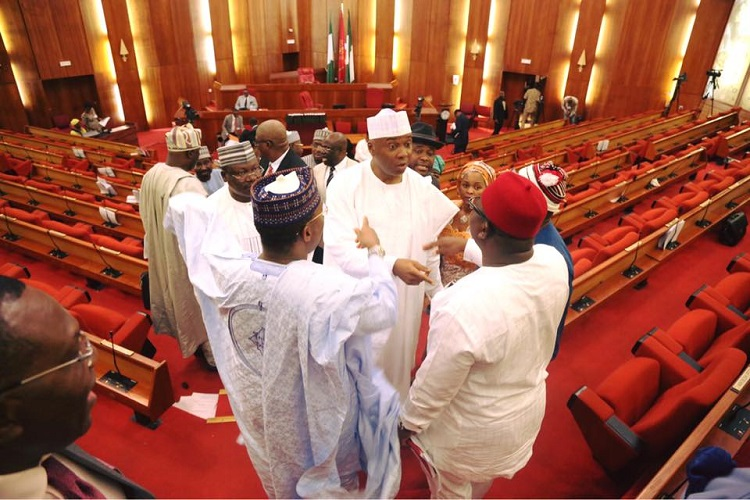
When senators gathered for the emergency session, the atmosphere in the chamber was described as chaotic and tense. Senator Tahir Monguno, the Senate Chief Whip, moved a point of order asking colleagues to rescind the earlier Senate approval by rereading Clause 60(3) without the contested wording — replacing “transmission” with “transfer.” That motion was immediately met with objections and points of order from several senators opposed to the change. 
Senator Enyinnaya Abaribe was among those who protested vigorously, demanding that the original language reflecting real-time transmission be restored, and at one point called for a formal division vote in the chamber. The scene quickly grew loud as senators argued over procedure and democratic obligation. 
In the end, the motion did not immediately settle the tension. The Senate instead moved to appoint 12 of its members to work with the House of Representatives on reconciling differences between the versions of the Electoral Act — a procedural shift that signals lawmakers may seek to resolve disputes through behind-the-scenes negotiations rather than direct confrontation on the Senate floor. 
https://ogelenews.ng/electoral-act-senate-revisits-clause-60-amid-protests
Growing Public and Institutional Pressure
Outside the National Assembly, pressure on lawmakers intensified. Groups such as the Nigeria Labour Congress (NLC) threatened mass action, including protests and potential election boycotts, if the Senate failed to adopt reforms that mandate real-time electronic transmission of election results. The NLC’s leadership called the Senate’s contradictory positioning a threat to public confidence and democratic integrity. 
The Nigerian Bar Association (NBA) also weighed in, urging the National Assembly to reverse its decision and explicitly mandate electronic transmission in Clause 60(3). The NBA stressed that discretionary language weakens transparency and opens the system to potential manipulation and disputes. 
Political leaders — including former presidential candidate Peter Obi — joined calls for urgent reforms, appearing at protests and publicly demanding that the National Assembly amend the clause to guarantee real-time uploads of polling unit results. Their participation added political weight to what began largely as a civil society campaign. 
What the Critics Say
Critics argue that without a statutory requirement for real-time electronic transmission of results, the electoral process remains vulnerable to delays and manipulation between polling units and collation centres. Transparency advocates maintain that instantaneous, verifiable uploads to INEC’s IReV portal would reduce opportunities for tampering and strengthen public trust in outcomes — a trust badly shaken by controversies surrounding previous elections.
Opposition parties, youth coalitions and professional bodies have warned that failing to legislate this provision could dampen voter enthusiasm and credibility of the 2027 polls, potentially undermining Nigeria’s democratic consolidation. 
The Senate’s Position
Senate leadership, for its part, has maintained that it did not entirely reject electronic transmission; rather, it retained the existing legal structure with discretionary language. Supporters of the Senate’s approach say that mandatory real-time transmission may be impractical in parts of the country with limited network connectivity, and that giving INEC flexibility accommodates on-the-ground realities. 
Senate President Akpabio and other principal officers have also stressed the importance of procedural adherence in the legislative process, arguing that the focus should be on securing broad consensus and legal clarity before finalising reforms. Critics, however, see these arguments as evasive, given the urgency attached to electoral reform. 
Why This Matters
The confrontation over Clause 60 is more than a technical debate about wording. It cuts to the heart of Nigeria’s struggle to build electoral systems that are transparent, credible, and trusted by a sceptical public. With the 2027 general elections on the horizon, how votes are counted, transmitted and publicly verified is of intense interest to voters, political parties, and observers alike.
If the Senate fails to address the concerns of protestors and stakeholders, it risks deepening divisions and fueling disillusionment with Nigeria’s democratic institutions. Conversely, meaningful reform could boost confidence in the electoral process and set a precedent for technology-enabled transparency. Less than a decade ago, this issue was hardly part of public discourse; today, it drives citizens into the streets and forces the legislature to respond — a testament to evolving expectations of democratic accountability in Nigeria. 
https://punchng.com/electoral-act-tension-as-senate-revisits-clause-60-amid-protests
Electoral Act Senate revisits clause 60 amid protests