
















electoral violence
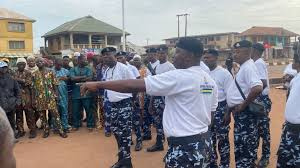
With Nigeria’s next general election still some distance away, the Federal Capital Territory Commissioner of Police, Ahmed Sanusi, has issued an early warning to youths and community leaders in Abuja against involvement in electoral violence, ballot snatching, and political thuggery, saying no political ambition is worth the loss of lives or destruction of property. Punch reported that the warning was delivered on Wednesday during a community engagement with residents and youths in Lugbe, Abuja, as part of activities marking National Police Day.
The police message may sound routine at first glance, but it is not without weight. In Nigeria, warnings about electoral violence often come after campaigns have heated up or after local tensions have already started to show. This time, the intervention is coming early. That alone makes it noteworthy. According to Punch and NAN, Sanusi urged residents to exercise their political rights peacefully and avoid conduct that could undermine public order during the 2027 election cycle.
At the heart of the story is the police concern over ballot snatching, one of the most symbolic and destructive forms of electoral violence in the country. Ballot snatching is not just an offence against voting materials. It is an assault on the credibility of the democratic process itself. When a police commissioner in the nation’s capital publicly warns youths against it, he is speaking not only to possible offenders but also to political actors who may be tempted to recruit them. That inference is grounded in the specific focus of Sanusi’s remarks on youths, community leaders, and political thuggery.
Punch reported that Sanusi told the gathering that the police would not tolerate any act capable of disrupting the peace of the FCT before, during, or after elections. He also urged community stakeholders to play a preventive role by guiding young people away from criminal participation in politics. That part is important because it broadens responsibility. The warning was not aimed at youths alone. It also placed moral pressure on families, local leaders, and neighbourhood influencers to resist the machinery of electoral violence before it takes shape.
There is also a practical reason the police are speaking now. Abuja is not just another city in the electoral map. It is the federal capital, the symbolic nerve centre of power, and a politically sensitive space where national party activity, elite mobilisation, and institutional visibility are unusually high. A breakdown linked to electoral violence in the FCT would carry consequences far beyond the boundaries of the territory. It would damage confidence in the state’s ability to secure the seat of government during a democratic transition. This is an inference drawn from the FCT’s status and from the police emphasis on peaceful participation.
The tone of Sanusi’s remarks, as reported by Punch, suggests the police are trying to do more than threaten arrests. They appear to be leaning on early sensitisation. That matters because security in election periods is not only about force deployment. It is also about shaping expectations. When authorities repeatedly warn against electoral violence before campaign season fully matures, they are trying to establish a public red line in advance.
https://ogelenews.ng/electoral-violence
This fits into a broader pattern seen elsewhere this week. Punch reported that police in Ogun also sensitised residents on the dangers of ballot snatching and other electoral offences, while Daily Trust reported that the Assistant Inspector-General of Police in Zone 2 issued a similar warning ahead of 2027. Taken together, these reports suggest a wider policing strategy of early public messaging around electoral violence, not just an isolated FCT initiative.
That broader context gives the Abuja warning more substance. It suggests that the police hierarchy may already be thinking beyond ordinary law enforcement and toward pre-election confidence building. Whether that strategy succeeds will depend on consistency. Nigerians have heard many anti-violence warnings before. What often determines public trust is not the speech, but whether the system later acts firmly and fairly when political actors test the line.
This is where journalism must stay careful. There is no indication in the reports reviewed that Abuja is currently facing a fresh outbreak of electoral violence. The story is preventive, not reactive. Turning it into a crisis headline would weaken its value. The better reading is that the police want to lower the risk before mobilisation intensifies. That makes the warning serious, but not sensational.
Still, early warnings do not emerge in a vacuum. They emerge because Nigeria’s electoral history has shown that youths are often the first targets of political mobilisation when violence is being outsourced. They are promised money, protection, access, or relevance, and then pushed toward intimidation, disruption, or outright criminality. By addressing youths directly, Sanusi was speaking into that reality, even if he did not spell out the full political economy behind electoral violence. This is a grounded inference based on the content of the warning itself.
Another notable feature of the Abuja engagement is the role assigned to community leaders. Punch reported that Sanusi addressed both youths and community figures. That matters because electoral violence does not usually thrive in total secrecy. It often grows in communities where influential actors look away, excuse it, or quietly benefit from it. A police appeal to community leadership is therefore also a test of local civic responsibility.
The deeper issue here is democratic culture. Elections are not made credible only by ballot papers, result sheets, and official declarations. They are also made credible by whether citizens believe they can vote without fear. Once electoral violence becomes normalised, even peaceful voters begin to retreat psychologically from the process. That is why warnings like this matter, even when no shots have been fired and no polling unit has yet been attacked. A democracy does not wait for violence to erupt before speaking against it.
There is also the matter of political signalling. When a commissioner of police publicly says no political ambition is worth bloodshed, he is delivering a message to politicians as much as to youths. The language may be addressed to the street, but the subtext reaches the elite. It tells would-be sponsors of thuggery that the police want to be seen as alert before the contest deepens. That interpretation is consistent with Punch and Sun reports emphasising ballot snatching, attacks, and political thuggery in Sanusi’s warning.
For Ogele News readers, the key point is simple. This is not just a community-policing story. It is an early-election story. It shows that security concerns around 2027 are already entering public language in Abuja. And once police commanders begin speaking openly about ballot snatching and electoral violence, it means the state is trying, at least rhetorically, to get ahead of a problem that has too often arrived before institutions were ready.
For now, the known facts are clear. FCT Commissioner of Police Ahmed Sanusi warned youths and community leaders in Lugbe, Abuja, against ballot snatching, political thuggery, and electoral violence during an outreach event held as part of National Police Day activities. He urged residents to participate peacefully in the democratic process and said the command would not tolerate acts capable of threatening public peace.
What happens next will matter more than the headline. If the police sustain this early prevention message with credible neutrality and later enforcement, the warning may help shape a safer political atmosphere in the FCT. If not, it risks becoming another familiar Nigerian ritual, strong in words but weak at the hour of testing. For now, though, one truth stands out. Abuja’s police command is already speaking the language of 2027, and at the centre of that language is a clear rejection of electoral violence.
https://punchng.com/2027-fct-cp-warns-youths-against-ballot-snatching-electoral-violence