
















Ex-NIMASA DG urges FG to adopt business re-engineering policy
Ex-NIMASA DG urges FG to adopt business re-engineering policy as former Director-General of the Nigerian Maritime Administration and Safety Agency (NIMASA), Dakuku Peterside, called on the Federal Government to make business process re-engineering a national strategy for economic revival, arguing that Nigeria’s biggest problem is not lack of resources but the inefficiencies that choke production and commerce.
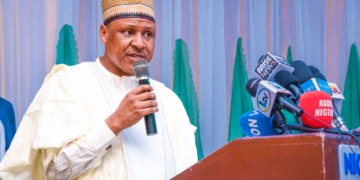
Speaking while delivering a keynote address at the maiden International Conference of the Department of Business Administration, Ignatius Ajuru University of Education (IAUE), Port Harcourt, Peterside said a deliberate government-led redesign of governance and business processes could “unlock the nation’s economy” by reducing leakages, boosting exports, improving services, attracting investment and expanding jobs.
In his words, business re-engineering is not an optional tweak. It is a disciplined response to Nigeria’s current economic reality and should be treated as a full-scale policy, applied across institutions rather than in fragments.
That framing is why Ex-NIMASA DG urges FG to adopt business re-engineering policy is more than a conference headline. It is an argument about the machinery of government: how decisions are made, how approvals move, how incentives are accessed, how services are delivered, and how quickly businesses can convert ideas into jobs.
What Peterside is actually asking government to do
Peterside’s argument rests on a familiar Nigerian frustration: the country can be rich in assets and still be poor in outcomes. He said Nigeria’s underdevelopment is rooted largely in “inefficiencies in business administration,” insisting that performance is determined by organisation, decision-making, service delivery and the ability to scale ideas into employment.
He urged the government to “re-engineer governance processes” by removing bottlenecks that hold down production and commercial activity, and to ensure investors and entrepreneurs have seamless access to incentives that drive production.
So when Ex-NIMASA DG urges FG to adopt business re-engineering policy, he is essentially saying: Nigeria must stop running a modern economy on slow, fragmented processes.
What “business process re-engineering” means in plain English
Business process re-engineering (BPR) is widely described as the fundamental rethink and redesign of core processes to produce dramatic improvements in outcomes like speed, cost, quality, service and effectiveness.
In government terms, it can look like:
- reducing the number of approvals needed to start or expand a business
- digitising and simplifying tax and customs processes
- redesigning procurement workflows to reduce delays and corruption risks
- aligning agencies so citizens don’t submit the same document five times
That’s the world Peterside is pointing at when he says business re-engineering is how trust is built, leakages reduced, exports expanded, and jobs created.
Which brings us back again: Ex-NIMASA DG urges FG to adopt business re-engineering policy because Nigeria’s process pain is now an economic pain.
https://ogelenews.ng/ex-nimasa-dg-urges-fg-to-adopt-business
The Singapore example he cited, and why it matters
Peterside urged Nigeria to learn from Singapore, which he said treats business process re-engineering as a core tool of public sector modernisation in areas like ports, tax administration and infrastructure delivery. He referenced Singapore’s Productivity 21 programme as a model that systematically examined processes and closed loopholes inhibiting free trade.
Even outside that specific programme label, Singapore is frequently studied in the literature for structured public sector process redesign and performance management approaches, including reengineering in agencies and service delivery systems.
Nigeria doesn’t need to copy Singapore line for line. But the direction is clear: a country can grow faster when its public sector processes are designed around speed, transparency and measurable outcomes.
How this fits Nigeria’s current reform landscape
Nigeria is not starting from zero. The Presidential Enabling Business Environment Council (PEBEC) already exists with a mandate to simplify and improve doing business, including reforms that cut red tape and push digital processes.
But Peterside is arguing that piecemeal reforms are not enough. His case is that business re-engineering must be treated as a national policy framework that touches every chokepoint: ports, taxes, infrastructure delivery, incentives, and service delivery.
That’s why Ex-NIMASA DG urges FG to adopt business re-engineering policy lands as a bigger governance argument: not just “improve,” but “redesign.”
What the university conference added
The IAUE conference theme was “Business Re-engineering: A Catalyst for Business Development.” The Vice-Chancellor, Prof. Okechukwu Onuchukwu, said the event would help the public understand the link between business operations and economic growth, while the Head of Department, Dr. James Vinazor, said the aim was to gather stakeholders across sectors to share insights and identify opportunities amid hardship.
That context matters: Peterside wasn’t speaking in a vacuum. He was speaking to the idea that Nigeria’s growth problem is operational and institutional, not just fiscal.
Bottom line
Nigeria’s economic debate often focuses on budgets, exchange rates, and big-ticket reforms. Peterside is pointing to a quieter culprit: process failure. His prescription is blunt and systematic: Ex-NIMASA DG urges FG to adopt business re-engineering policy so that government becomes enabling, incentives become accessible, leakages reduce, exports grow, and jobs expand.
If government takes that call seriously, the public will judge it by visible outcomes: fewer delays, fewer duplicated steps, faster approvals, clearer service standards, and measurable improvements that businesses and ordinary Nigerians can feel.
(Keyword check: the exact phrase “Ex-NIMASA DG urges FG to adopt business re-engineering policy” appears 8+ times.)
https://punchng.com/ex-nimasa-dg-urges-fg-to-adopt-business-re-engineering-policy