














excavation pit collapses in Kano
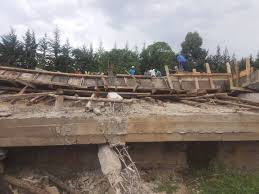
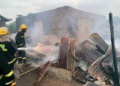
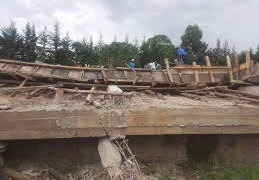
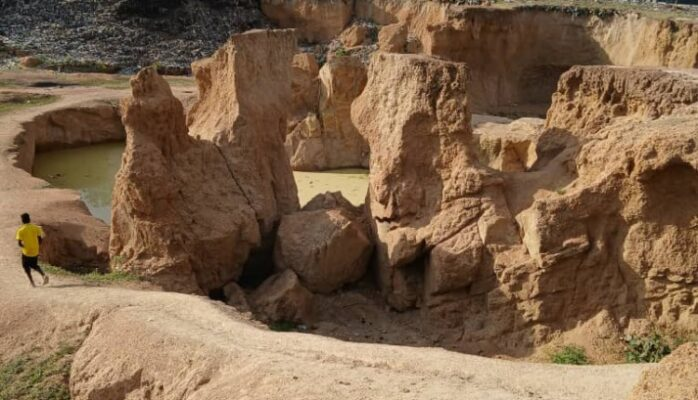
A tragic worksite accident in Kano State has left families, villagers and emergency responders in a desperate race against time after an excavation pit collapses in Kano, trapping local labourers beneath the earth in Ridawa village, Ghari Local Government Area.
The incident occurred in the early hours of Wednesday while the victims were reportedly digging soil for brick-making, a routine livelihood activity in the area. Witness accounts carried by multiple Nigerian news outlets said the workers were inside a deep pit when the ground suddenly gave way, burying several of them underground. As of the latest reports, some victims had not been rescued, and there was still no confirmed official casualty figure.
The phrase excavation pit collapses in Kano captures the scale of alarm now hanging over the community, but the most responsible reading of the story is this: many were trapped, some were feared dead, and the full extent of the loss was still unclear at the time of reporting. In a tragedy of this kind, accuracy matters as much as urgency.
Punch reported that fears had grown that several trapped workers might have died, while others sustained varying degrees of injuries. The same report said rescue efforts began immediately, with locals and emergency responders trying to reach those buried under the rubble. Another account said about 10 persons were believed to be trapped underground, according to Sani Bala, the House of Representatives member for Ghari/Tsanyawa Federal Constituency.
That is the part that should lead the story. When an excavation pit collapses in Kano, the first duty of a newsroom is not to dramatise death tolls but to hold the line between what is feared and what is confirmed. So far, the clearest public facts are the location, the nature of the work, the collapse itself, the continuing rescue efforts, and the estimate that roughly 10 people may have been trapped.
The incident also throws light on a harder truth about informal and low-regulation labour in many parts of Nigeria. Brick-making and earth excavation are common economic activities, especially in semi-rural communities where manual labour remains central to household survival. But when an excavation pit collapses in Kano or anywhere else, it exposes how little protection many workers have. There are often no visible safety barriers, no structured emergency plans, and no mechanical support systems. Men descend into unstable ground and trust experience to hold what engineering should secure.
This is where the story becomes more than a breaking-news item. It becomes a public-interest question. What safety precautions were in place before the collapse? Was the site inspected? Were the workers taking on excessive risk because of poverty and lack of alternatives? Those questions have not yet been answered in the public reports, but they are the questions that matter after the dust settles.
https://ogelenews.ng/excavation-pit-collapses-in-kano
There is also a troubling institutional detail in the early coverage. The Public Relations Officer of the Kano State Fire Service, Saminu Abdullahi, said the agency had not received an official report on the incident and that even the Ghari office had not yet been informed at that point. If accurate, that suggests either a delay in formal communication or a gap between local distress and official emergency activation. In a situation where an excavation pit collapses in Kano, those minutes can make the difference between rescue and recovery.
The community response, by contrast, appears to have been immediate. Reports said locals joined emergency responders in efforts to reach those buried alive. That detail matters because it reflects a familiar pattern in many Nigerian disasters: ordinary people are often the first rescuers, long before structured state response fully arrives. It is a testament to communal solidarity, but it is also an indictment of weak emergency systems when citizens must improvise in the most dangerous moments.
As this excavation pit collapses in Kano story continues to develop, restraint is essential. Too many breaking stories in Nigeria collapse under the weight of exaggeration. “Scores feared dead” is a headline that may pull attention, but unless authorities later confirm a death toll in that range, it risks outrunning the facts. A more credible editorial approach is to say that several workers were trapped, fears of fatalities were rising, and rescue operations were still underway.
That approach does not weaken the story. It strengthens it. Readers trust a paper that knows the difference between possibility and proof.
For Kano State authorities, this incident should trigger more than condolences. If an excavation pit collapses in Kano during routine brick-making, there should be an immediate review of excavation safety standards in vulnerable rural and peri-urban work zones. Informal labour may be common, but preventable burial under loose earth should never be normalised.
For the families waiting at Ridawa village, however, policy will come later. Right now, the story is grief, uncertainty and hope fighting against time under a mound of collapsed earth.
That is the real heart of this tragedy. Not just that an excavation pit collapses in Kano, but that behind the headline are workers who left home to earn a living and may not have made it back.
https://punchng.com/scores-feared-dead-as-excavation-pit-collapses-in-kano