



















FAAN cashless system
Nigeria’s aviation regulator, the Federal Airports Authority of Nigeria (FAAN), has rolled out more than 70,000 prepaid access cards as part of efforts to stabilise the country’s newly introduced FAAN cashless system at airport entry points nationwide.
The initiative is part of FAAN’s broader “Operation Go Cashless” policy, which officially came into force on March 1, 2026, eliminating cash transactions at airport toll gates, parking areas, executive lounges, and other revenue points across the country.
Authorities say the digital system is designed to improve operational efficiency, block revenue leakages, and align Nigeria’s aviation sector with the federal government’s broader push toward a cashless economy.
But the transition has not been entirely smooth. Early implementation triggered traffic gridlock at major airports, raising questions about preparedness even as FAAN moves to scale up the system by issuing tens of thousands of access cards.
The Policy Behind the FAAN Cashless System
The FAAN cashless system is built around a closed-loop digital payment model that replaces traditional cash payments with electronic transactions.
Under the new framework, motorists and airport users must pay through approved digital channels when accessing airport facilities. These include entry gates, parking areas, and other service points that previously accepted cash payments.
FAAN says four payment options are currently available under the system:
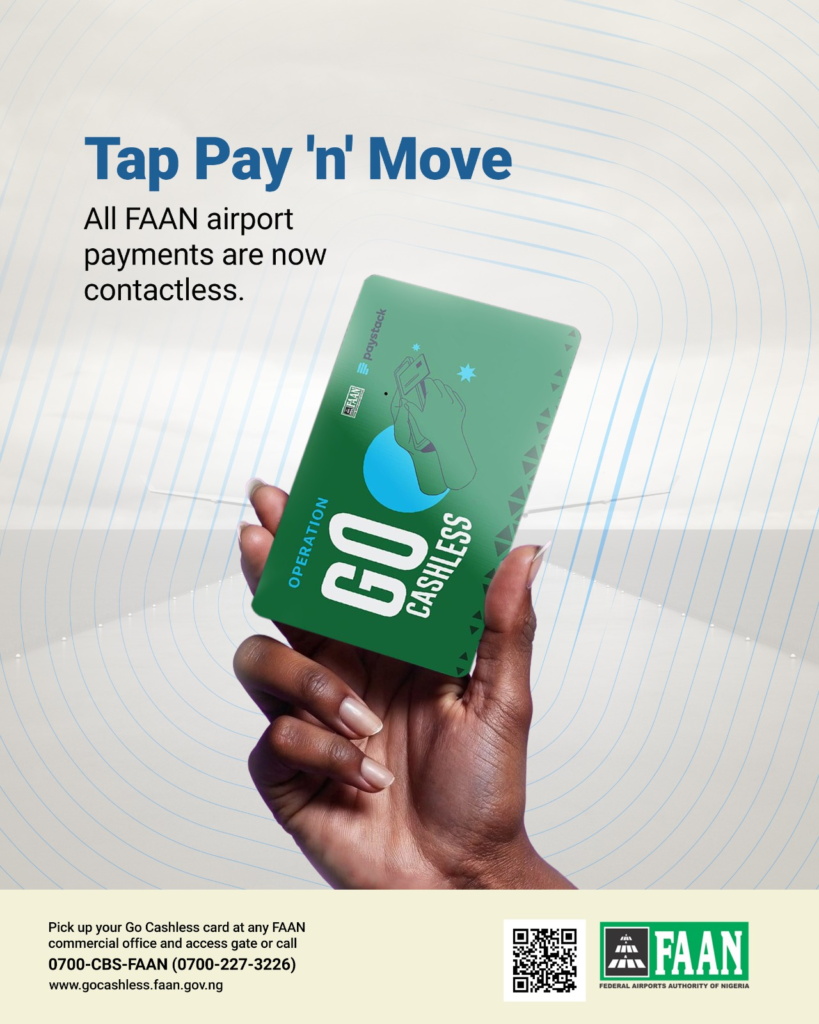
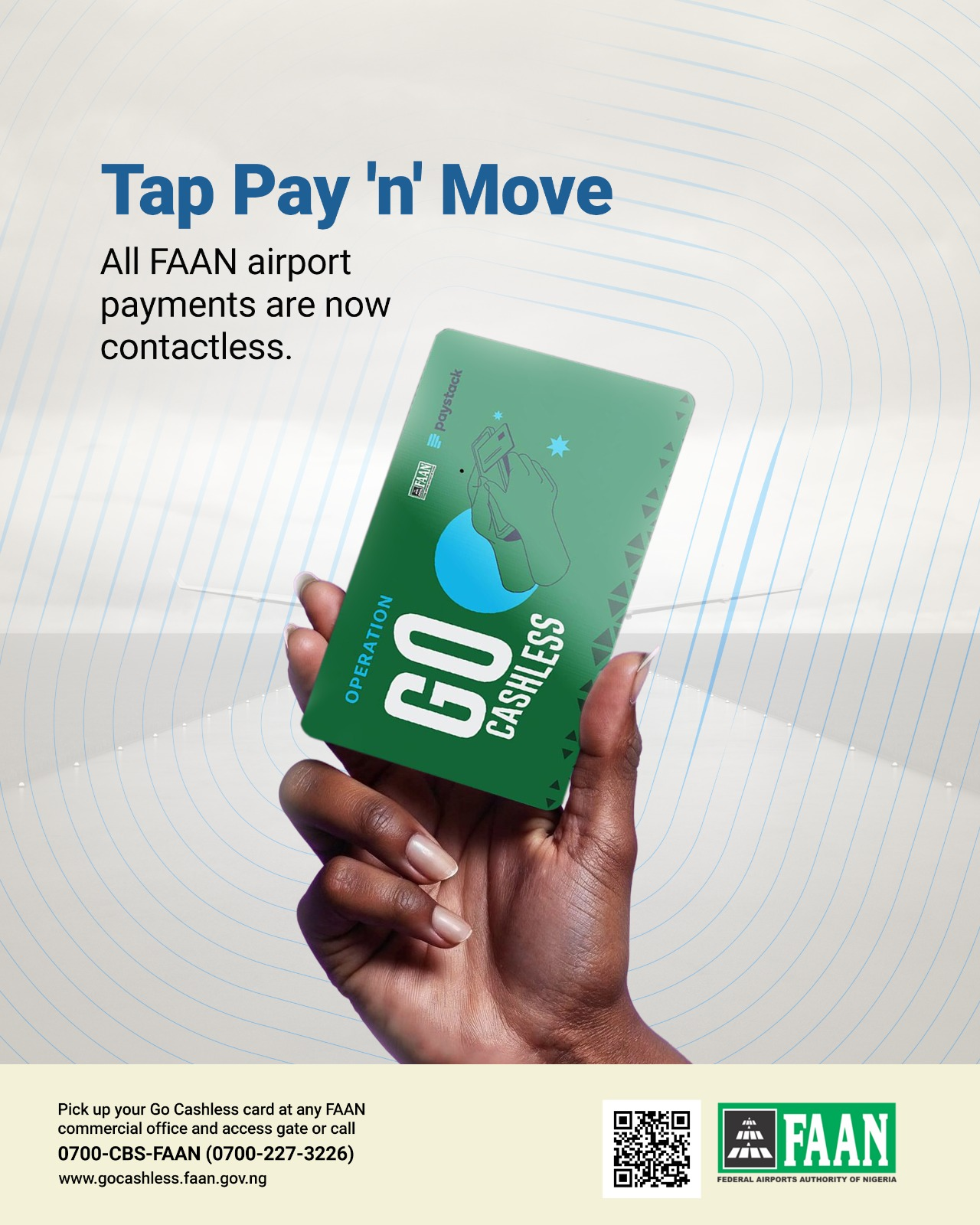
- FAAN Go Cashless Card – a prepaid card that allows fast tap-and-go payments
- E-Tag – a radio-frequency system for automatic deductions
- VIP Sticker – issued to authorised vehicles with approved access
- ATM or Debit Card via POS terminals
Officials describe the prepaid card as the fastest and most seamless method because it allows drivers to simply tap the card at access points without stopping for lengthy transactions.
This contactless design is meant to reduce congestion at airport gates, where slow payment processes have historically caused long queues.
Why FAAN Introduced the Cashless Airport System
The rollout of the FAAN cashless system reflects a combination of economic, technological, and governance considerations.
First, the system is intended to increase transparency in airport revenue collection. Aviation authorities have long acknowledged that manual cash handling creates opportunities for leakages and inefficiencies.
Second, the policy aligns with Nigeria’s broader financial reforms aimed at reducing the use of cash in public transactions.
The Central Bank of Nigeria has repeatedly encouraged government agencies to adopt digital payments to improve financial traceability.
FAAN officials say the system could significantly boost internally generated revenue.
According to projections cited by aviation officials, digital payments could increase airport revenue by as much as 75 percent, largely because every transaction will now be electronically recorded.
For an aviation sector under pressure to modernise infrastructure and improve passenger experience, the FAAN cashless system represents a major administrative shift.
https://ogelenews.ng/faan-cashless-system-airport-cards-nigeria
Distribution of 70,000 Airport Access Cards
To stabilise the system, FAAN has significantly expanded card distribution.
Officials confirmed that more than 70,000 users have now been onboarded, marking a major increase from the early pilot phase of the programme.
The cards can be obtained at:
- FAAN commercial offices
- Airport access gates
- designated registration points across major airports
Users can also register and manage their accounts online through the dedicated cashless portal.
Authorities say the growing number of issued cards will help reduce congestion because motorists will no longer need to register on the spot at airport gates.
During the first days of implementation, many drivers attempted to sign up at entry points, leading to significant delays.
Early Disruptions at Major Airports
The rollout of the FAAN cashless system faced immediate operational challenges.
At major aviation hubs such as Murtala Muhammed International Airport in Lagos and Nnamdi Azikiwe International Airport in Abuja, long queues formed as motorists struggled to comply with the new payment rules.
Some travellers reportedly missed flights due to traffic congestion around airport access roads.
Observers said the gridlock occurred because many drivers arrived without prepaid cards and attempted to register for them directly at the gates.
Others relied on point-of-sale terminals to pay with debit cards, but banking network delays slowed the process.
In response, FAAN officials appealed for patience, stressing that initial disruptions were expected during the transition to a fully digital system.
How the System Works
Under the FAAN cashless system, users load money onto their prepaid airport cards before arriving at the airport.
At entry points, they simply tap the card on a reader, allowing the system to deduct the appropriate access fee instantly.
The entire process is expected to take only a few seconds.
Frequent airport users, such as airline staff and logistics companies, can instead install an E-Tag, which allows automatic deductions without stopping at the gate.
FAAN believes these technologies will significantly reduce congestion and streamline airport access once adoption becomes widespread.
The Bigger Picture for Nigeria’s Aviation Sector
Beyond solving payment delays, the FAAN cashless system represents a wider transformation in how Nigerian airports operate.
Globally, airports have increasingly adopted digital payment platforms to improve efficiency, security, and passenger convenience.
By digitising access payments, Nigeria’s aviation regulator hopes to modernise airport operations and align them with international standards.
The system may also provide more accurate data about airport traffic, which could help authorities plan infrastructure upgrades and manage peak-hour congestion.
The Road Ahead
While early disruptions drew criticism, FAAN insists the policy will ultimately improve airport operations.
Officials say the ongoing distribution of 70,000 prepaid cards is only the first phase of a larger digital infrastructure programme.
As adoption increases and more motorists preload their cards, authorities expect the FAAN cashless system to stabilise and deliver faster, safer, and more transparent transactions across Nigeria’s airport network.
For travellers and airport users, the message from FAAN is simple: the era of paying cash at airport gates is over.
The future of airport access in Nigeria is now digital.
https://punchng.com/cashless-policy-faan-announces-four-payment-options-at-airports