















FG, CSO partner to boost inclusive healthcare policies
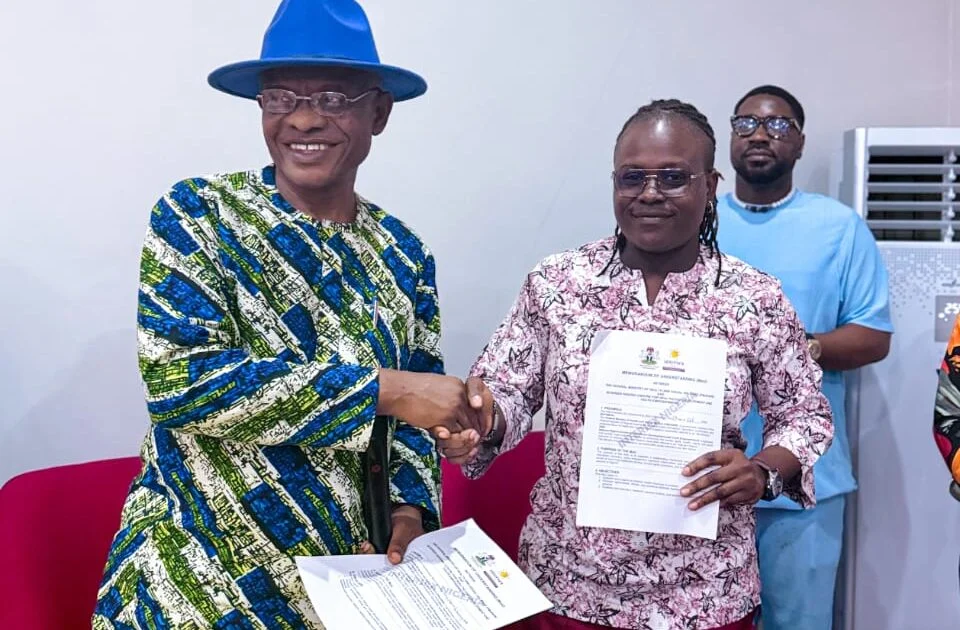
FG, CSO partner to boost inclusive healthcare policies as the Federal Ministry of Health and Social Welfare in Abuja on Saturday signed a landmark Memorandum of Understanding (MoU) with a civil society group, Intersex Nigeria, to formally integrate intersex perspectives into national healthcare policy frameworks.
The signing marked a major step toward institutionalising more inclusive healthcare policies for Nigerians born with variations in sexual characteristics—groups often left out of mainstream public health planning and service delivery.
Officials said the partnership, which began informally in 2023, was now being elevated through an MoU and an accompanying policy toolkit developed to support health institutions in adopting inclusive practices nationwide.
A partnership designed to change policy from within
At the heart of the agreement was a clear message: FG, CSO partner to boost inclusive healthcare policies by recognising that gaps in awareness, stigma and systemic exclusion have prevented many Nigerians from accessing respectful and appropriate care.
Representing the ministry, Dr. John Ovuoraye, Director of the Department of Family Health, said the Minister of Health, Professor Ali Pate, had directed support for advocacy focused on mainstreaming intersex concerns into broader healthcare policy discourse and practice.
Ovuoraye told the gathering that low awareness of intersex health needs contributes to harmful misconceptions and that formal policy action was needed to make health systems responsive. “Because if people are aware, they would be able to accept them (intersex persons), they are neither witches nor wizards, they are just born like that, and therefore they should be accommodated into healthcare policies,” he said.
By formalising the MoU, the ministry agreed to lead public education, policy coordination, and advocacy efforts that put intersex health on the national agenda. That was the practical foundation for FG, CSO partner to boost inclusive healthcare policies — working collaboratively to build capacity in institutions across the health system.
What “inclusive healthcare” means in this context
Intersex persons are individuals born with biological sex characteristics that do not fit typical binary notions of male or female, and global estimates suggest around 1.7 per cent of the world’s population has intersex traits.
This partnership underlined that inclusion is not simply about access, but about policy reform that ensures health facilities, curricula, service delivery standards and legal frameworks recognise and protect intersex people.
Officials highlighted that stigma and ignorance within healthcare settings often prevent intersex persons from seeking care for common health issues, not just those directly related to their sex characteristics. It was here that FG, CSO partner to boost inclusive healthcare policies becomes more than a slogan — it becomes a commitment to systematic change.
https://ogelenews.ng/fg-cso-partner-to-boost-inclusive-healthcare
The toolkit that came with it
At the event, Intersex Nigeria, represented by Obioma Chukwuike, Executive Director, presented a policy toolkit designed to guide healthcare institutions and providers in adopting more inclusive practices.
Chukwuike said the document was intended to support reforms that reduce discrimination and help facilities be more responsive to the needs of intersex children and adults alike. “We are not asking for a new world altogether,” she said. “We are asking for the already existing policies to have guidelines that can support intersex inclusivity and protection for all children and adults.”
This toolkit is expected to inform revising facility protocols, training materials and public health advisories within primary, secondary, and tertiary healthcare facilities. It is also meant to be a resource during future policy reviews and legislative engagement.
Broader implications for the health sector
Policy experts said the MoU signals a broader trend in which CSOs play a more formal role in shaping how government defines priorities and standards for service delivery, particularly on issues that conventional health systems have historically overlooked.
This is part of a wider context in which the Federal Government has reaffirmed its commitment to inclusive health through various mechanisms — including disability-inclusive budgeting and family planning initiatives that seek to leave no one behind.
Critics and advocates alike say that sustained implementation will require continuous monitoring, funding and training — not just rhetoric — to ensure that targeted reforms translate into tangible improvements in access and outcomes for marginalised populations.
What to watch next
While the MoU sets a framework, the real test will be in implementation: how the policy toolkit is absorbed into everyday clinical practice, how health workers are trained, and whether services at the primary health care level reflect the inclusion principles agreed upon in Abuja. — That will determine whether FG, CSO partner to boost inclusive healthcare policies becomes a meaningful benchmark in Nigerian health policy.
Because the initiative includes formal mechanisms for awareness and structural changes, it could represent a major pivot point in how Nigeria balances expert knowledge, civil society advocacy, and government authority in shaping healthcare for all.
https://punchng.com/fg-cso-partner-to-boost-inclusive-healthcare-policies