













FG flags safety risks in solar panel installations
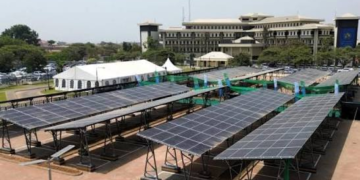
The Federal Government has raised fresh concern over the way solar systems are being installed across Nigeria, warning that poor workmanship, weak roof structures and substandard components are turning what should be a clean energy solution into a potential safety hazard.
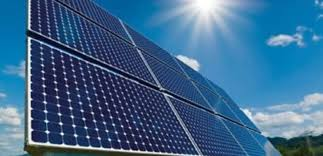
In practical terms, FG flags safety risks in solar panel installations because the country’s fast-growing rooftop solar market is now attracting both demand and danger. According to the Nigerian Electricity Management Services Agency, panels must be mounted on appropriate structures, and roofs must be assessed to ensure they can safely bear the added load. Where this is ignored, the result can be roof damage, electrical faults and in severe cases, fire outbreaks.
The warning is blunt. NEMSA said photovoltaic modules with cracks, bent frames, air bubbles, hot spots or loose junction boxes should not be used. These are not cosmetic defects. They are technical red flags that can reduce performance, cause electrical failure and increase the risk of fire or total equipment breakdown. That is why FG flags safety risks in solar panel installations should be read as a public safety notice, not just another regulatory statement lost in the daily news cycle.
This matters because solar is no longer a niche product in Nigeria. As grid instability, rising electricity costs and diesel dependence continue to frustrate homes and businesses, more Nigerians are moving toward rooftop solar and battery systems. The trend is understandable. Solar offers independence from erratic public supply and can reduce long-term energy costs. But the same boom is creating a market in which unqualified technicians and cheap, uncertified parts can thrive if regulators do not step in. Recent expert commentary tied solar fire incidents more to poor installation, bad system design and substandard components than to the technology itself.
That is the real point behind the latest advisory. FG flags safety risks in solar panel installations not because renewable energy is unsafe by nature, but because bad installation practices can make even a promising technology dangerous.
There is already enough warning from the wider power sector to take such alerts seriously. In January, the Nigerian Electricity Regulatory Commission raised alarm over rising electricity-related accidents and deaths in the country, linking many of the incidents to poor technical skills and inadequate training. That background is important. It shows that the solar warning did not emerge in isolation. It fits into a larger concern about a power sector where safety culture has often lagged behind market growth.
The government’s position also comes at a time when it is trying to expand renewable energy access, not slow it down. Only days ago, officials and sector players were praising new mini-grid rules as a turning point for Nigeria’s renewable energy market, with the Rural Electrification Agency saying the updated framework could speed up project delivery and improve standards in off-grid power. Earlier in March, the government also partnered with GIZ to strengthen solar mini-grid inspection and certification standards, with a clear emphasis on safety, technical quality and compliance. That means FG flags safety risks in solar panel installations is not anti-solar policy. It is part of a push to make expansion safer and more credible.
That distinction is crucial for public understanding. Nigeria needs more renewable energy, not less. Health facilities, schools, businesses and rural communities are already benefiting from cleaner and more reliable electricity where solar systems are properly designed and installed. The World Health Organization, for instance, recently highlighted how solar power is supporting safer vaccine storage, emergency care and maternal health services in Nigerian health centres. But gains like that can be undermined if poor installations begin to produce fires, injuries or public distrust.
https://ogelenews.ng/fg-flags-safety-risks-in-solar-panel-installations-…
So when FG flags safety risks in solar panel installations, the public should hear two messages at once. The first is a warning to consumers: do not hand over your roof and wiring to anybody who claims to be an installer. The second is a warning to the market: the era of careless deployment and uncertified shortcuts cannot continue if Nigeria wants a serious renewable energy industry.
There is also an economic side to this story. Every time a badly installed solar system fails, the damage goes beyond the individual property owner. It weakens confidence in the wider market, punishes reputable installers, and gives skeptics more reason to dismiss renewable energy as unreliable. In a country trying to attract investment into distributed power and off-grid infrastructure, that kind of reputational damage can be costly. This is another reason FG flags safety risks in solar panel installations should be seen as a regulatory attempt to protect both lives and the credibility of the sector.
For households and businesses, the lesson is straightforward. Ask whether the installer is competent. Check whether the equipment is certified. Make sure the roof has been assessed. Insist on proper mounting, earthing, wiring and battery safety measures. And where a panel is visibly damaged or a component looks suspiciously cheap, do not proceed simply because the quotation is attractive. A lower upfront price can become a far higher cost after a fire, collapse or electrical fault.
In the end, FG flags safety risks in solar panel installations because Nigeria is entering a stage where renewable energy growth must be matched by safety discipline. The country cannot afford to expand access on one hand and tolerate dangerous shortcuts on the other. Solar remains one of the most practical answers to Nigeria’s electricity crisis. But if it is to retain public trust, the installations climbing across rooftops in cities and towns must be done properly, professionally and under standards that protect both consumers and the future of the energy transition.
https://punchng.com/fg-flags-safety-risks-in-solar-panel-installations