















December 2025 revenue
Nigeria’s three tiers of government — the Federal Government, states, and local governments — shared a total of ₦1.969 trillion as December 2025 revenue, reflecting a significant monthly inflow at a time of mounting fiscal pressure across the country.
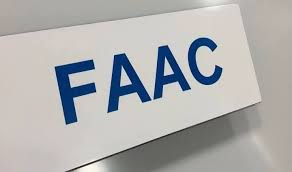
The distribution was made through the Federation Accounts Allocation Committee (FAAC), which meets monthly to share federally collected revenue among the tiers of government. The latest allocation comes amid rising expenditure demands, persistent inflation, and continued calls for improved fiscal discipline.
For state governments and local councils struggling with wage obligations, infrastructure backlogs, and social services, the December 2025 revenue allocation represents both relief and a reminder of deeper structural challenges in Nigeria’s public finance system.
What the ₦1.969trn December 2025 Revenue Represents
The ₦1.969 trillion shared as December 2025 revenue is drawn from multiple federally collected sources, including:
• Statutory revenue
• Value Added Tax (VAT)
• Exchange rate gains
• Other government inflows
FAAC allocations are not discretionary grants. They are constitutionally mandated distributions, forming the financial backbone of subnational governance in Nigeria.
For most states and nearly all local governments, FAAC receipts account for the bulk of monthly operating funds.
Why December Allocations Matter
December FAAC distributions often carry extra weight.
End-of-year allocations typically coincide with:
• Salary payments and arrears
• Year-end bonuses in some states
• Increased security spending
• Seasonal social intervention programmes
With inflation still eroding purchasing power, many public servants depend heavily on timely December allocations. Delays or shortfalls often translate directly into unpaid wages or deferred projects.
That is why the size of the December 2025 revenue allocation has drawn attention.
Federal Government, States, LGs: Shared Dependence on FAAC
Although the Federal Government retains independent revenue streams, FAAC remains a central pillar of its fiscal operations.
For states and local governments, the dependence is even more pronounced.
Most states generate less than 30 per cent of their total revenue internally, making FAAC distributions essential for survival rather than growth.
The December 2025 revenue sharing once again highlights Nigeria’s over-reliance on centralized revenue pooling and distribution.
https://ogelenews.ng/fg-states-lgs-december-2025-revenue
VAT and the Subnational Lifeline
Value Added Tax continues to play a crucial role in FAAC distributions.
VAT receipts are shared among the three tiers using a formula that favours states and local governments, providing them with a relatively stable inflow compared to volatile oil-derived revenues.
For many states, VAT allocations are now more predictable than statutory revenue, especially amid fluctuations in crude oil production and prices.
The December 2025 revenue allocation reinforces VAT’s growing importance in Nigeria’s fiscal architecture.
Inflation, Spending Pressure, and Fiscal Reality
While ₦1.969 trillion appears substantial on paper, its real value must be understood against Nigeria’s current economic realities.
Inflation remains high, pushing up:
• Construction costs
• Healthcare expenses
• Food prices
• Security operations
As a result, the purchasing power of FAAC allocations has been steadily declining.
Economists warn that rising allocations do not automatically translate into improved public services unless accompanied by spending efficiency and accountability.
State Governments: Relief Without Comfort
For governors, the December 2025 revenue allocation offers breathing space but not comfort.
Many states are grappling with:
• Expanding wage bills
• Debt servicing obligations
• Infrastructure decay
• Rising public expectations
Several states have already earmarked portions of their FAAC receipts for loan repayments, leaving limited funds for development projects.
In this context, the ₦1.969 trillion shared nationally must be viewed as a stopgap, not a solution.
Local Governments and the Grassroots Question
Local governments, often the weakest tier fiscally, rely almost entirely on FAAC.
Yet, questions persist about:
• Transparency in local government spending
• State-level deductions from LG allocations
• Limited service delivery at the grassroots
The December 2025 revenue allocation once again raises the issue of whether funds reaching local governments are translating into visible improvements in rural communities.
Structural Questions FAAC Cannot Answer
Beyond the monthly numbers, FAAC distributions expose deeper systemic questions:
• Why do most states remain fiscally unviable without federal transfers?
• Why has internal revenue generation not kept pace with population growth?
• Can Nigeria sustain centralized revenue sharing indefinitely?
Until these questions are addressed, monthly FAAC meetings will continue to feel like survival rituals rather than strategic planning sessions.
What to Watch Going Forward
As 2026 unfolds, analysts will be watching:
• Trends in FAAC allocations
• The balance between statutory revenue and VAT
• The impact of exchange rate movements
• Subnational debt accumulation
The December 2025 revenue allocation may set the tone for fiscal expectations in the new year, but it does not resolve underlying vulnerabilities.
The Bottom Line
The sharing of ₦1.969 trillion as December 2025 revenue underscores the central role of FAAC in Nigeria’s public finance system.
While the allocation provides short-term relief, it also highlights long-standing dependence, structural weaknesses, and the urgent need for fiscal reform.
For Nigeria’s three tiers of government, the real challenge is not how much is shared each month, but how sustainably it is used.