















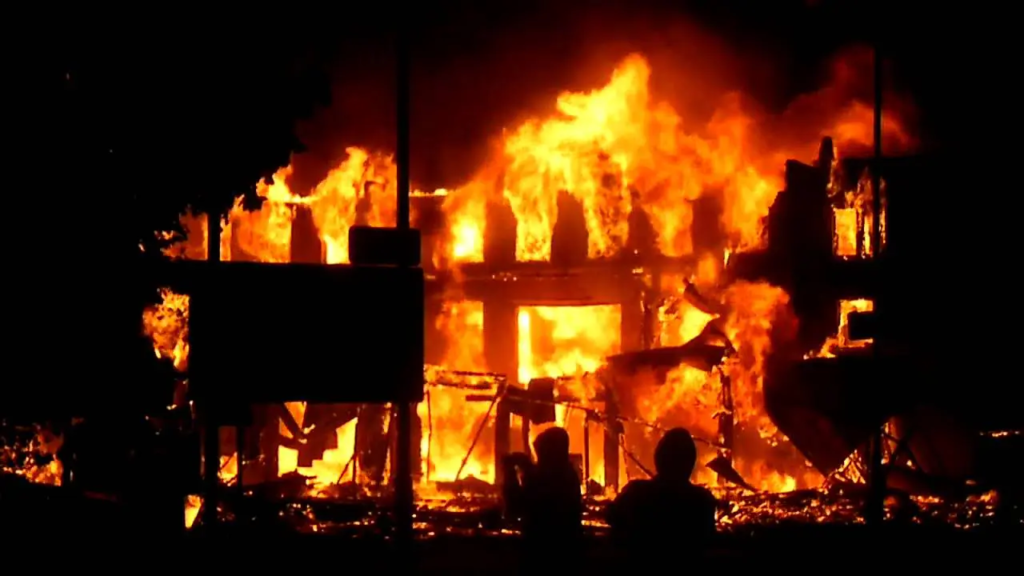
Fire guts two-storey building in Kwara
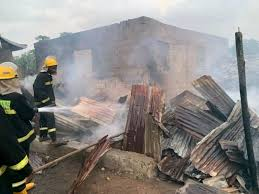
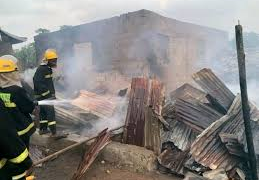
A fire outbreak in Ilorin, the Kwara State capital, on Wednesday evening damaged part of a two-storey commercial building, with emergency responders preventing what could have escalated into a far more devastating incident.
The incident, now widely reported as Fire guts two-storey building in Kwara, occurred at about 4:19 p.m. at Akolapo Plaza along Oro Road, off the Taiwo Oke axis of Ilorin. The building, a busy commercial structure housing about 18 shops, is a familiar hub for traders and small businesses in the area.
According to the Kwara State Fire Service, only one shop was significantly affected by the fire, despite early fears that the blaze could spread across the entire complex.
The agency’s spokesperson, Hassan Adekunle, confirmed that firefighters responded promptly to distress calls and were able to contain the situation before it extended to adjoining shops or nearby buildings.
What makes the Fire guts two-storey building in Kwara incident notable is not just the outbreak itself, but the speed and coordination of the response. In many fire incidents across Nigeria, delayed emergency calls often lead to catastrophic losses. In this case, early intervention made the difference between a controlled incident and a full-scale commercial disaster.
Preliminary findings by the fire service pointed to an electrical fault linked to a solar power installation within the building. Investigators said a spark from the system’s wiring ignited nearby combustible materials, triggering the fire.
This detail is critical. As more businesses turn to alternative energy sources due to unstable public power supply, poorly installed solar systems are increasingly becoming a silent risk factor. The Fire guts two-storey building in Kwara case adds to a growing pattern where energy improvisation, without proper standards, exposes properties to fire hazards.
Officials say the structure itself remained intact, and the fire did not spread beyond the affected shop due to the rapid containment effort. Firefighters reportedly deployed coordinated suppression tactics, preventing escalation and safeguarding goods and assets in the remaining shops.
The Director of the Kwara State Fire Service, Alabi Muhammed, used the incident to issue a broader warning to property owners and business operators. He stressed the importance of proper installation, regular inspection, and the use of certified professionals when handling electrical and solar systems.
He also advised traders to keep flammable materials away from electrical installations and ensure that fire extinguishers are readily available and functional within commercial premises.
https://ogelenews.ng/fire-guts-two-storey-building-kwara
The Fire guts two-storey building in Kwara incident is the latest in a string of fire outbreaks recorded across the state in recent weeks. Earlier in March, fires destroyed multiple shops in different parts of Kwara, including containerised stalls at Eyenkorin and market shops in Offa, with goods worth millions of naira lost.
That pattern raises a larger question about fire preparedness in densely packed commercial areas. Markets, plazas, and mixed-use buildings across Nigeria often combine high human traffic, electrical improvisation, and limited safety infrastructure. When fires break out in such environments, the margin for error is extremely small.
Still, the outcome in this case offers a rare counter-narrative. Unlike incidents where entire buildings are razed before help arrives, the Fire guts two-storey building in Kwara situation shows what effective emergency response can achieve.
No casualties were reported, and damage was limited, a result that officials say should not be taken for granted.
For business owners, the lesson is straightforward. Fire outbreaks rarely begin as major disasters. They start small, often from avoidable triggers like faulty wiring, overloaded circuits, or poor maintenance. What determines the outcome is how quickly the situation is detected and how fast trained responders are engaged.
For authorities, the challenge remains public education and enforcement. Advisories are often issued after incidents, but consistent monitoring of building safety standards remains weak in many urban areas.
As Ilorin continues to expand commercially, the need for stricter compliance with fire safety regulations becomes more urgent. The cost of negligence is often measured not just in property loss, but in livelihoods disrupted overnight.
The Fire guts two-storey building in Kwara story may not have ended in tragedy, but it carries a warning that cannot be ignored. In environments where risk factors are already high, prevention is not optional. It is the only real defence.
https://theinformant247.com/firefighters-avert-disaster-as-fire-guts-shopping-complex-in-ilorin/