












Ganduje, Badaru meet Tinubu amid defection surge
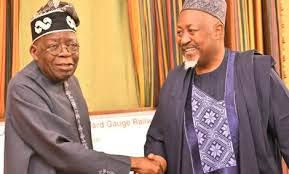
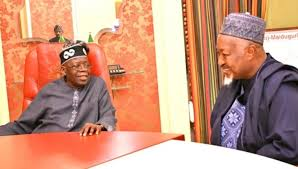
President Bola Tinubu’s separate meetings with Abdullahi Ganduje and Mohammed Badaru Abubakar at the Presidential Villa have added fresh intrigue to an already tense political moment, as defections and party realignments gather speed ahead of the 2027 election cycle. The meetings took place on Tuesday in Abuja, with Ganduje and Badaru arriving and leaving separately, a detail that suggested individual consultations rather than a joint political session. Neither man spoke to journalists afterward, leaving the presidency’s political watchers to read the timing as carefully as the silence.
The phrase Ganduje, Badaru meet Tinubu amid defection surge has gained traction because the timing is impossible to ignore. The audience came just a day after Rabiu Musa Kwankwaso, former Kano governor and a major northern political force, was reported to have defected to the African Democratic Congress. That move, according to reports, did not happen in isolation. It was said to have come with other key figures, including former APC governorship candidate Nasiru Gawuna and former Kano deputy governor Aminu Gwarzo, deepening the sense that Kano has entered a new phase of political volatility.
That is why Ganduje, Badaru meet Tinubu amid defection surge is not just another Villa photo opportunity. It lands at a moment when the ruling APC is trying to steady itself after a burst of movement across party lines. On the same Tuesday, Punch reported that multiple lawmakers were switching parties in what it described as a defection tsunami, with some leaving opposition platforms for the APC and others moving in the opposite direction. A serving senator from Niger South also formally defected from the PDP to the APC, citing unresolved internal disputes. The bigger picture is clear: Nigerian politics has entered another season of rapid rearrangement.
In Kano, the pressure is especially intense. Ganduje is no ordinary visitor to the Villa. He is a former governor of the state and only recently left office as APC national chairman before Prof. Nentawe Yilwatda emerged as substantive chairman at the party’s convention on March 27, 2026. Even after leaving the national chairmanship, Ganduje remains one of the APC’s most visible power brokers in Kano. Reports say he had earlier accompanied Governor Abba Yusuf and Deputy Senate President Barau Jibrin to witness the defection of eight NNPP House members to the APC, then publicly insisted that Kano would still deliver for Tinubu in 2027 despite the new moves around Kwankwaso. That makes Ganduje, Badaru meet Tinubu amid defection surge a story about damage control as much as party management.
The Kano side of the crisis is layered. One part is the symbolic shock of Kwankwaso’s reported switch. Another is the deeper contest over who truly controls the anti-APC vote and the local structures that decide primaries, alliances, and turnout. P.M. News reported that analysts are already linking the turmoil in Kano APC to a struggle for control of the party, especially after Governor Abba Yusuf’s changing political alignment altered the internal balance in the state. In that context, Ganduje, Badaru meet Tinubu amid defection surge looks like a moment in which the President is trying to keep one of the party’s most strategic northern states from slipping into confusion.
Jigawa presents a different, though related, anxiety. Badaru, a former governor of the state and former minister of defence, has been linked in reports to tensions within the APC structure in Jigawa, especially around Governor Umar Namadi. P.M. News reported that disagreements over party control and convention outcomes fed speculation that some Badaru loyalists could move toward the ADC. Yet this must be handled carefully, because Badaru had already issued a clear denial months earlier, rejecting claims that he planned to leave the APC and insisting his loyalty to the party remained absolute. That earlier denial matters because it warns against treating every rumour as settled fact.
https://ogelenews.ng/ganduje-badaru-meet-tinubu-amid-defection-surge
Even so, Ganduje, Badaru meet Tinubu amid defection surge remains politically significant because Tinubu appears to be consulting two men who still command influence in volatile northern theatres. Ganduje’s relevance lies in Kano’s changing map. Badaru’s relevance lies in whether Jigawa APC can remain cohesive despite elite rivalry. The fact that both meetings happened on the same day, during the same wave of defections and speculation, gives the story its force. It suggests that the Presidency is not waiting passively for state structures to sort themselves out.
There is also the matter of symbolism. In politics, closed-door meetings at the Villa are rarely just about conversation. They are also about signals. When a President receives two influential figures separately amid a realignment season, the signal is that the centre is paying attention. Whether the subject was reconciliation, reassurance, strategy, or warning, the meetings project one unmistakable message: the APC understands that defections, if left unmanaged, can become contagious. Seen this way, Ganduje, Badaru meet Tinubu amid defection surge is a headline about political containment.
But a responsible reading must also avoid melodrama. The APC is under pressure, yes, but it is also benefiting from defections elsewhere. The same day’s reports showed lawmakers and a senator moving into the ruling party from opposition camps, underlining the messy truth of Nigerian politics: realignments rarely move in one direction only. That is why Ganduje, Badaru meet Tinubu amid defection surge should not be written as a story of APC collapse. It is better understood as a story of an increasingly fluid pre-2027 battlefield in which every major party is hunting strength and trying to prevent internal erosion.
For Tinubu, the stakes are larger than two meetings. Kano is too electorally weighty to treat lightly, and Jigawa is too politically important to ignore. If the ruling party loses grip in either state through internal fractures, the consequences could ripple far beyond local contests. That is why Ganduje, Badaru meet Tinubu amid defection surge belongs in the larger story of how parties are reorganising after conventions, amid elite rivalries, and under the shadow of 2027. The Villa may not have disclosed the agenda, but the context supplies enough gravity.
In the end, this is what gives the story its value. Not gossip, but timing. Not speculation for its own sake, but what the sequence reveals. Ganduje came. Badaru came. Both left without speaking. And they did so at a moment when defections in Kano, strains in Jigawa, and wider legislative cross-carpeting were all building into a national pattern. For now, that is the strongest and fairest reading of Ganduje, Badaru meet Tinubu amid defection surge: a snapshot of a presidency watching the political map shift and moving quietly to keep its coalition intact.
https://punchng.com/ganduje-badaru-meet-tinubu-amid-defection-surge