
















ICPC arraigns works ministry director for money laundering allegation
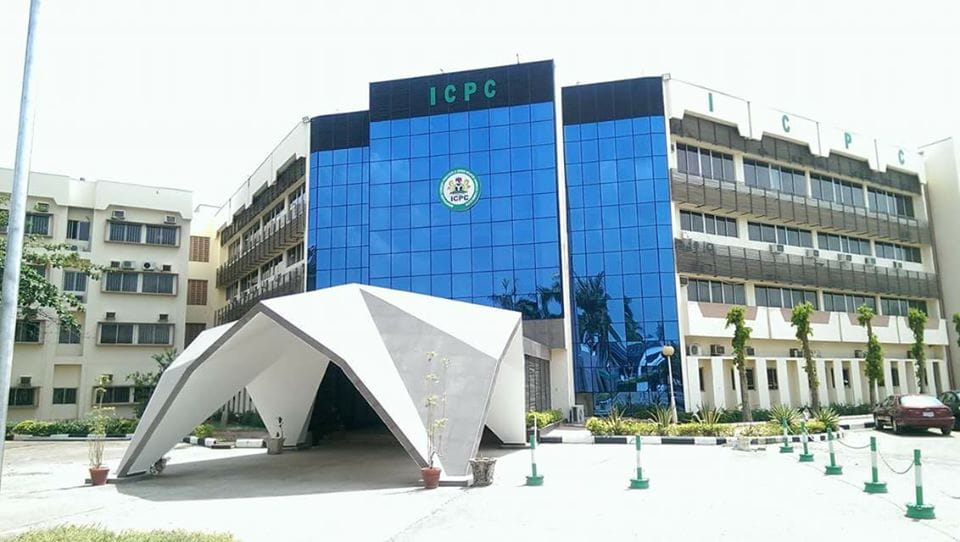
ICPC arraigns works ministry director for money laundering allegation in a case that puts a senior public officer of the Federal Ministry of Works and Housing under judicial scrutiny over alleged suspicious cash inflows and transfers traced to a subordinate, family-linked accounts, and possible proceeds of corruption.
The Independent Corrupt Practices and Other Related Offences Commission (ICPC) confirmed that Mrs. Adiobome Blessing Lere-Adams, a director in the ministry, was arraigned before the Federal High Court, Abuja, on Monday, February 16, 2026, in a six-count charge bordering on money laundering and corruption. 
The case is marked FHC/ABJ/CR/551/2025, and the Commission says the alleged offences were committed between August 2022 and January 2024 within the Federal Capital Territory, Abuja. 
ICPC arraigns works ministry director for money laundering allegation under a combination of statutes, including the Money Laundering (Prevention and Prohibition) Act, 2022, the Penal Code (Northern Nigeria) Federal Provisions Act, and the Corrupt Practices and Other Related Offences Act, 2000. 
What the ICPC is alleging
In its summary of the charges, the ICPC says Lere-Adams received various sums of money from a subordinate, Mr. Henry David, and that she “knew, or ought reasonably to have known,” the funds were proceeds of corruption. 
The Commission further alleges that she transferred substantial portions of the funds to her husband, Mr. Olujimi Lere-Adams, and into a Fidelity Bank account belonging to her son, Jafe Joel Lere-Adams. 
ICPC arraigns works ministry director for money laundering allegation with prosecutors framing the money trail as the central issue: the origin of the funds, the defendant’s knowledge (or duty to know), and how the money moved afterward.
A key count: the ₦2 million transfer
One of the counts reproduced by the ICPC is specific: investigators allege that on August 18, 2022, the defendant, while a director at the Federal Ministry of Works and Housing, took possession of and retained ₦2,000,000 transferred to her First Bank account (No. 3002361584) by her subordinate, Henry David, when she reasonably ought to have known the funds were proceeds of corruption. 
The ICPC says this count is brought under Section 18(2)(d) and punishable under Section 18(3) of the Money Laundering (Prevention and Prohibition) Act, 2022. 
ICPC arraigns works ministry director for money laundering allegation, and this is the heart of it: prosecutors are anchoring the case on both the transaction details and the legal test of what a public official “reasonably ought to have known.”
Plea, bail, and conditions
In court, Lere-Adams pleaded not guilty to all the charges through her counsel, Barrister Nduka, after which the defence requested bail on liberal terms. 
Justice M.S. Liman granted bail in the sum of ₦5 million, with one surety in like sum. 
The bail conditions are not light paperwork. The court ordered that the surety must:
• Reside within the court’s jurisdiction and provide a verifiable address
• Submit two passport photographs for verification by NIMC
• Provide a sworn affidavit
• Submit three years’ tax clearance for inspection 
ICPC arraigns works ministry director for money laundering allegation, and the bail terms signal what courts often do in financial-crime cases: allow liberty, but insist on traceable guarantees.
The court also granted the defendant a 72-hour window to meet the bail conditions and warned that bail could be revoked if the terms were not satisfied within the timeframe. 
https://ogelenews.ng/icpc-arraigns-works-ministry-director-for-money-lau…
Next court date
The matter was adjourned to April 20, 2026, for hearing. 
ICPC arraigns works ministry director for money laundering allegation, but the next phase is where the case will either tighten or weaken: prosecution witnesses, documentary exhibits, bank records, and how the defence attacks the “knowledge” element.
Why this case matters
This arraignment sits at the intersection of public trust and public finance. The Federal Ministry of Works and Housing is one of the most consequential spending centres of government, linked to contracts, procurement chains, and large project budgets. When an official at director level is taken to court on money laundering and corruption counts, it instantly becomes bigger than one defendant.
ICPC arraigns works ministry director for money laundering allegation, and the bigger institutional question becomes unavoidable: how money moves inside public offices, who controls approvals, and how easily “unusual” transfers can be disguised as routine.
The ICPC, in its statement, framed the arraignment as part of its wider resolve to ensure accountability in public service and to prosecute those who abuse positions of trust. 
What to watch going forward
If this case proceeds to full trial, these points will likely define its direction:
1. Money trail clarity: amounts, dates, and the full transaction pattern across accounts
2. Proceeds-of-corruption link: what unlawful act the prosecution ties the money to
3. Knowledge test: what the defendant knew, and what she “ought reasonably to have known”
4. Transfer rationale: why money moved to spouse and son’s accounts, and under what explanation
5. Witness credibility: especially around the subordinate named in the allegations 
ICPC arraigns works ministry director for money laundering allegation, and while the allegations are serious, the court process is still the court process: accusation is not conviction. The prosecution must prove its case, and the defence will get full opportunity to challenge it.
https://punchng.com/icpc-arraigns-works-ministry-director-for-money-laundering-allegation