














Igbo king in South Africa
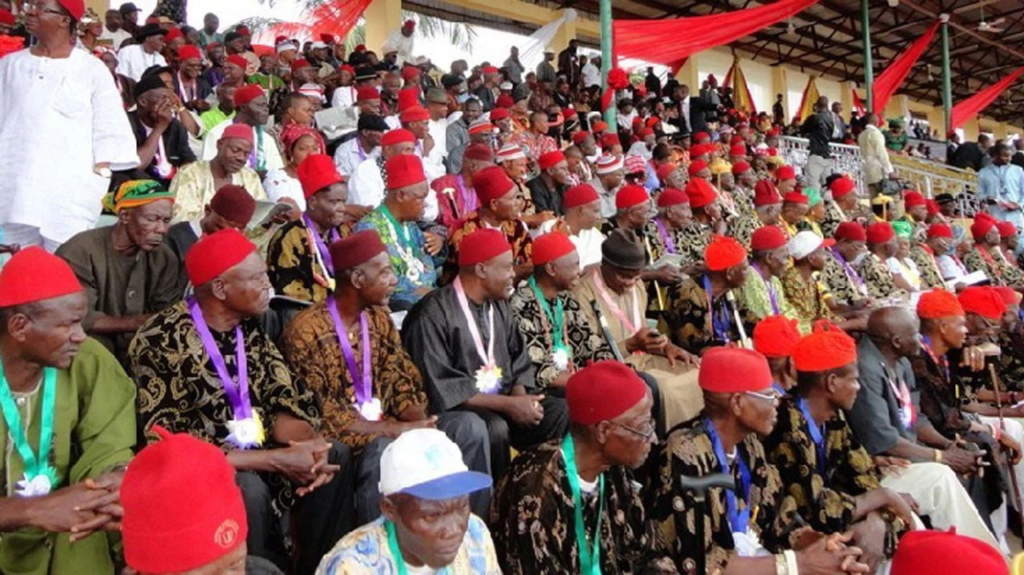
The decision by Ohanaeze Ndigbo Worldwide to reject the controversial installation of an Igbo king in South Africa has added a new layer of political and cultural weight to a story that had already sparked protests, violence, and uneasy diplomatic attention.
Ohanaeze, the apex socio-cultural organisation representing Igbo interests, said it does not recognise the installation of an “Igwe Ndigbo na East London” in South Africa and insisted that the title has no legal or traditional standing under its authority. According to Punch, the group formally distanced itself from the event and made clear that the title being paraded in South Africa lacks recognition.
That statement matters because the controversy over an Igbo king in South Africa is no longer just a local community affair. It has grown into a broader debate about diaspora identity, cultural symbolism, and how far migrant communities can go in recreating traditional structures outside Nigeria without provoking tension in their host country.
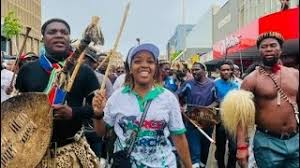
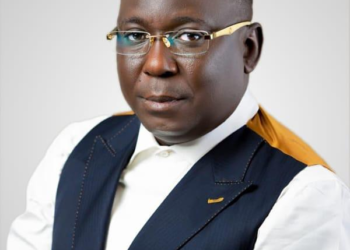
The issue first gained wider public attention after reports emerged that Chief Solomon Ogbonna Eziko had been installed as “Igwe Ndigbo” in East London, in South Africa’s Eastern Cape Province. Punch reported that the event triggered protests, with demonstrators torching vehicles and looting shops owned by foreign nationals. That violence turned what may have begun as a cultural ceremony into a major public controversy.
This is why the intervention by Ohanaeze is significant. By rejecting the Igbo king in South Africa installation, the organisation appears to be trying to draw a firm line between recognised Igbo traditional institutions at home and community-based cultural arrangements in the diaspora. In effect, it is saying that no matter how emotionally meaningful such a title may be to some members of the diaspora, it should not be confused with a formally recognised kingship.
That clarification is important because kingship in Igbo land is not a casual matter. Traditional rulership in the South-East is tied to custom, lineage, community consent, and local legitimacy. A title proclaimed outside that framework, especially in another country, can quickly become controversial. The uproar over the Igbo king in South Africa issue shows exactly how explosive that confusion can become.
https://ogelenews.ng/igbo-king-in-south-africa
There is, however, another side to the story. Punch also reported that the Nigerian Citizens Association South Africa moved to explain the event, saying the title of “Igwe Ndigbo” conferred on its member was not meant to disrespect South African traditional institutions or challenge the constitutional order of the Republic of South Africa. The group described it as a cultural and traditional expression aimed at preserving identity, promoting unity, and fostering social cohesion among Igbos in the diaspora.
That defence reveals the heart of the dispute. Supporters seem to be framing the Igbo king in South Africa title as a diaspora identity project, while critics see it as an overreach that creates dangerous misunderstanding. In a country like South Africa, where tensions over migration, identity, and foreign nationals can flare up quickly, symbolism matters. Once the event began to be interpreted as the installation of a foreign monarch on South African soil, the fallout became harder to contain.
This is where Ohanaeze’s position becomes both strategic and necessary. By saying it does not recognise the Igbo king in South Africa, the body is likely trying to protect the credibility of Igbo traditional institutions while also helping to lower tensions. In moments like this, silence can be interpreted as endorsement. A clear public rejection was therefore bound to carry weight.
The wider concern is the effect on Nigerians living in South Africa. Reports indicate that the unrest linked to the coronation did not remain at the level of argument or symbolism. It spilled into violence, affecting shops and property associated with foreign nationals. That means the controversy over the Igbo king in South Africa is no longer just about titles. It has become a security issue for ordinary Nigerians trying to live and work abroad.
There are also diplomatic undertones here. Sahara Reporters and Peoples Gazette both reported that the Nigerian High Commission in Pretoria distanced itself from the coronation and apologised to the South African government amid rising tensions over the matter. While those outlets are not the primary basis of this report, their accounts reinforce the picture of an incident that quickly moved beyond local ceremony into official concern.
For Ohanaeze, the challenge is delicate. It must defend Igbo cultural dignity without appearing to endorse an action that has caused backlash. It must also speak to diaspora communities that want cultural continuity while reminding them that recognition in exile is not the same thing as recognised authority at home. The uproar over the Igbo king in South Africa controversy has forced that distinction into the open.
The deeper lesson is that diaspora cultural politics can become combustible when symbols are poorly understood or badly communicated. A title meant internally as a community unifier may be read externally as a political claim. In the case of the Igbo king in South Africa, that gap in interpretation appears to have helped fuel unrest.
This is also a reminder that traditional institutions are not props for publicity. Their authority comes from history, communal legitimacy, and careful observance of custom. Once such titles are improvised or projected without broad recognition, they risk weakening the very heritage they claim to honour. That seems to be part of the warning embedded in Ohanaeze’s rejection of the Igbo king in South Africa installation.
For now, the known facts are these: a coronation in East London sparked protests and violence in South Africa’s Eastern Cape; the title was linked to Solomon Ogbonna Eziko; Ohanaeze has said it does not recognise the kingship; and Nigerian community leaders in South Africa insist the event was cultural, not political.
What comes next will matter. If tensions cool, the incident may become a cautionary tale about the limits of diaspora symbolism. If not, the Igbo king in South Africa controversy could deepen anxieties around xenophobia, migrant safety, and the public image of Nigerian communities abroad.
For now, Ohanaeze has chosen the path of distance and clarity. In doing so, it has made one point unmistakable: whatever happened in East London, it should not be mistaken for a recognised extension of Igbo traditional authority.
https://punchng.com/ohanaeze-disowns-installation-of-igbo-king-in-safrica/